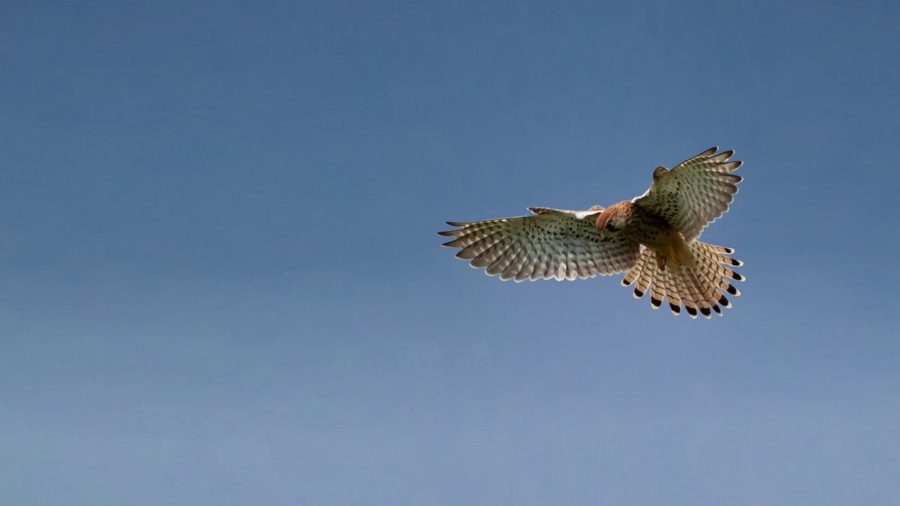
The Common Kestrel Falco tinnunculus is a small, agile bird of prey which can be seen ‘praying’ in the air. While searching for its next meal, it hovers silently, head bowed over a field, then suddenly blitzes downward to catch a field mouse or vole. Once emblematic of the Dutch landscape, kestrels are now in steady decline. This is largely due to intensive agriculture, which makes the land unsuitable for kestrels and their main sources of prey. Ironically, kestrels can actually help farmers by eating ‘pests’ like large insects, rodents and small fruit-eating birds. To help this iconic species, A Rocha Netherlands is taking the wider ecosystem into account.
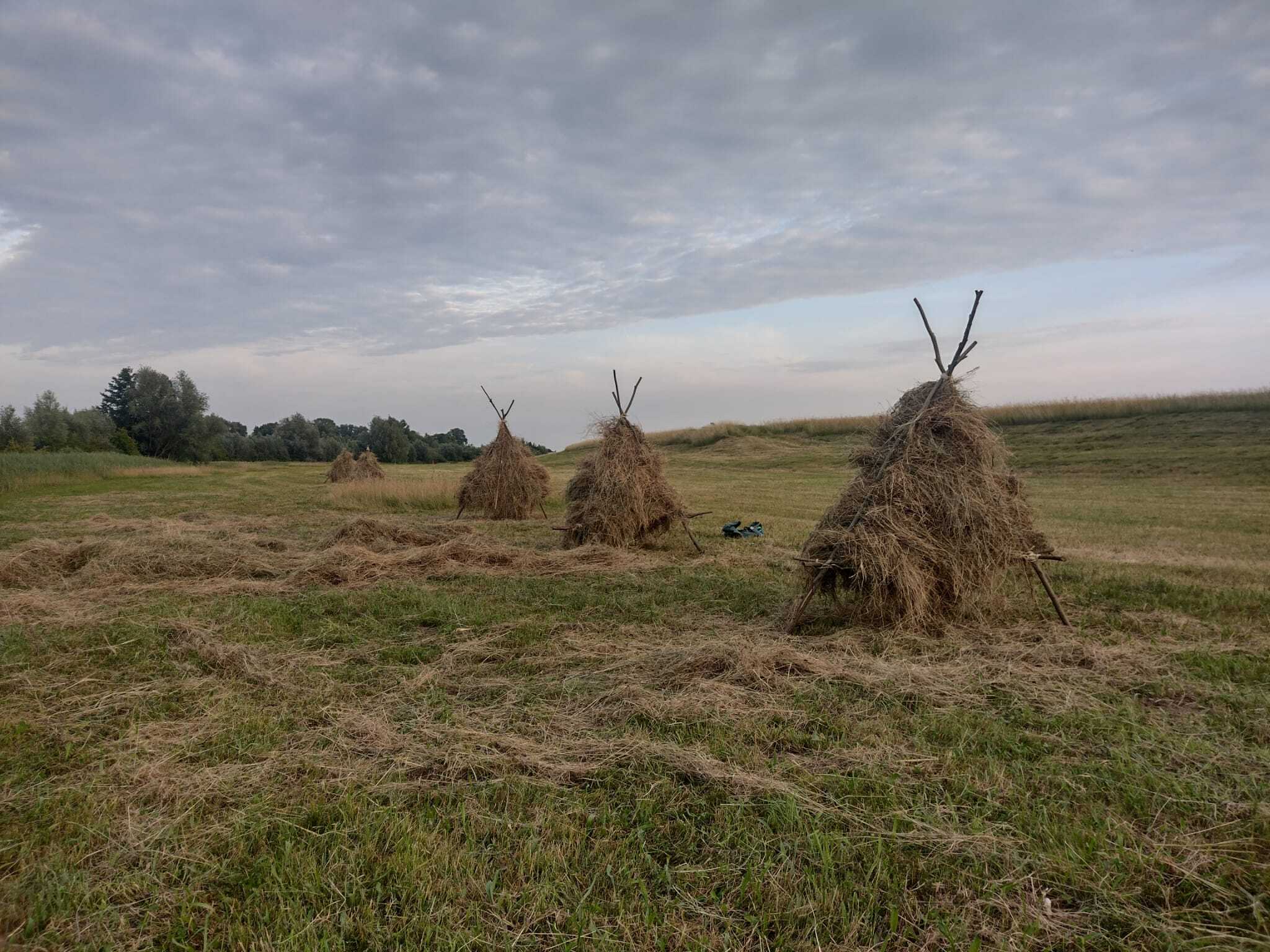
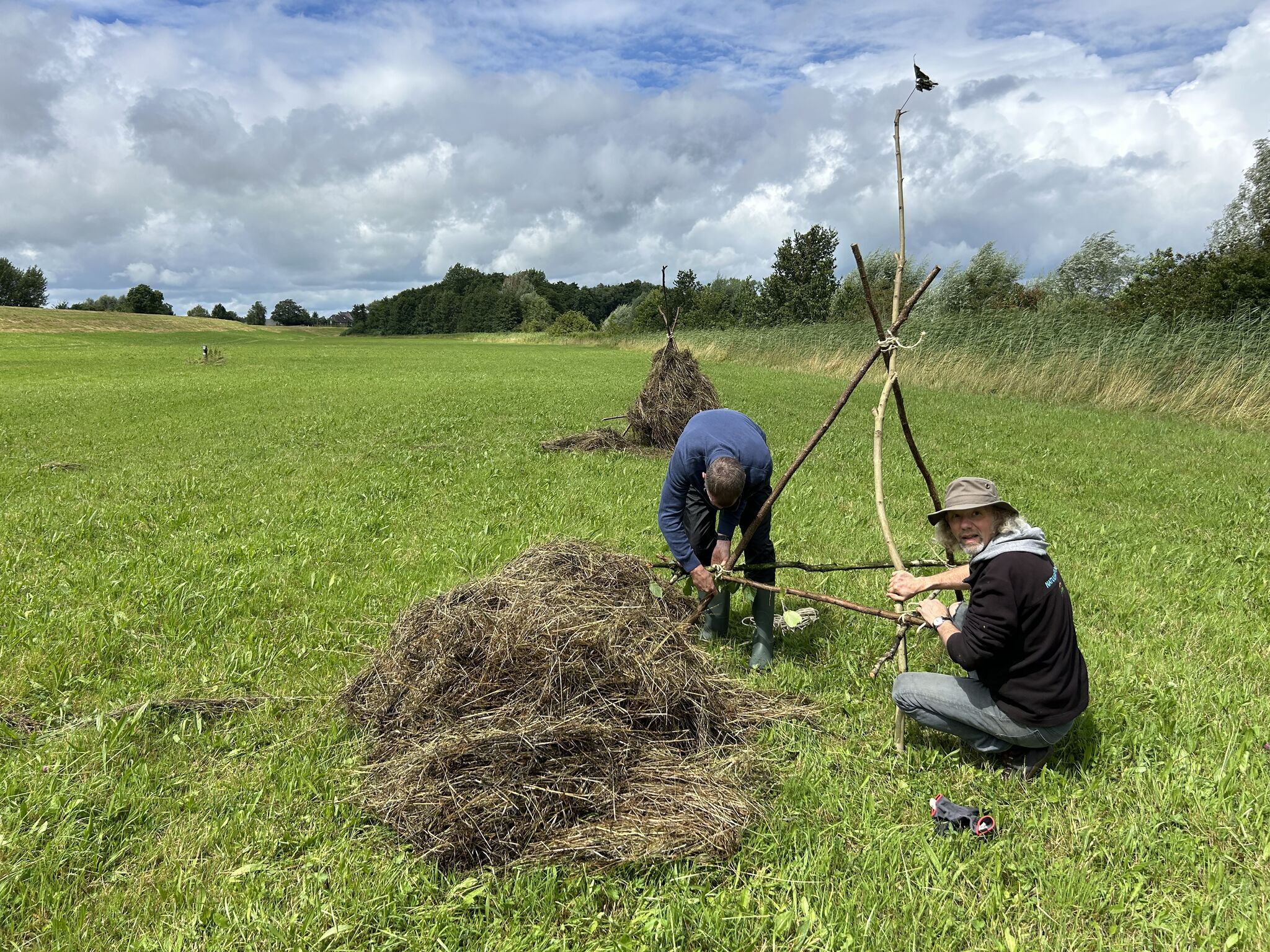
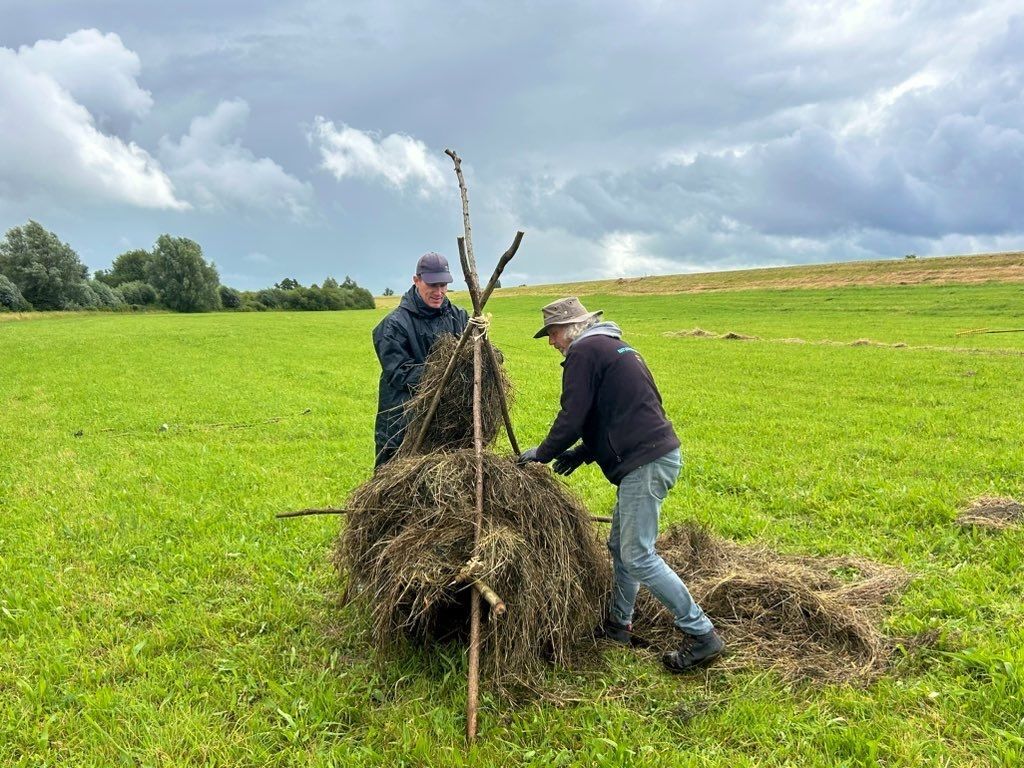
In Zwolle, the beautifully flowering hay meadows at the bottom of the Schellerdijk River are mowed in mid-June. Some of the clippings are left lying on the ground, which, year after year, the local A Rocha Netherlands group use to build ‘hooiruiters’ or hay drying racks.
This clever structure is made of three long sticks placed together in a pyramid shape with grass piled up between them. In the past, this was a common practice to dry the grass so that it could be stored as hay until winter. These days, conservationists do this in nature reserves to create a place for mice to gather in the grass and hay. These mice provide welcome food for kestrels in the area, as well as Little Owls Athene noctua and Barn Owls Tyto alba.