48379051052_6dc94f955c_o

Hoping Against Hope – France

In today’s fast-paced and uncertain world, many of us struggle to find hope that endures. How can Christian faith provide resilience, meaning, and reassurance in times of anxiety and global uncertainty? Hoping Against Hope: Theology for an Anxious Age offers a space to explore these questions in a serene and reflective environment.

About the Retreat

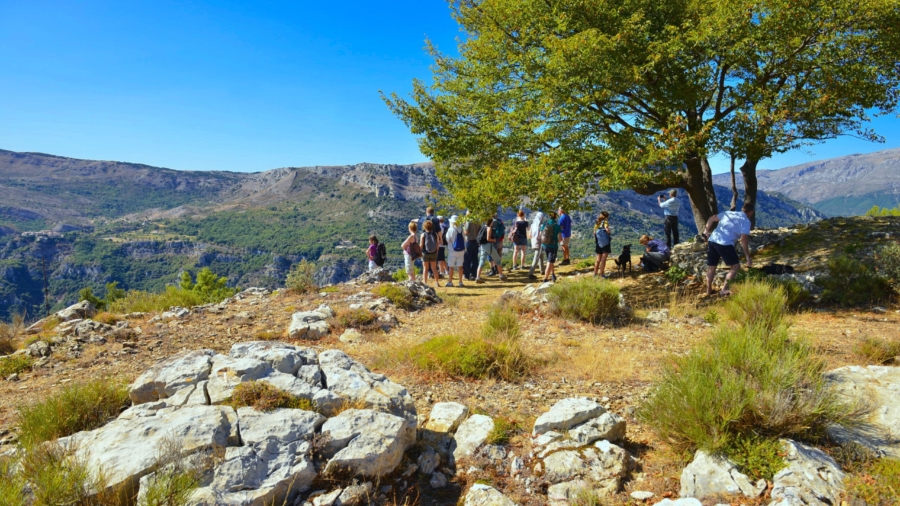
This unique retreat will take place at Domaine des Courmettes, near Nice in Southern France—a location renowned for its stunning landscapes and peaceful natural surroundings. The event is designed to help participants engage deeply with the theological and practical dimensions of hope, particularly when life feels overwhelming or uncertain.

Through a combination of talks, reflection, and community engagement, participants will explore how Christian theology can provide tools for resilience, hope, and spiritual growth. The retreat also emphasizes the importance of reflection and dialogue in developing a personal and communal sense of hope that can sustain participants beyond the event itself.

Who Should Attend

This retreat is primarily aimed at English-speaking participants and welcomes attendees from across Europe and beyond. Whether you are seeking personal renewal, professional development in ministry, or simply a space to reflect on the challenges of modern life through a theological lens, this retreat offers something meaningful for everyone.

Spaces are limited, so interested participants are encouraged to learn more and register soon. For full details on the retreat, schedule, and registration, visit the official page: Hoping against hope: Theology for an Anxious age
 

48749540006_1ec2d831dd_o

Volunteer at Les Courmettes – France

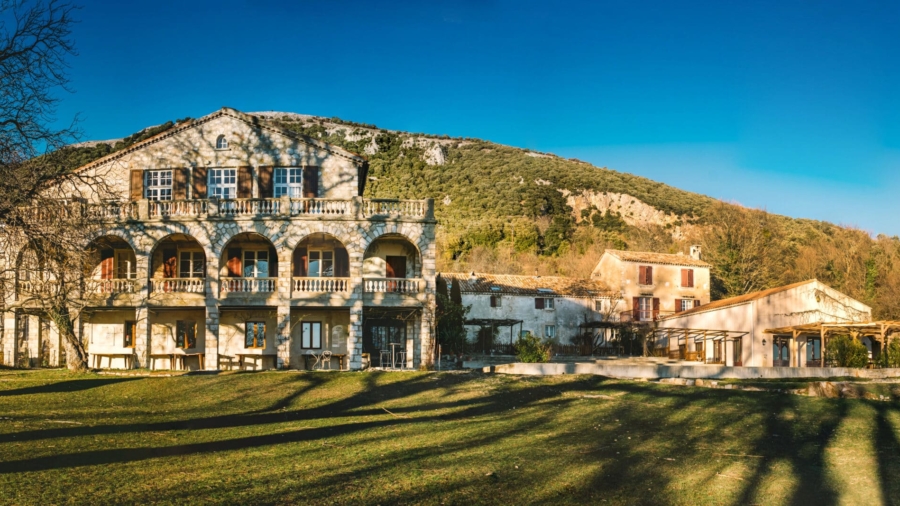
Le Domaine des Courmettes is A Rocha France’s second site, an hour’s drive up into the hills northwest of Nice. It offers 600 ha of preserved wildlife in a variety of natural habitats and a breathtaking view of the French Riviera. The Domain is open to the public, with several hiking trails.

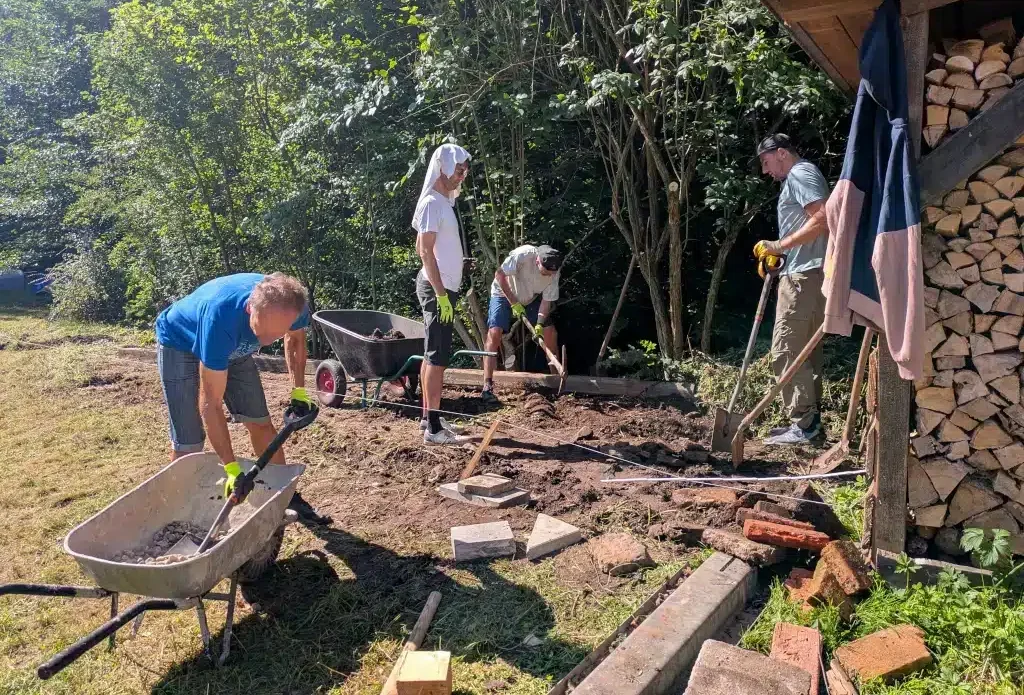
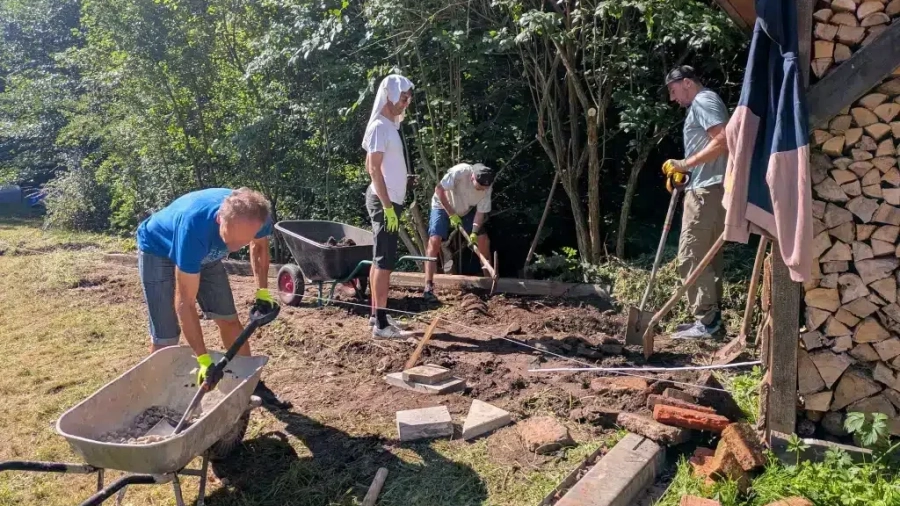
This is a pioneering experience, with a small on-site team and volunteering needs in many areas: building, painting, roofing, insulating, administrating, welcoming visitors and hikers, nature surveying, path-making, marketing, hosting commercial events, and so on. Les Courmettes holds huge potential for touching hearts and lives and helping visitors connect with the losses generated by climate change and the joys of living healthily. Come and be a part of it as an individual or even better, as a group!

A Rocha also hopes to develop various environmental education tools in the near future, as well as eco-tourism in the years to come.

Volunteers at Les Courmettes are welcomed for stays of at least two weeks. Living conditions are a little rougher than at Les Tourades, especially during the winter months, and city dwellers might feel somewhat isolated over longer stays. Count on about 130 euros for a week’s full board (subject to change).

Those who participate in outdoors work need to be physically fit and able to hike around the Domain. Ability in French, while not essential, is an asset. Because the community at Les Courmettes is an international one, we do not offer a French-language immersion experience

Long-term volunteer positions at Les Courmettes include:

  • logistics assistant for events management and welcoming visitors (with organisational and people skills)
  • building maintenance coordinator (with a variety of construction and home improvement skills)
  • land management assistant (with skills in environmental management)
  • renewable energy project manager (for implementation on site and to offer feasibility studies for churches and parachurch structures)
  • environmental education assistant (with skills in education, small group leadership, graphic design and drawing)
  • gardening and house help (with agriculture and organisational skills).

These team members may live on or off-site; they would join the team for six to 12 months or more. They must be financially self-supporting, and A Rocha France is available to help volunteers raise support from their local communities.

To apply, please fill out our volunteer application form.

DT-prace

International Volunteer Week – Czech

From 15 to 22 August 2026, join A Rocha Czech at their annual international volunteering week at the Keith Morris Eco-centre.

What you will be doing:

  • Caring for nature in the beautiful surroundings of NE Czech Republic.
  • Practising language skills.
  • Enjoying trips, workshops and evenings filled with music and inspiring conversations.  

Click here to book your slot

Canada-Brooksdale

Tatalu Conservation Residency – Canada

Looking for a meaningful, hands-on opportunity in environmental stewardship? The Tatalu Conservation Residency at the BC Environmental Centre offers a unique, apprenticeship-style experience that goes far beyond traditional training.

This residential program is designed for individuals who want to grow both practically and personally—combining skill development, community living, and a shared commitment to caring for the environment.

🌱 About the Program

The Tatalu Residency provides practical training and instruction in one of four focus areas:

  • Conservation Science
  • Environmental Education
  • Sustainable Agriculture
  • Food & Hospitality

But this is more than a professional opportunity—it’s an immersive lifestyle experience. Residents join a vibrant community grounded in environmental stewardship and a faith-based vision for the flourishing of people and the natural world.

Applications for the next term are currently open and close on May 12, 2026. Only 15 slots are available. Register now.


Blog_kingfisher_mc-300x200

Glimpsing The Sacred In Wonder

Picture of David Gregory

David Gregory

Glimpsing The Sacred In Wonder

Playfulness and Communion.

An invitation to deeper attentiveness: exploring how science, faith, and the natural world reveal wonder, humility, and responsibility – calling us to live with care, gratitude, and hope within Earth’s fragile, interconnected community of life.

Cycling along a stream that runs through the parkland and forest of Milton Keynes, the UK city where I live, I came to an abrupt halt. Something wonderous had caught my attention. A Kingfisher sitting on the branch of a tree. Still, attentive, hanging over the waters. Stillness and attentiveness that connected us. A sacred moment, all too quickly over as perhaps are all sacred moments. A flash of blue glinting in the sunshine, it swooped fast and low over the stream, quickly lost to my view among the trees.

The Kingfisher is well named, capturing its behaviour and vibrant splendour. In the Bible God invites Adam to be attentive to the natural world. Bringing the animals before him ‘to see what he would name them’ (Genesis 1:19). Attentiveness connects humans with the Creator and a wonderous world that God declares good. 

Humans have deepened their attentiveness to the world around them through God’s gift of science. New windows have been opened to the splendour of the cosmos, near and far, large and small; of the beauty and complexity of life among which we live – beyond Adam’s knowing, even beyond our naming. Attentiveness evokes a louder, deeper ‘wow’ that responds to the wonderous garden that the Earth is: a good place, with a just right atmosphere and just the right temperature, just the right magnetic field and moon; interweaving factors allowing life in its splendour to flourish through the long journey of the Earth. The imaginative creativity of human science meets that of the divine artist, giving glimpses of the signs of God’s grace through the wonder of it all. Leading to humility?  And gratitude? 

Attentiveness connects humans with the Creator and a wonderous world that God declares good.

Today through God’s gift of science, we see the wonderous diversity of life in wider, deeper ways than our ancestors did, inviting us to encounter divine purpose and shaping of the world as we understand the role evolution has played in bringing the world to be. In the Bible, a troubled man, Job, is taken by the God on a tour of the wonders of the natural world. Just as we are awed by the stunning images of nature documentaries, he too was captivated. Yet is our response the same as his?  For at the end, Job declares, ‘My ears had heard of you but now my eyes have seen you’ (Job 42:5). Our view is wider, deeper, higher, broader. Yet can the same be said of our attentiveness. Our thankfulness? 

The world in which we live, and the life we share it with is shaped by God through the life of the Son of God, Jesus. ‘For in him all things were created … created through him and for him … in him all things hold together’ (Colossians 1:16,17). The beauty and glory of nature hints at this divine shaping. But what of the brokenness and loss seen in the long tragedy of life, remembered as fossils that reveal equally wonderous ages now long past? We still find and experience pain alongside beauty in our world. For while the Kingfisher is well named for its splendour, what would the fish in the stream name it?   

Beyond beauty, perhaps God is glimpsed within the loss and hope of it all. In the catastrophe of mass extinctions, life falls yet rises again in new and imaginative forms. This is a story of life held long in hope by the pattern of Easter. Death and resurrection, revealing the love of God for the world within its chaotic dance between order and disorder; his deep sharing in its suffering, his continual creative Spirit at work bringing it towards life and hope.  

Into the dance of the world, stepped the one who gives it life. Jesus, the divine, became ‘flesh and made his dwelling among us’ (John 1:14). Affirming the value of all forms of life, each part uniquely expresses God’s creative imagination, fitting within his purpose in ways that we do and do not perceive, affirming One from among the vast menagerie of life – One whose creativity, expressed in many ways including science, reflects that of the Creator. Jesus sees our world and the cosmos more fully and deeply than our satellites and scientific instruments allow. Yet he comes and sees the wonder of life through our eyes so that we might see it through his.  

"Beyond beauty, perhaps God is glimpsed within the loss and hope of it all."

Jesus lived as one of us, a sign of the connection between the divine and all that is living, the divine being attentive to that which is created in a new way and inviting us to attentiveness and to our part in the purposes of God. Too often we attend to our needs and security before those of our neighbours’, ahead of the community of life with whom we share the Earth.  

Too often we use our science and technical abilities to take for ourselves rather than delight over the divine wonder they reveal. In the Bible, humans were expelled from the Forest of Eden by their own folly. Now, by our continued folly, we expel others too. Long ago we named ‘the birds of the air and all the beasts of the field’ (Gen 2:20). But how might the animals name us in the world we are creating? 

The Bible’s story ends with a ‘river of the water of life, as clear as crystal, flowing … down the middle of the street of the city’ (Rev 22:1,2). As future generations pause by the stream winding through my city, will they have a chance to be attentive to the Kingfisher, a sign of the wonderful creativity of God in which our, and all life on Earth, is woven? Held in hope by God through falling and rising, it faces death yet is pulled towards fulness of life through divine presence: ‘When you send your Spirit they are created, and you renew the face of the Earth’ (Psalm 104:30).  

That same Spirit is at work in our lives, inviting us to share with God in bringing hope to people and the community of life with whom we share the Earth. Turning from lives that increase the disorder of the world, let’s live in ways that collaborate with the Creator to bring peace to the Earth. Now. And for the future. 

Picture of David Gregory

David Gregory

David is a Baptist minister with a background in meteorology and climate science. He serves as Baptist Missioner for Science and Environment and convenes the Baptist Union Environment Network. His recent book, Divine Windows – Seeing God through the lens of science, was published by the Bible Reading Fellowship in July 2025 (https://www.brfresources.org.uk/) and explores how God might be glimpsed in the imagery of science through themes of wonder, play and communion. He is also the writer and presenter of the four-part film series ‘God Saw That It Was Good’ (www.gstiwg.co.uk), soon to be shown on the TBN UK TV channel. The blog was adapted from the last episode, ‘Life’.

Other Articles

Unlikely Partners

A Personal View Of The Collaboration Between Finance And Nature.   This reflection explores whether finance and nature conservation are truly in conflict, or whether

Read More »

Anchored To The Rock

An A Rocha Story Of Redemption. A journey from loss, loneliness, and doubt to faith, belonging, and hope through discovering community and the unexpected anchor

Read More »

Glimpsing The Sacred In Wonder

Playfulness and Communion. An invitation to deeper attentiveness: exploring how science, faith, and the natural world reveal wonder, humility, and responsibility – calling us to

Read More »
ARO Welcome_Nigeria_mc

Welcome A Rocha Nigeria

Join us in welcoming A Rocha Nigeria to the A Rocha Worldwide Family – a new chapter emerging from the faithful work of Eden Creation Care Initiative.

One of its flagship projects has been caring for the Rennajj Fish Farm for several years. In the heart of Jos, in Plateau State, abandoned ponds and a threatened wetland habitat is now a landscape alive with restoration.

Each morning, as mist rises gently from the water, the protection team walks the boundaries, boots pressing into damp earth, watching for signs of disturbance and ensuring wildlife is undisturbed. As the dry season approaches, careful hands carve firebreaks across the land, tracing protective lines against wildfire. When the rains return, pond outlets are sealed, allowing water to gather and remain, sustaining life long after the clouds have passed.

Nearby, a nursery hums with quiet growth. Thousands of seedlings of cashew and other native species stretch toward the sun, waiting to take root in renewed soil. Over time, hopeful saplings have matured. African baobab and African locust bean trees now stand tall, their fruit a living testimony of resilience.

Invasive eucalyptus trees are gradually replaced with native, life-giving species. Along the edges, Jatropha curcas – a drought resistant, perennial plant – forms a living fence, guarding the sanctuary.

As Eden transitions into A Rocha Nigeria, this flourishing wetland becomes part of a global family – locally rooted, globally connected and thriving with hope.

ARO Welcome_DR Congo_mc

Welcome A Rocha DR Congo

The Democratic Republic of Congo is known both for its extraordinary biodiversity and for the long shadow cast by conflict. Decades after one of Africa’s most devastating civil wars, over 7 million people remain displaced, and localized struggles over land and resources continue to fracture daily life. The minerals that power much of the modern world are pulled from Congolese soil, and the cost is borne by communities and ecosystems alike.

Into this fragile, vibrant place steps a new member of the A Rocha family: A Rocha DR Congo was founded as TRAFFED in 2003 in Bukavu, South Kivu. For more than 20 years, TRAFFED has quietly and faithfully woven together creation care, community development and Christian discipleship in some of the world’s most challenging contexts.

Their work stretches across eastern Congo’s globally significant landscapes, from community forests on Mount Kabobo to conservation efforts protecting Grauer’s Gorilla Gorilla beringei graueri in the Itombwe region. The team partners with pastors to address deforestation around Kahuzi-Biega National Park, supports women’s eco-entrepreneurship across South Kivu, and advocates for sustainable fisheries near Lake Albert. At the heart of it all is a deep commitment to faith: biblical teaching integrated into conservation, churches equipped as agents of hope, and collaboration across evangelical and ecumenical lines.

One of A Rocha DR Congo’s most inspiring achievements is the Higher Institute of Ecology for Conservation of Nature, home to a pioneering department of environmental theology, forming leaders who see creation care as central to God’s purposes.

In a place marked by long conflict and loss, A Rocha DR Congo reminds us that faithful action is still possible. As Steve Tanner, board chair of A Rocha International writes, ‘This new member of the family represents a huge sign of hope. Even in countries in conflict, where the population goes through extreme difficulties, dangers and uncertainties, there are Christians who chose to stand up and act for creation. A Rocha DR Congo joining the family is a powerful encouragement!’

Bitterns_mc

Booming Bitterns return

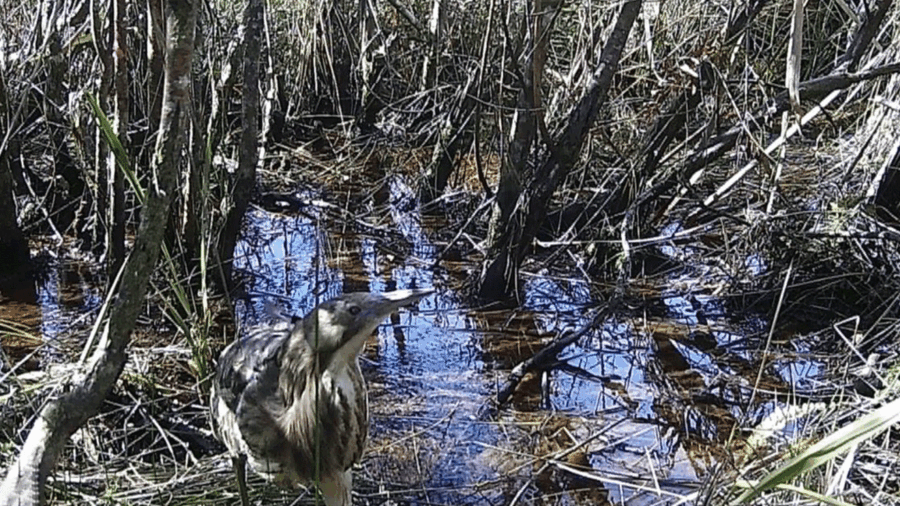
Bitterns prefer to be heard, not seen. Camouflaged in streaked brown plumage, this heron haunts the reedbeds of freshwater or brackish marshes. When it feels threatened, the Bittern freezes and extends its neck towards the sky, a position it can maintain for several hours. It will even sway, mimicking the movement of the wind in the reeds, waiting for the danger to pass. This long neck is also a formidable weapon, tucked into its shoulders as the Bittern moves imperceptibly towards a fish, amphibian or aquatic insect. Once it is close enough, it extends its neck to catch or pierce its prey with its spear-like beak. Due to its stealthy nature, it is difficult to detect a Bittern’s presence by sight, but its deep, rhythmic call can be heard from hundreds of metres away.

For the first time in over 30 years, the booming of the Eurasian Bittern Botaurus stellaris has been heard once again in the marshes of the Baux Valley, France. By surveying an area from dusk until dawn during breeding season, the A Rocha France team identified a singing male in the Ilon Regional Nature Reserve on several occasions. Since this species is polygamous, it is likely that there are also several females on the site. The Bittern’s return to the valley is encouraging news, suggesting that the water levels and environments are favorable to its nesting.

In Aotearoa / New Zealand, the Karioi Project is a collaborative community restoration initiative supported by A Rocha Aotearoa / New Zealand, contributing to the Matuku-hūrepo Muster: a national initiative to monitor and protect the Australasian Bittern / Matuku-hūrepo Botaurus poiciloptilus. Local wetland surveys and community hui (gatherings) are helping build a clearer picture of where these elusive birds are breeding, the habitats on which they rely and how better to support their survival. This work also raises awareness of the value of healthy wetlands for people and wider biodiversity around Whāingaroa and beyond. In 2024 and 2025, 14 sites were monitored by listening, with five Bitterns recorded booming across four sites.

Listen to the striking call of these delightful creatures below. Through strategic conservation work, we hope to have wetlands resound with Bittern booming once again!

Eurasian Bittern Botaurus stellaris recorded by A Rocha France in the Valleé de Baux.