Stuart Blanch
Trees, the tree, and the Tree
The beauty and theology of trees.
This reflection celebrates the beauty, ecological importance and spiritual meaning of trees. From the vast scale of global forests that sustain life on Earth to the urgent threats they face from deforestation and climate change, it explores both awe and concern for their future. Drawing on Scripture, it traces how trees run through the biblical story – from creation and prophecy to the cross and the Tree of Life – offering a vision of hope, renewal and God’s love for the whole of creation.
I love trees.
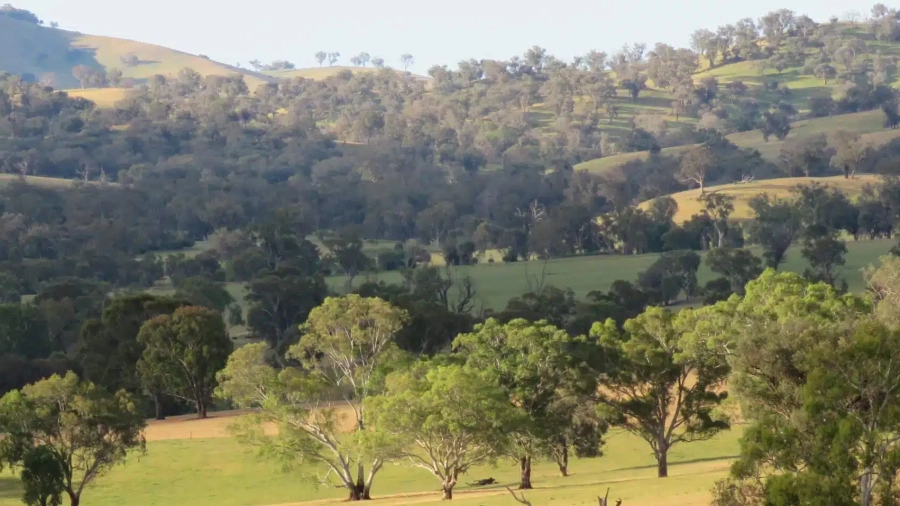
Standing under a tree, I am in awe, still, observing: trunk towering, branches arching, leaves filtering, birds calling, cicadas buzzing.
Reaching upwards towards the Sun, a tree pumps water through its roots way up to leaves in the canopy, making oxygen, producing rain, absorbing carbon dioxide, cooling the air.
Trees are homes, food, shelter for animals, fungi, bacteria, plants. They make wood wonderful to touch, give us fruit delightful to eat, shade us.
Fun fact: there are three trillion trees on Earth.
That’s about 375 trees for each person.
Forests of trees cover four billion hectares, or 31% of land. These store 861 billion tonnes of carbon.
There are 60,000 known species of trees. Forests are home to 80% of all species of animals, plants and insects.
Two billion people rely directly on forests for livelihoods, shelter, fuel, food.
I fear for trees.
Sad fact: there used to be six trillion trees.
One third of forests are gone.
For some countries most of their tree loss happened hundreds of years ago, such as France, China, Russia, the UK, Iceland, the United States.
Today, ten million hectares of forest are lost each year, killing 10 to 15 billion trees, from Brazil to India, Indonesia to the DRC.
Thirty eight percent of tree species are at risk of extinction.
Thankfully, governments committed at Climate COP28 in 2023, in Dubai, to “enhanced efforts towards halting and reversing deforestation and forest degradation by 2030”.
But we are not on track to achieve this.
Global heating and fires are killing trees; the Amazon rainforest is starting to become dry savanna.
Forest fires burn 6 million more hectares of forest than they did 20 years ago, with big fires in recent years burning forests from California to Algeria to Australia to Portugal.
How will trees survive if Earth warms by 2, 2.5 or 3o Celsius?

“That’s about 375 trees for each person.”
I hope for trees.
Encouraging fact: trees grow.
Reforestation is gathering pace, as forests of trees are restored. Governments, corporations, Indigenous landholders and farmers are regenerating forests.
A Rocha is working with local communities and governments and churches to save and grow trees. From Ghana to Peru, Uganda to Australia, Kenya to Canada, we are protecting forests and planting trees.
God loves trees.
The arc of God’s dealings with people is marked by trees.
In some passages in the Bible, references to trees in everyday events provide geographical and historical context. In others, trees have rich theological meaning, in prophecy, poetry, songs.
God created trees, giving them to people to use (Genesis 1:29) and care for (2: 15). People turned from God by eating of the tree of the knowledge of good and evil, ignoring His command (2: 17). Under an oak tree, the Lord appeared to child-less Abram, saying his offspring would inherit the land (12: 6).
Wood from the long-lived desert tree acacia built the Ark of the Covenant (Exodus 37: 1) that held then Ten Commandments God gave Moses, and the Altar for sacrifices (38: 1).
The person who delights in the law of the Lord is compared to a tree planted by streams of water, which yields its fruit in season and whose leaf does not wither (Psalm 1: 2-3).
Wise King Solomon spoke about the cedars of Lebanon (1 Kings 4: 33), and built God’s Temple from massive strong cedar trunks (1 Kings 5: 6).
Isaiah preceded his prophecy regarding the suffering Servant of the Lord, which was fulfilled in Jesus of Nazareth, by referring to placing various tree species in the barren wastelands (Isaiah 41: 19).
Micah prophesied the restoration of Zion where every man will sit under his own sycamore fig tree (Micah 4: 4), which signify abundance and flourishing.
“Trees give us life; air, rain, food, timber, wildlife, beauty, health. Every day.”
I need ‘the tree’
A week before Jesus died, the rich and despised tax collector Zacchaeus, climbed a sycamore fig tree to look over the crowd to see Jesus (Luke 19: 4), and found salvation.
A few days later, Jesus knelt in prayer in an olive grove outside Jerusalem (John 18: 1).
The next day, he was crucified on a wooden cross (Matthew 27: 32) willingly bearing “our sins in his body on the tree” (1 Peter 2: 24).
The Apostle Paul wrote that Jesus is reconciling to himself all things on earth and in heaven – trees included – through his blood shed on the cross (Colossians 1: 20).
I long to see the Tree.
And on the last page of the Bible, the apostle John writes that the Tree of Life will be watered by the river of the water of life in the New Jerusalem (Revelation 22: 2).
Trees give us life; air, rain, food, timber, wildlife, beauty, health. Every day.
And trees bookend the Bible, and appear throughout God’s dealing with people. In the Gardens of Eden and Gethsemane, in psalms of praise and prophecies of redemption, on the Cross, and in the renewed Earth, there are trees.
I love trees.
Stuart Blanch
Australian ecologist and conservation leader Stuart has worked across river, wetland and forest restoration in Australia and France. He now works with WWF on forest conservation policy and is a founding director of A Rocha Australia.
Other Articles
Unlikely Partners
A Personal View Of The Collaboration Between Finance And Nature. This reflection explores whether finance and nature conservation are truly in conflict, or whether
Anchored To The Rock
An A Rocha Story Of Redemption. A journey from loss, loneliness, and doubt to faith, belonging, and hope through discovering community and the unexpected anchor
Glimpsing The Sacred In Wonder
Playfulness and Communion. An invitation to deeper attentiveness: exploring how science, faith, and the natural world reveal wonder, humility, and responsibility – calling us to


The conference sparked progress – including further support for the Pelagos Sanctuary, near me in the Mediterranean. Support for a global plastics treaty grew to over 90 countries, and 37 countries now support a moratorium on seabed mining (up from none in 2022). A treaty on the governance of the high seas – 50% of the planet and currently without governance – jumped from 30 to 51 ratifications. That’s nine short of the number needed, but there is hope ratification will be achieved this autumn, to come into force in January 2026.