Meal-times_mc

A Rocha mealtimes

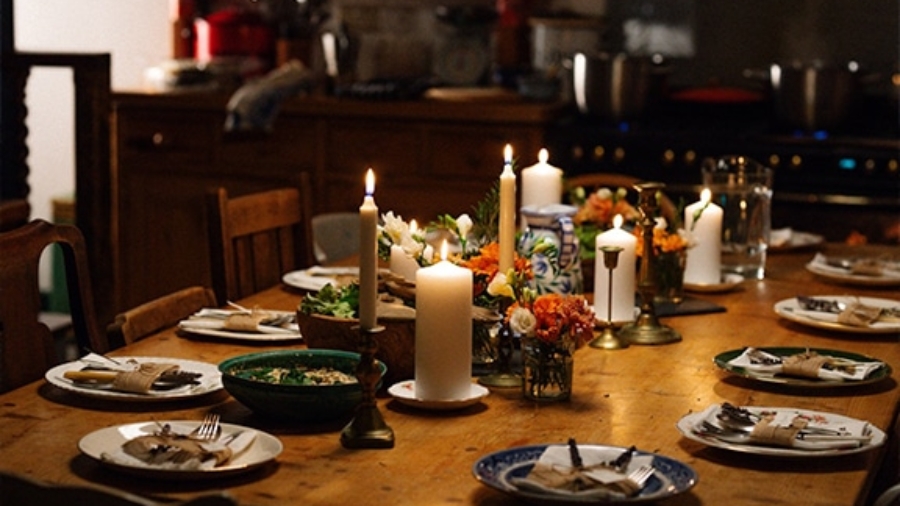
‘At A Rocha centres we don’t have a chapel, we have a table,’ wrote Leah Kostamo in Planted, her book telling the story of A Rocha Canada. She goes on, ‘The meal is a place of community, fellowship and invitation… the table is a safe place, a neutral ground for dialogue, knowing and communion.’

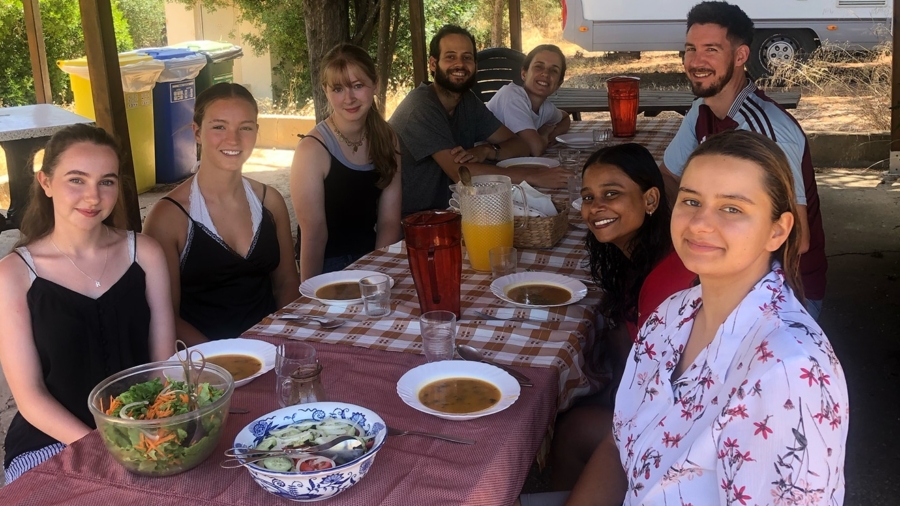
One of A Rocha’s five core commitments is community and there is no better place to form community than around a meal table. At Cruzinha, A Rocha Portugal’s centre, there is a new outside eating area with shade providing protection from the ever-increasing heat. This is where the team, interns, volunteers and visitors gather most lunch times, which in Portuguese style begin with soup and continue for two more courses!

At Krupárna, A Rocha Czech Republic’s centre, there are magical evenings around a blazing campfire with local sausages, stories and songs. The dining room at A Rocha Kenya’s centre, Mwamba, is usually buzzing with conversation as people share updates from the early morning bird ringing or snorkel survey; the latest on the ever-growing forest reserve, Dakatcha; or how a school’s environmental education programme is going. At the A Rocha Canada BC Centre, much of the delicious food on the table is grown on site! Mealtimes at Les Courmettes in France, Casa Adobe in Costa Rica and Kasserguppe in India are also significant and valued by permanent community members and guests alike.
Find out more about our centres here.

Marked-Hermit_mc

A toast to the Hermit Butterfly

Conservation efforts take many forms. Visitors ordering a specific beverage at a seaside hotel or a summer festival in the South of France might not realise their choice was helping to save a butterfly.

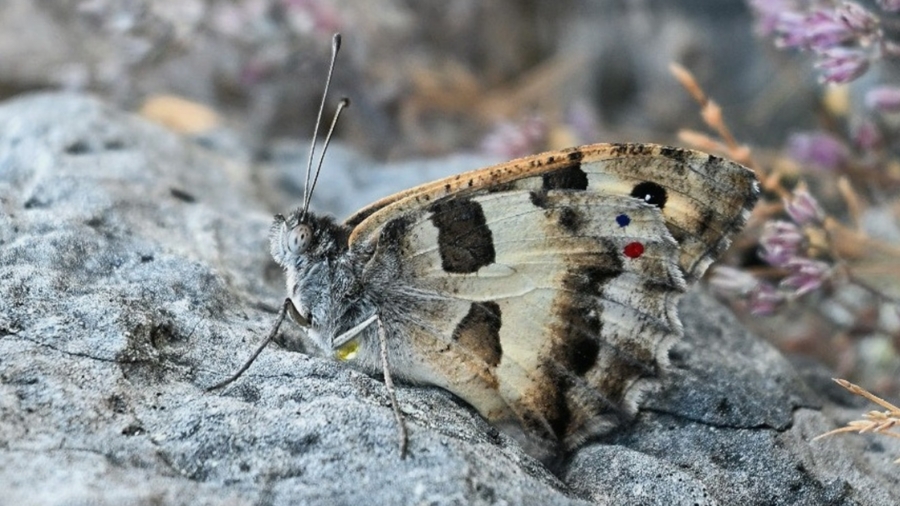
Due to its decline in recent years, the Hermit Butterfly Chazara briseis is a target species of the National Action Plan for Butterflies in France. In 2021, a regional version of this plan was approved in the Provence-Alpes-Côte d’Azur region, which led to a study by A Rocha France on the Hermit at the Les Courmettes centre.

Since 2024, the study has been supported by Act for Heritage, a new initiative launched by Events for Heritage in the South of France. The programme donates part of the proceeds from three specially branded beverages, sold in partner hotels, restaurants and events, to specific ecological projects. One drink – called the Flying Hop – supports biodiversity projects, including wolf conservation and protection of the Hermit butterfly. Each year, it raises €1,000–2,000 until the €10,000 target is met.

The study follows the Hermit through two key stages: caterpillars in spring and adults in summer. Since the caterpillars are nocturnal, from May to June. surveys run between 11 p.m. and 1 a.m. Small teams move through the grass on their knees with headlamps, scanning every tuft for the tiny brown-grey larvae. It’s not an easy task – sightings are rare – but each discovery feels like a real victory. Confirming the caterpillar presence helps us identify the plants on which they rely, crucial for protecting a species whose survival depends on healthy host plants. If you’re up for an unusual nighttime adventure, extra eyes are always welcome to join the search!

In July and August, the focus shifts to adults. Armed with nets, we catch butterflies, mark their wings with tiny coloured dots, then release them. This simple code assigns each Hermit its own unique identity, enabling us to track their movement, lifespan and population changes year by year. Alongside these surveys, we also explore new corners of the estate to find other Hermit hotspots. Every marked butterfly and new sighting brings us closer to understanding and protecting this rare species.

Thanks to the A Rocha’s Global Conservation Fund, A Rocha France has begun preliminary work on a genetic study of the species as well as surveys outside of Les Courmettes.

BC-barn_mc

A Walk to the Barn

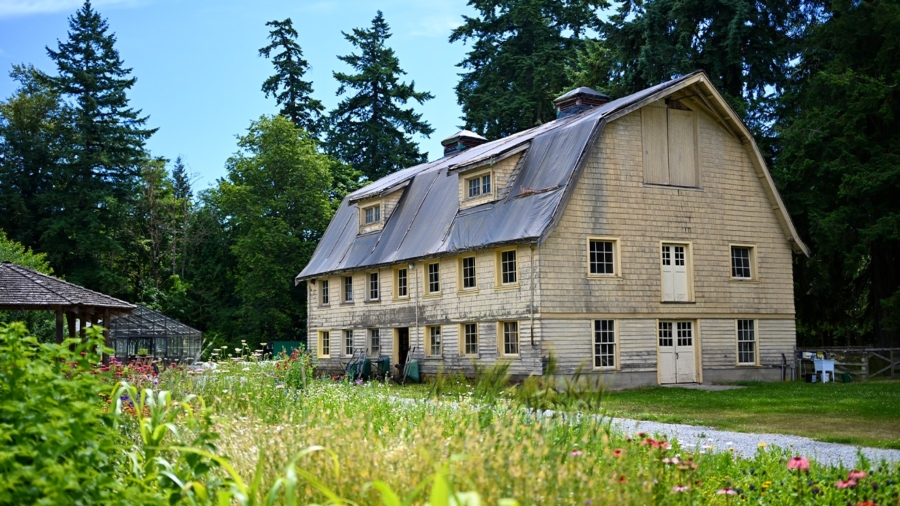
Imagine an early autumn day at the A Rocha Canada BC Centre. You’ve spent the morning contemplating salmon, toads and damselflies at the Tatalu river. White-crowned Sparrows Zonotrichia leucophrys greet the day, while Bigleaf Maple Acer macrophyllum leaves fall to the moist forest floor. You make your way up a winding path and up to the A Rocha Canada farm. First, you encounter an epic compost pile steaming in the cool air. You then pass by rows upon rows of various leafy greens, on to the kid’s garden, and then finally to the grand yellow barn. It’s well-loved yet weary from nearly a hundred years of use.

Built in the 1930s, this heritage barn has become emblematic of the BC Environmental Centre and its history. It stood when the Brooksdale estate was used as a care facility for people suffering from mental illness and mental disabilities. Later, when the estate changed hands, the barn was used by drama troupes and musical ensembles for performances. Since A Rocha Canada moved to the property in 2010, the barn has been used for learning, celebration and farming activities, but it’s ready for a major upgrade to support the next hundred years of conservation.

Now imagine walking up to that barn transformed into a four-season Conservation Learning Centre and Hospitality Hub. A Rocha Canada is planning a major renovation to equip the barn with a welcoming farm market cafe, a hands-on conservation lab and a multi-purpose event space where the old hayloft used to be. The revived and energy-efficient barn will host school groups, retreats, community workshops and thousands of visitors every year.

In September, friends of A Rocha Canada gathered for a ‘Shindig in the Barn’ to bid farewell to the summer season and raise funds for this ambitious renovation. 108 attendees enjoyed delicious farm-fresh foods, live music and dancing. Generous donors contributed to a live and silent auction, which included heirloom quilts, a tranquil bed and breakfast holiday and more. In total, $60,000 was raised towards the barn renovation, a significant step forward in A Rocha Canada’s 2.2 million dollar goal! In a world where people often feel alienated, we need real places that connect us to history, to nature and to community.

At-the-table_blog

Around The Table

Picture of Jo Swinney

Jo Swinney

Around The Table

Connecting Hospitality, Food, Faith And Creation Care.

Beginning with a century-old table at the heart of A Rocha’s community, this reflection explores the deep connections between hospitality, food, faith and creation care. Through personal stories and practical questions about what we eat, it challenges us to “join the dots” between our daily choices, the wellbeing of people and planet, and our relationship with God’s creation.

In 1986 my mother, Miranda Harris, was tasked with furnishing the first A Rocha field study centre, Cruzinha. She spent a huge proportion on one item, a beautiful, dark chestnut refectory table, at the time already 100 years old. The table is still there at the heart of the house, drawing people into community over lovingly prepared and gratefully eaten meals. And community remains at the heart of A Rocha.  

In October 2019 Mum died in a car accident. She had wanted to write a book about hospitality, community and food for years. Although she had begun work on it, she didn’t live to see it finished. It was my privilege to become her co-author. The following is an extract from our book, ‘A Place at the Table’. 

[Note: Miranda’s writing is in italics] 

An important part of preparing to offer hospitality is procuring the ingredients for the food you plan to serve. This might seem simple on the face of it – make a list, go to a shop or log on to your supermarket of choice and get the items you need. But there are many constraints and choices to be made and, far from being simple, shopping for food is about as morally and intellectually complex as it gets.  

"[Miranda] led us over the seldom-crossed chasm between farm and fork, and with knowledge came responsibility."

Money was tight for our family while I was growing up and more often than not there were many more than the six of us sitting down to eat. Until a certain point, however, we ate a varied and abundant range of foods. Then came the day someone made the mistake of giving mum a book: The Food We Eat[i] – or as we came to call it, ‘The Food We Used to Eat’, by investigative food journalist Joanna Blythman. In it she made a compelling case for considering not just price but the well-being of producers, the skill and care taken over how food is grown, reared or caught and the impact of what we eat on the soil, air and water. She led us over the seldom-crossed chasm between farm and fork, and with knowledge came responsibility. The holder of the household budget now knew the desperate plight of the attractively priced battery chickens. We would henceforth only eat the happiest of birds and only on the rare occasions we could afford them. Mum became equally enlightened about beef, pork and a seemingly ever-growing list of other consumables from chocolate to kiwis, eggs to pasta. I hold Joanna Blythman personally responsible for the abomination that is ‘Shepherd’s Beany Pie’ which made its unwelcome appearance at far too many of my childhood dinner times. For a while we ‘suffered with vegetarianism’ – a phrase I discovered recently while googling whether my newly veggie daughter could eat Turkish delight (yes, it is indeed suitable for those suffering with vegetarianism, the website earnestly informed me). Meat was back on the menu in less-straightened times, but always formerly happy meat.  

We talk a lot in A Rocha about ‘joining the dots’ – the ongoing exercise of connecting facets of life that live artificially segregated: prayer from work from worship; money from soil from flavour; humans from nature from God. Perhaps we need reminding that the business of food shopping is profoundly spiritual and imbued with relational consequence. 

Community includes not only the people around us, but also the creation itself. We all live in creation and handle its raw material every day. We didn’t even have our own day in the story of creation. We arrived on day six along with ‘livestock, creatures that move along the ground and wild animals’ (Genesis 1:24). We are part of creation, not outside it or over it or above it. 

"Community includes not only the people around us, but also the creation itself."

We can’t opt in or out of creation care or take it up as a hobby, like gardening or golf, if we aren’t too busy. We are doing it already – badly or well, living our relationship with God’s world like his children who love him, or like people who don’t know that it was made with infinite care, love and delight.  

Care begins with noticing. Anything God makes deserves our attention. Careful observation leads to wonder, worship and giving thanks. Our task is to find a place within creation and to worship the one by whom, through whom and for whom it was all made (Colossians 1:15-17).  

When my niece Jessica was three her parents took her to see cows being milked. She watched, entranced, as the huge, placid beasts stood patiently in a row while the milking apparatus throbbed rhythmically up and down on their udders, carrying white fluid through various tubes and eventually out of sight. Finally and thoughtfully she said, ‘Are they putting it in or taking it out?’ Sometimes we become disastrously separated from creation. We all recognise the white stuff in our lattes or on our breakfast cereal but fail to connect it with anything other than a plastic bottle or carton.  

Here is a suggestion for consideration: that to the extent we are able, we seek out the very best ingredients to prepare and serve up – the ones with the fullest flavour, the most vibrant colours, brought to market by people who care for the earth; that we savour the experience of peeling, chopping, mincing, slicing, mixing, roasting, frying, steaming. That we do not begrudge the extra pennies, the extra minutes, the burden of care, but offer them up from generous, full hearts, a sacrifice of praise. 

Picture of Jo Swinney

Jo Swinney

Jo Swinney joined A Rocha International as Head of Communications in 2020. Alongside this, she is a writer, speaker and editor.

Other Articles

Unlikely Partners

A Personal View Of The Collaboration Between Finance And Nature.   This reflection explores whether finance and nature conservation are truly in conflict, or whether

Read More »

Anchored To The Rock

An A Rocha Story Of Redemption. A journey from loss, loneliness, and doubt to faith, belonging, and hope through discovering community and the unexpected anchor

Read More »

Glimpsing The Sacred In Wonder

Playfulness and Communion. An invitation to deeper attentiveness: exploring how science, faith, and the natural world reveal wonder, humility, and responsibility – calling us to

Read More »