Forty years of experiencing biodiversity and beauty in the Florida Keys, USA
Where faith, science and coral reefs meet.
Reflecting on decades of diving in the Florida Keys, this article explores how science and theology can work together to reveal the beauty, value and purpose of creation. Through the lens of marine conservation, it considers how protected areas not only safeguard biodiversity but also help us encounter the Creator and rediscover our responsibility to care for the oceans.
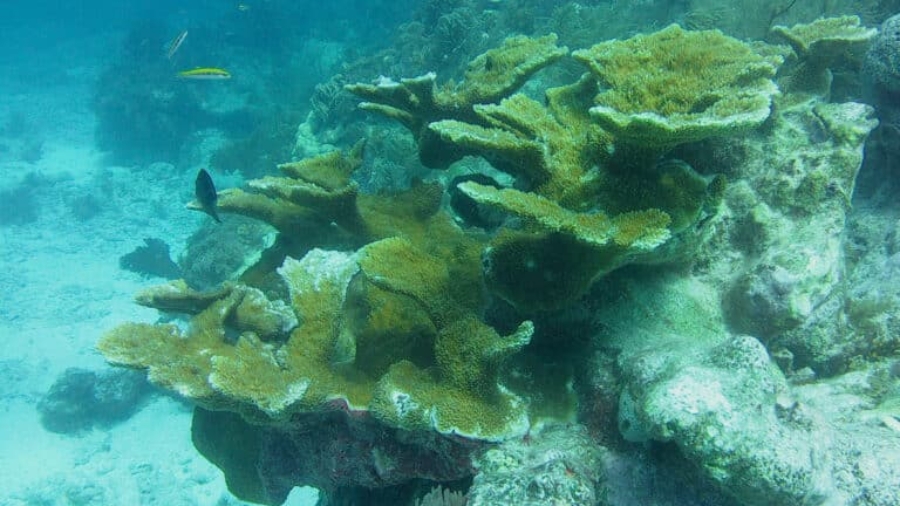
My first visit to the Florida Keys happened 40 years ago. Growing up far from the ocean, I nonetheless decided I wanted to SCUBA dive. Passing my course in a quarry meant cold water and few creatures. But I was breathing underwater. My family went to Florida every few years and this year we were to visit an area near the largest coral reef in the mainland USA. The warm water, beautiful creatures, and delight of being underwater amidst those reefs and their inhabitants was part of the reason I chose to study marine biology.
I didn’t know any scientific words or concepts to describe the experience of diving in the Keys as a 15-year-old. My training in marine biology at University of Miami including an eventual Ph.D. in coral reef fish ecology certainly did. While not couched in words like beauty, I learned to describe coral reefs truthfully – or at least as close to the truth as we could come given our humanity, bias, and otherness. Transects were set to record the number of fish along a certain length and breadth and then compared statistically to find differences in fish density, diversity and size among coral reefs. Marine Protected Areas began to be developed and studied showing that with protection from fishing, a coral reef which was once impoverished biologically could be restored at least to what we knew a reef to be. The Florida Keys National Marine Sanctuary was established to provide protection to these reefs recognizing the negative human impacts on biodiversity.
"One of the important lessons I have learned about noticing beauty and relating it to my faith is to develop a specific vocabulary."
The beauty of these reefs still drew me in and enthralled me. Seeing a rare species or a big shark on a dive drew exclamations of awe and wonder (possibly some bragging) once we returned to the surface. It was not a bad way to learn and develop a career diving amongst this beauty both above and below the surface. Yet I still lacked a religious vocabulary to describe the spiritual and ethical value of my research and passion for coral reefs. Despite growing up in a religious home and attending church regularly, I don’t remember anyone helping me to make sense of the beauty I was experiencing. It was as if what I did in the water had nothing to do with my faith. I am sure that I was taught about a Creator God who made the seas and all that was in them. But this didn’t seem to have any application to my vocation. The beauty pointed to a creative God, but now that there was a Book about that God, it was no longer necessary to involve His creation in any part of my faith. Diving and science was just that – diving and science.
One of the important lessons I have learned about noticing beauty and relating it to my faith is to develop a specific vocabulary. In the same way there are precise scientific words to describe biodiversity, there are theological words that describe one’s experience in creation. This last word is an example; for me, it doesn’t refer to a way of making, but acknowledges the fact that there is a Creator. In the same way, referring to a beautiful fish that I see as a creature, reminds me of theological concepts such as my own creatureliness. Or at times referring to that same fish as a neighbor reminds me of Jesus’ command to love our neighbor and helps me to pause and reflect about that creature and its context. This often has to be intentional and learned. I have had to read widely and deeply on these types of topics and practice using a different vocabulary.
"Science and faith not only happily coexist but amplify each other for the common good.”
We recently moved back to Florida after considerable time abroad. During our absence, my faith had been transformed particularly through my involvement with A Rocha. My children are now young adults and all SCUBA certified. Recent trips to the Florida Keys carrying scientific and faith language allowed me to see anew the beauty of that place. It also allowed me to experience that beauty through another’s eyes. My children didn’t see the Florida Keys as I did as a young adult, but they still saw the beauty that was there. My scientific mind went through the conservation threats and successes. Arguably, these coral reefs were no longer made of much coral with coral cover declining well below a few percent in many places. Yet I saw many old friends including more goliath groupers (Epinephelus itajara) on one dive than in hundreds as a graduate student – results of strong protection and a National Marine Sanctuary actively managing the area.
I saw the reefs, my experience, and the time with my children through a different lens of faith – one which now intentionally sought to integrate scientific truth with a spiritual, ethical and moral vocabulary and conceptual framework. These were fellow creatures who in their own way were giving praise and glory to their Maker.
Marine Protected Areas (MPAs), such as the Florida Keys National Marine Sanctuary, are important places to see and experience scientific and religious beauty. They are places where we can see the ocean as it could be as they are protected from many human impacts. This provides scientific truth to help us to understand and appreciate many types of beauty. That of provisioning for humans outside of MPAs, testing hypotheses about how systems are supposed to work, and awe and wonder of abundance and diversity. Intentional reflection and active engagement in religious practice in and with these places of beauty connect us to their Creator. International goals such as protecting 30% of the ocean by 2030 thus become not only scientific truth-seeking ventures, but religious experiences of promoting and protecting beauty. In these places, we find that science and faith not only happily coexist but amplify each other for the common good and a more beautiful planet.
Robert Sluka
Robert D Sluka, Ph.D. leads A Rocha’s Marine Conservation Programme. He is a curious explorer, applying hopeful, optimistic and holistic solutions to all that is ailing our oceans and the communities that rely on them. Robert’s research focuses on marine biodiversity conservation, plastic pollution, and fisheries, particularly marine protected areas. The ultimate goal is to glorify God through oceans and communities being transformed using holistic marine conservation.
Almost a year since its launch, the Conservation Certificate’s first cohort will graduate by the end of July. Read about their transformational experiences Almost one
Where faith, science and coral reefs meet. Reflecting on decades of diving in the Florida Keys, this article explores how science and theology can work
A personal view of the collaboration between finance and nature. This reflection explores whether finance and nature conservation are truly in conflict, or whether they
There is a line from a sitcom, The Office, that captures something deeply true about working together. Tim Canterbury, known for his elaborate pranks and quiet wisdom, reflects: ‘The people you work with are people you were just thrown together with. I mean, you don’t know them, it wasn’t your choice. And yet you spend more time with them than you do with your friends or your family.’
At first, it can feel strange being placed alongside people by circumstance, learning to navigate personalities, rhythms and responsibilities. Yet over time, those shared hours often become something more: friendships are formed, trust is built and ordinary work can transform into meaningful community. This is especially true in a global organization like A Rocha, where cultural diversity adds another layer of richness. People from different countries, backgrounds and traditions come together, each bringing unique perspectives, stories and ways of seeing the world. What begins as simply working alongside one another can become a beautiful exchange of cultures, ideas and experiences.
Spring, too, is a season of transformation. As warm sunlight returns, flowers bloom and fields turn green, reminding us renewal often begins quietly, with small acts of care and preparation. At A Rocha Czech Republic’s centre at Krupárna, spring is the perfect time to make room to plant, to restore and to grow.
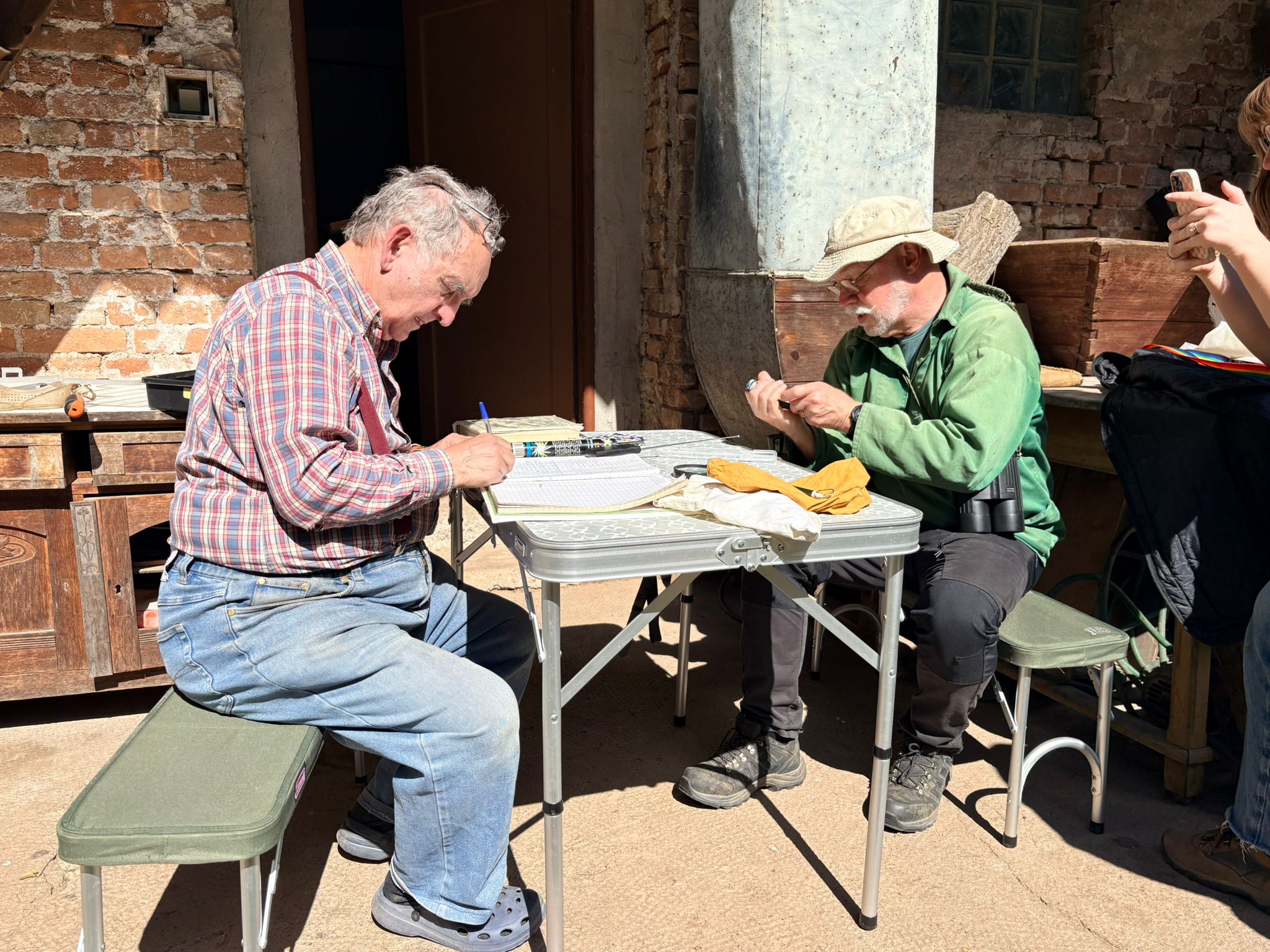
The annual gathering of the A Rocha International team – held near Krupárna this year – offered more than a meeting. It became an opportunity to live out Tim Canterbury’s observation in the best possible way. Welcomed by directors Pavel and Radka Světlík and team with warm drinks and sweet treats, the team eased into the day while bird ringing quietly captivated those who stopped to watch.
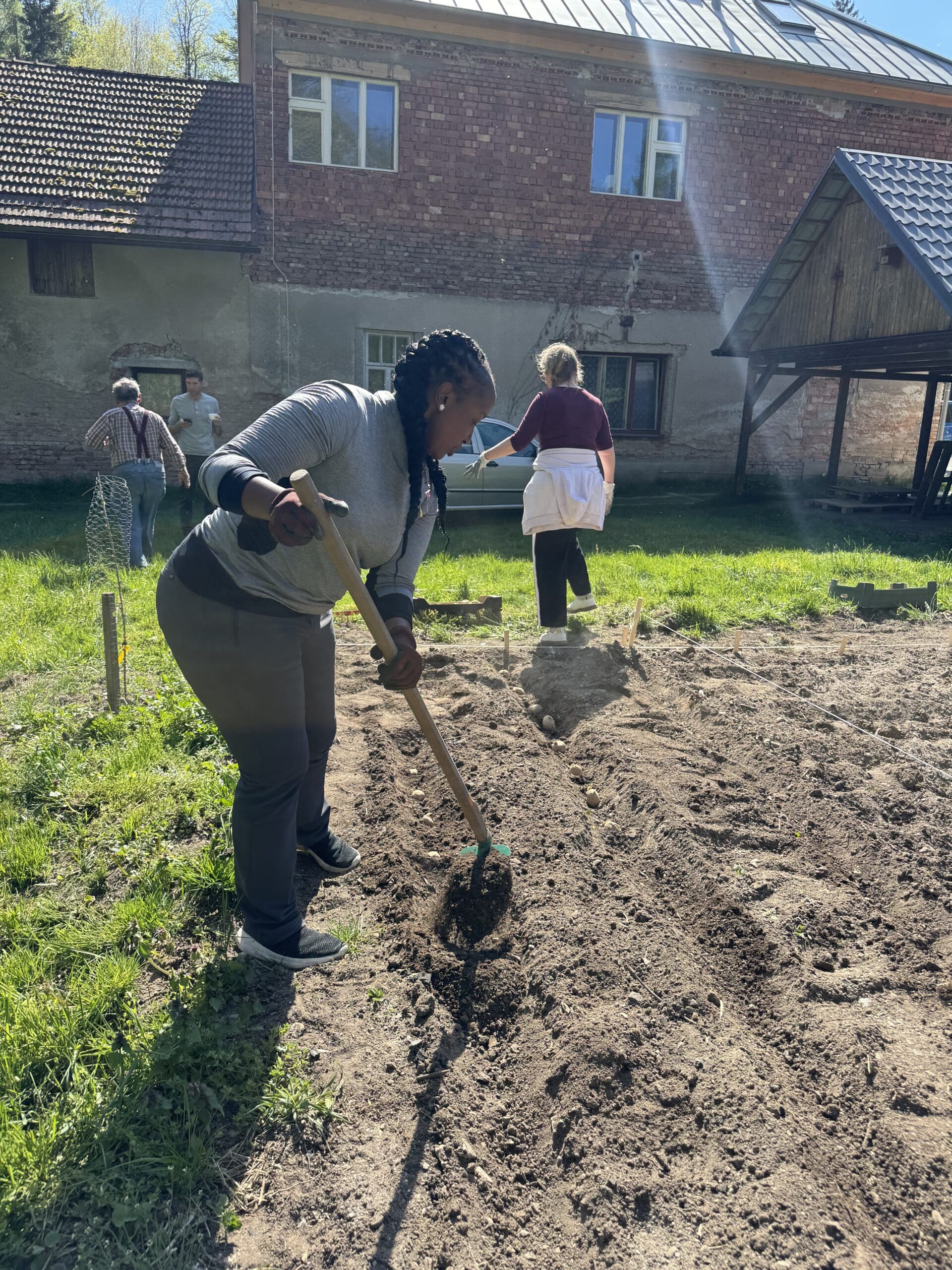
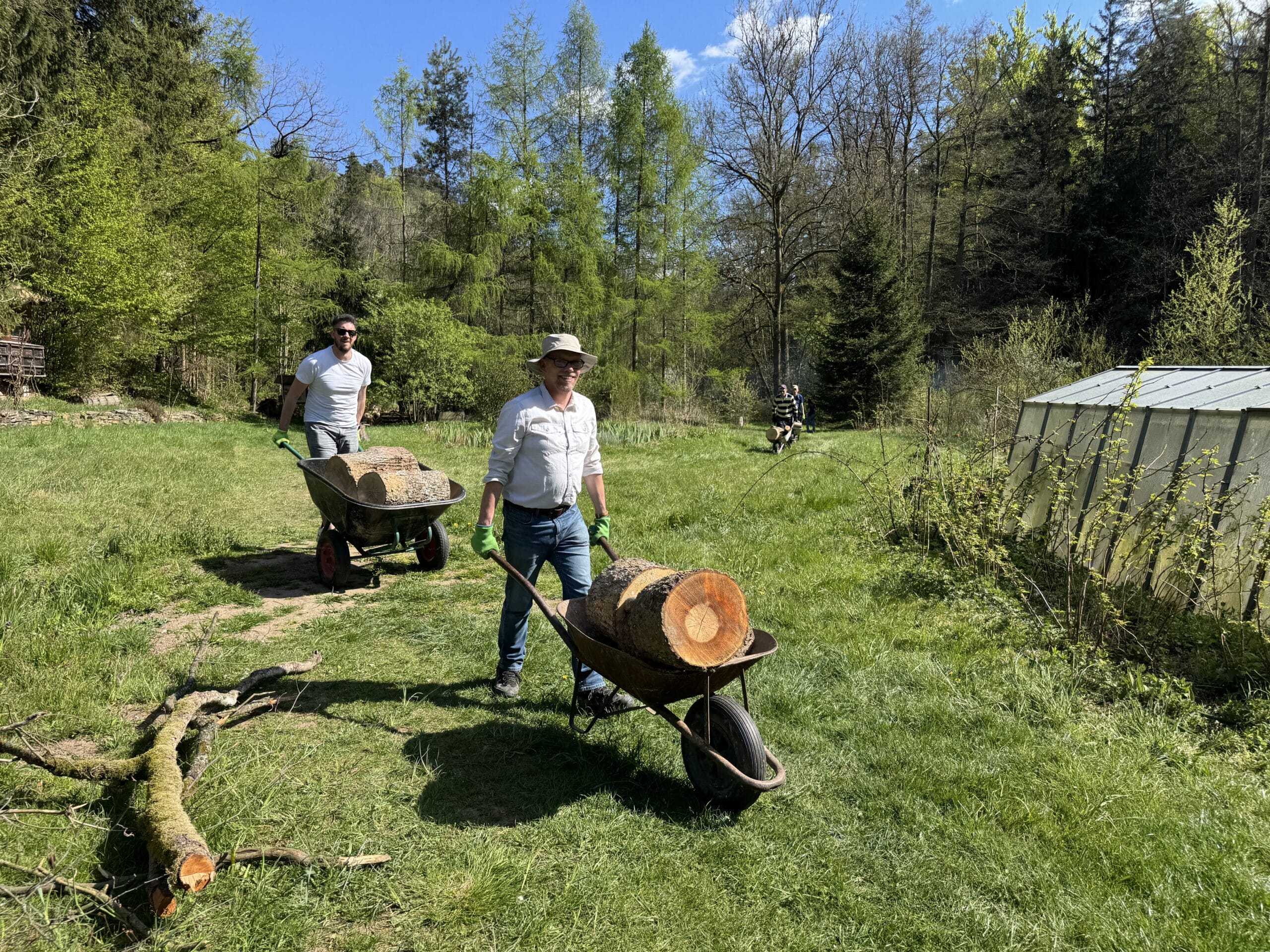
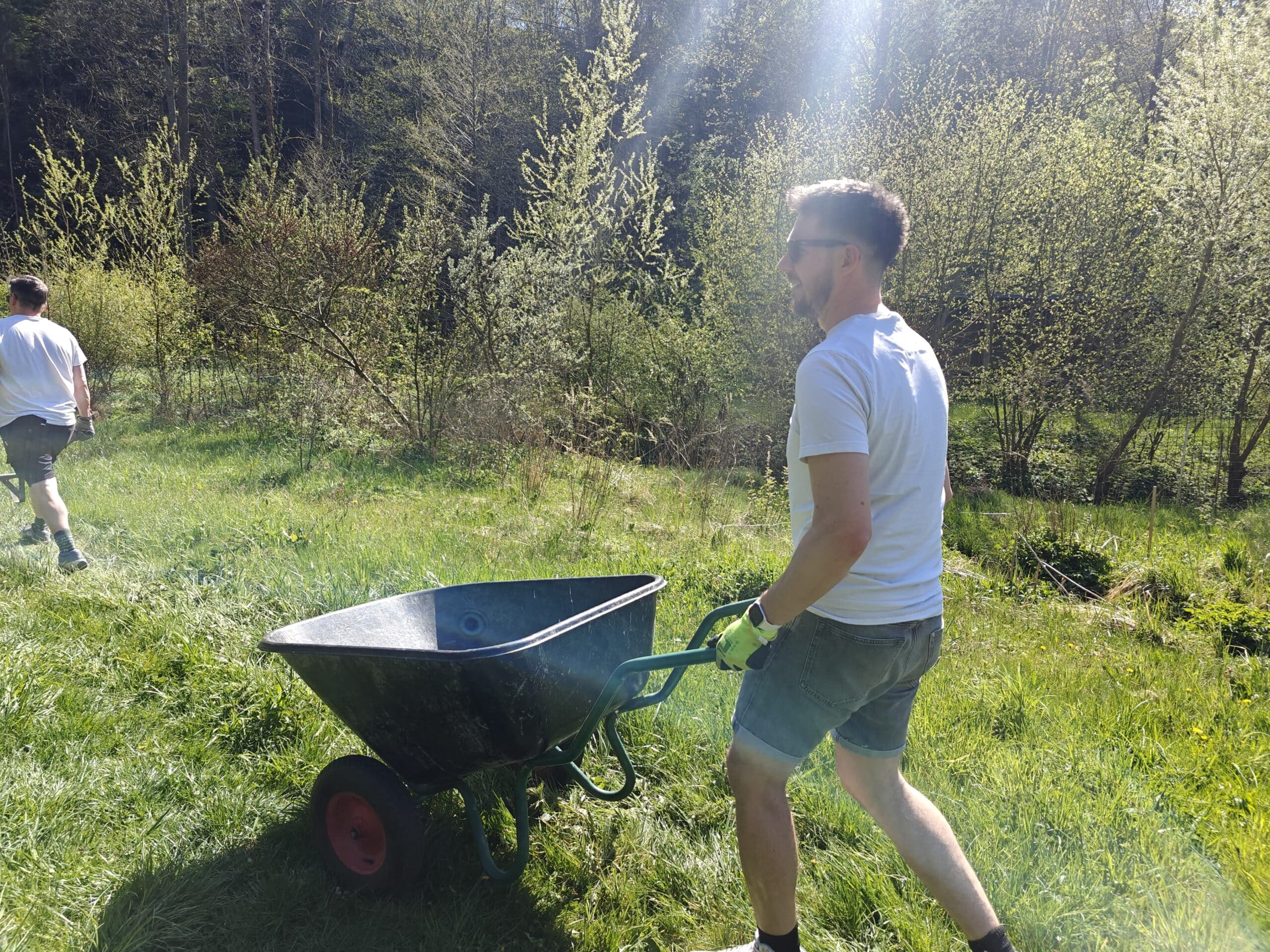
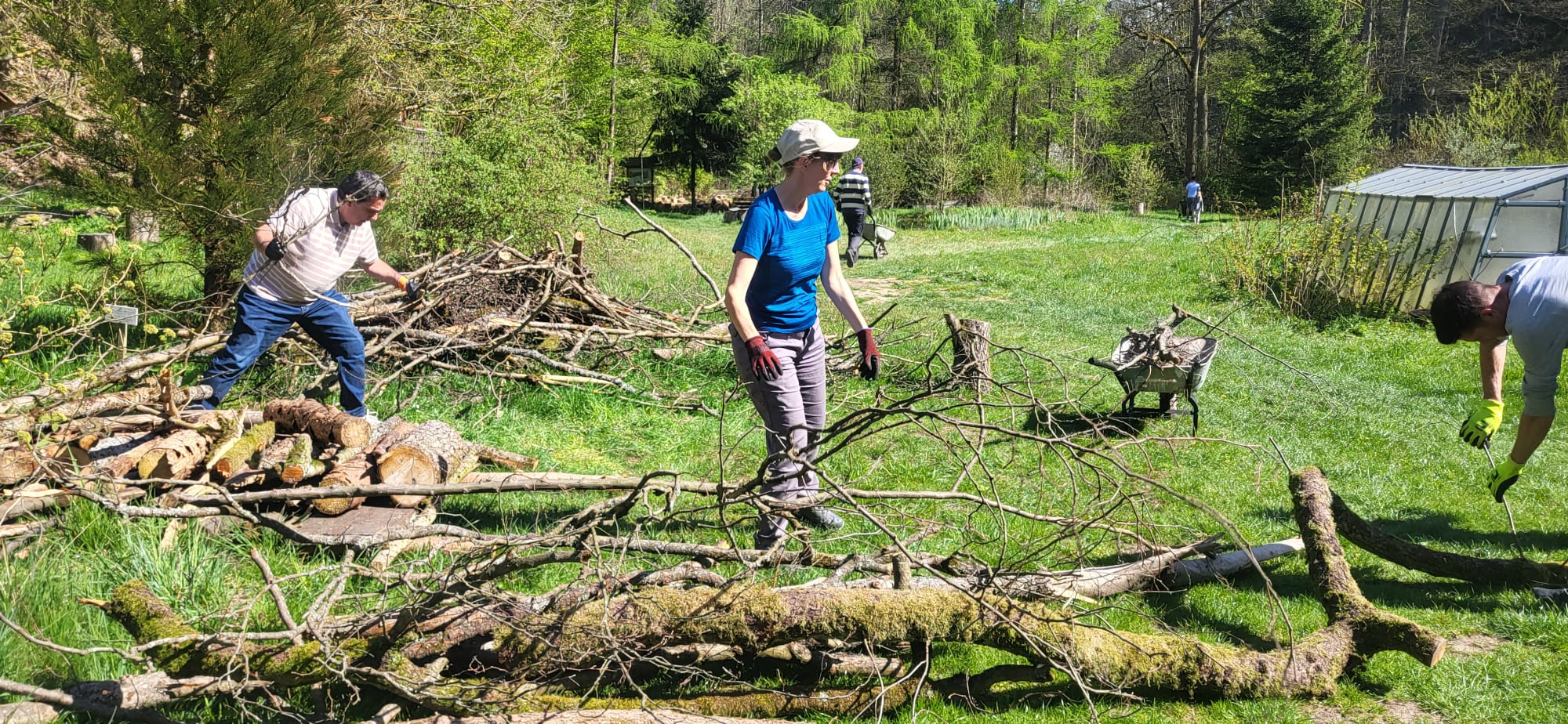
Soon, the real work began. Small groups scattered across the grounds, each taking on different tasks. Some planted potatoes beside the bee hives, preparing for future harvests. Others chopped wood and transported heavy loads using wheelbarrows, stacking the logs for the months ahead. Conversations flowed between people from different parts of the world, with laughter and shared effort bridging language and cultural differences. Every task, however simple, became part of a shared purpose.
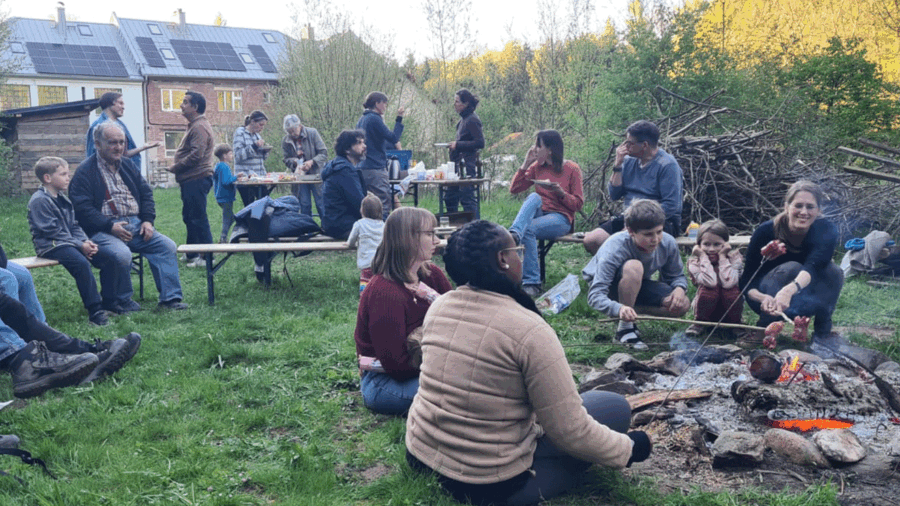
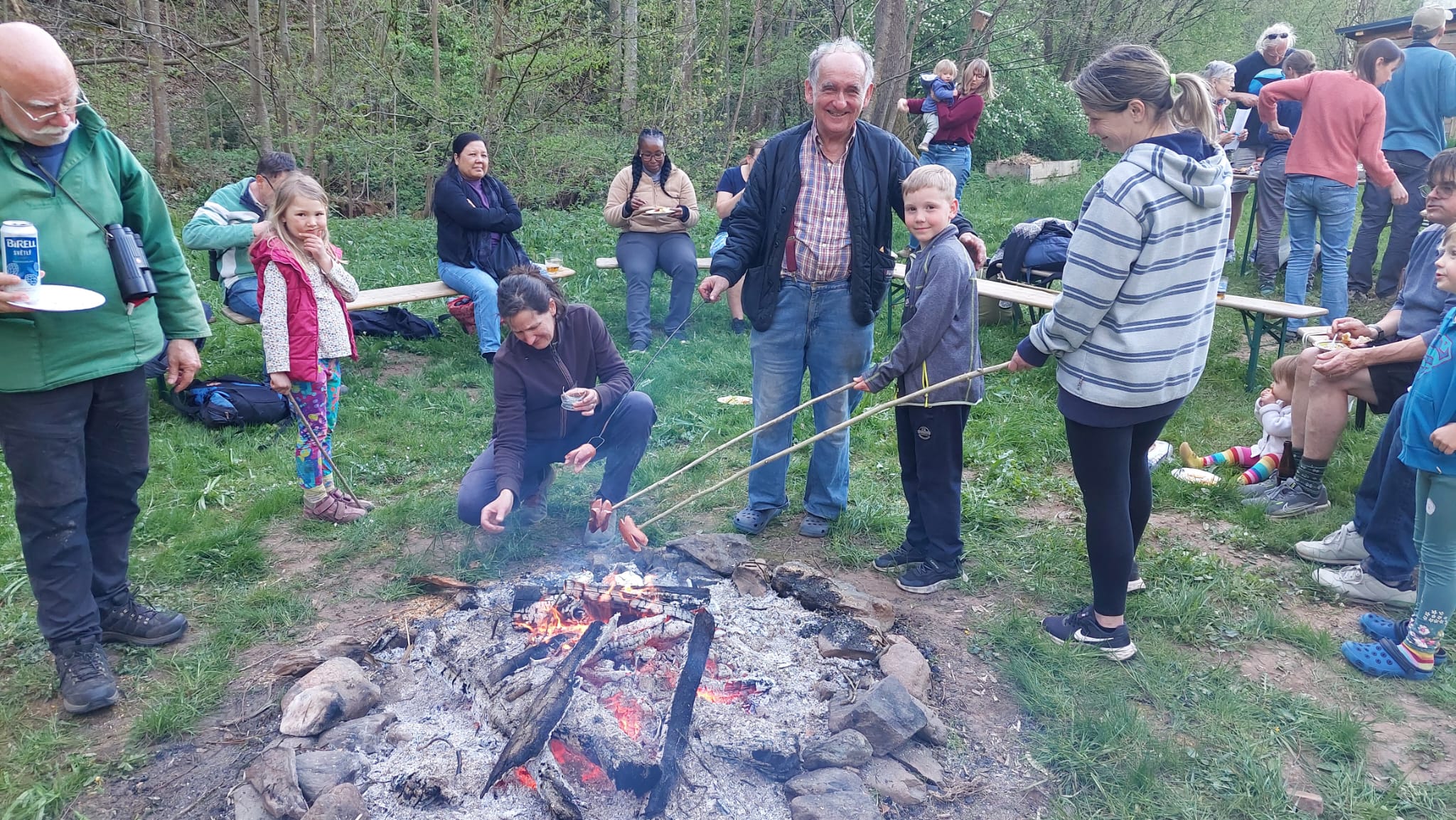
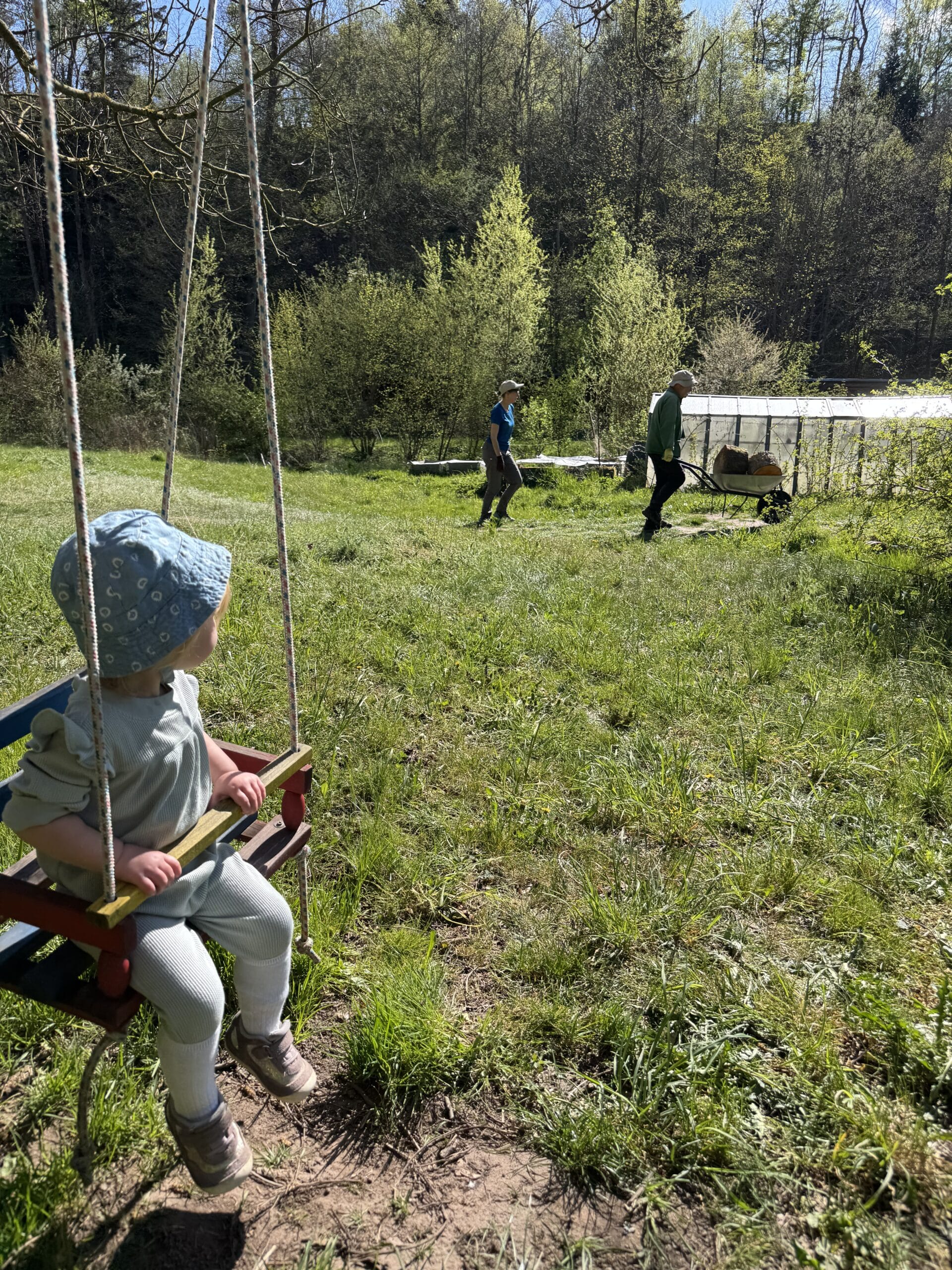
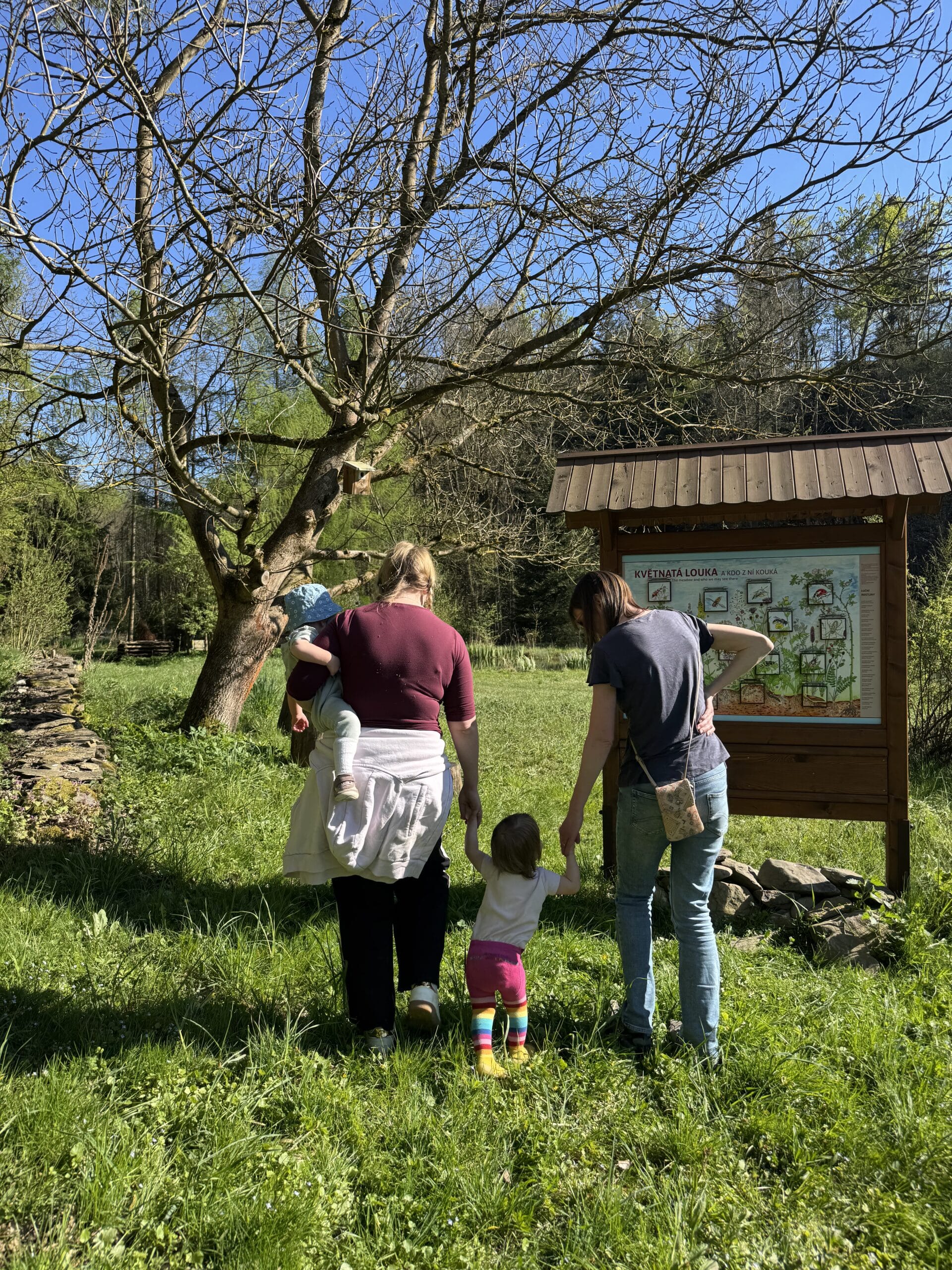
Children played happily in the nearby shade, cheering on the adults and filling the space with laughter. As teams completed their tasks, A Rocha Czech prepared a barbeque around a bonfire, crackling at the centre. Pavel expertly demonstrated the art of roasting sausages and cheese over the flames and most of us, even first-timers, managed to cook ours into something pleasantly edible.
As evening settled and conversations lingered in the warmth of the fire, the day ended with what may have been its most important work: building connection. Perhaps Tim Canterbury was right: we are often simply thrown together with the people with whom we work. But in moments like these – working side by side, learning from one another and celebrating the renewal of spring – they can become much more than colleagues. They can become a community, rooted not only in shared work, but in the beauty of diversity and belonging.
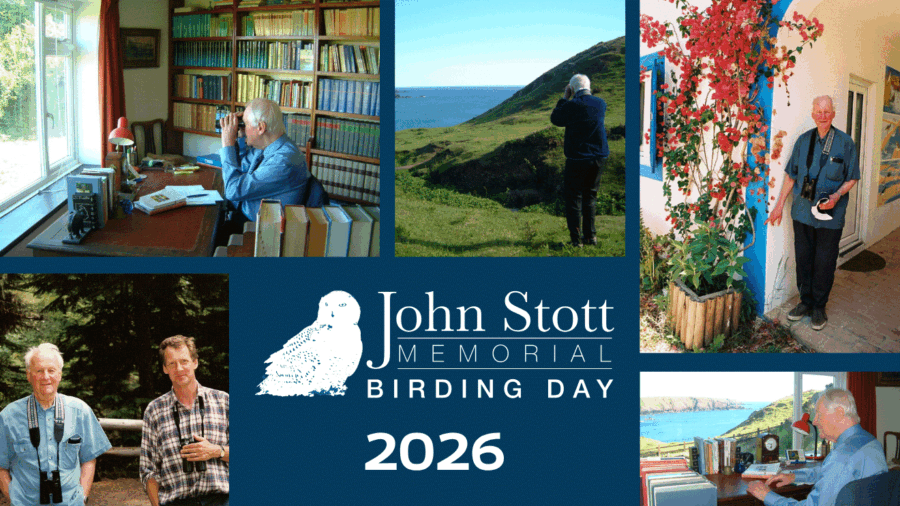
‘It was Jesus Christ himself in the Sermon on the Mount who told us to be birdwatchers,’ John Stott exclaimed in his ‘orni-theological’ treatise, The Birds Our Teachers. A dear friend of A Rocha from its earliest days, John Stott (1921-2011) was at the forefront of bringing creation care to the attention of the global Church. Each year, A Rocha International is pleased to host a day of birding in his honour. Corresponding with Global Big Day, the John Stott Memorial Birding Day supports citizen science efforts to conserve birds worldwide.
On the fourth annual John Stott Birding Day, teams in 12 countries logged 754 species. That’s roughly 7% of all the bird species in the world, an impressive tally for a relatively low number of countries! From Malaysia, to South Africa, Canada and Australia, 103 birders contributed to this global citizen science effort.
Special congratulations to the winners of the John Stott Birding Day bird race: the Gardner-Webb ASA chapter! In upstate South Carolina, USA, the Gardner-Webb ASA chapter observed a team record of 116 species. The dedicated group of three woke up at dawn and went back out after dark to record an array of owls, woodpeckers, vireos and many more.
Keep reading to see the winners of our photo competition!
Several A Rocha organizations joined this year, including three A Rocha Canada teams in three provinces. On a misty Ontario morning, A Rocha Canada watched Sandhill Cranes (Grus canadensis) bank over the pond and listened to the beautiful call of the Red Breasted Grosbeak (Pheucticus ludovicianus). They were also blessed with the first Bobolink (Dolichonyx oryzivorus) sighting of the spring! In Manitoba, one group gathered in the city and another at A Rocha Canada’s Boreal Ecology Centre. Despite the cold weather, these brave groups spotted 47 species, including the Eastern Bluebird (Sialia sialis), American Kestrel (Falco sparverius) and Broad-winged Hawk (Buteo platypterus).
Altogether, A Rocha Kenya had an impressive tally. Splitting into three teams across Watamu, they recorded more than 200 bird species! Among the highlights was spotting five Amur Falcons (Falco amurensis), a migratory species that breeds in China. Another notable sighting was the White-browed Sparrow-Weaver (Plocepasser mahali), a species commonly seen in other parts of Kenya but only rarely recorded along the coast.
Leanne Wicks of Songlark Studio joined the bird race for the first time from her newly built bird hide in New South Wales, Australia. ‘The Ornithon’ is furnished with a pew from a closed local church, a fitting spot to ‘look at the birds’, as Jesus instructed his followers.
The United States was well represented, with birding teams from coast to coast and even in Hawai’i. The YWAM Creation Care team in Kona went from the mountain to the sea to spot the birds of Hawai’i Island. The naturalized Indian Peafowl (Pavo cristatus) and the stunning, scarlet-coloured I’iwi (Drepanis coccinea) made an appearance, but the most remarkable sighting was of a critically endangered Palila (Loxioides bailleui), which can only be found on a single slope of the Mauna Kea volcano.
To spot one of Hawai’i’s honey creeper species like the I’iwi and the Palila is incredibly special. At least half of the roughly 140 bird species native to Hawaiʻi have gone extinct. Sightings of the seven honey creeper species remaining on Hawaiʻi Island are rare. Allan described to us his annual search for these precious birds:
One of our favourite traditions – often reserved for the John Stott Memorial Birding Day – is driving across Saddle Road between our island’s two great volcanoes and hiking out across lava fields into remote kīpuka forests. These are ancient islands of native forest left untouched while lava flows surrounded them centuries ago.
Entering one of these forests can feel almost otherworldly – something between Narnia and Lothlórien. You move from barren lava into deep moss beneath a ʻōhiʻa and Koa tree canopy, alive with birdsong. If you wait quietly enough, the honeycreepers often come to you.
The ʻIʻiwi in particular is unforgettable: brilliant scarlet plumage that almost disappears among the red lehua blossoms of the ʻōhiʻa trees they feed upon, along with a long, curved bill exquisitely adapted to native flowers.
Over on the West Coast, Autumn and her one-year-old daughter Lydia went out for a day of urban birding in Pasadena, California. The birds led them to interesting sightings: following an Acorn Woodpecker (Melanerpes formicivorus), they spotted a magnificent granary in a distant palm tree. Woodpeckers store their acorns here, moving them every few days to hide them from opportunistic squirrels. Of course, they also encountered several of the legendary Yellow-headed Amazons (Amazona oratrix), an exotic parrot species which has been eliminated from much of its home range due to poaching. A thriving (and rather loud) population can be heard across Pasadena.
Enormous thanks to everyone who competed in the bird race, shared beautiful images in the photo competition, and joined us in celebrating John Stott and the birds he loved so much. We will see you next year!
‘So let’s resolve to do all we can to protect and preserve our unique God-given environment, and so continue to enjoy its God-given “’bio-diversity’, not least its fascinating birds.’ – John Stott, The Birds Our Teachers
Developed by United Bible Societies (UBS), Scripture Union International (SUI), and the British and Foreign Bible Society (BFBS) – in partnership with and facilitated by A Rocha International –Creation Care: A Biblical Mandate is a landmark statement affirming that environmental stewardship is deeply rooted in Scripture.
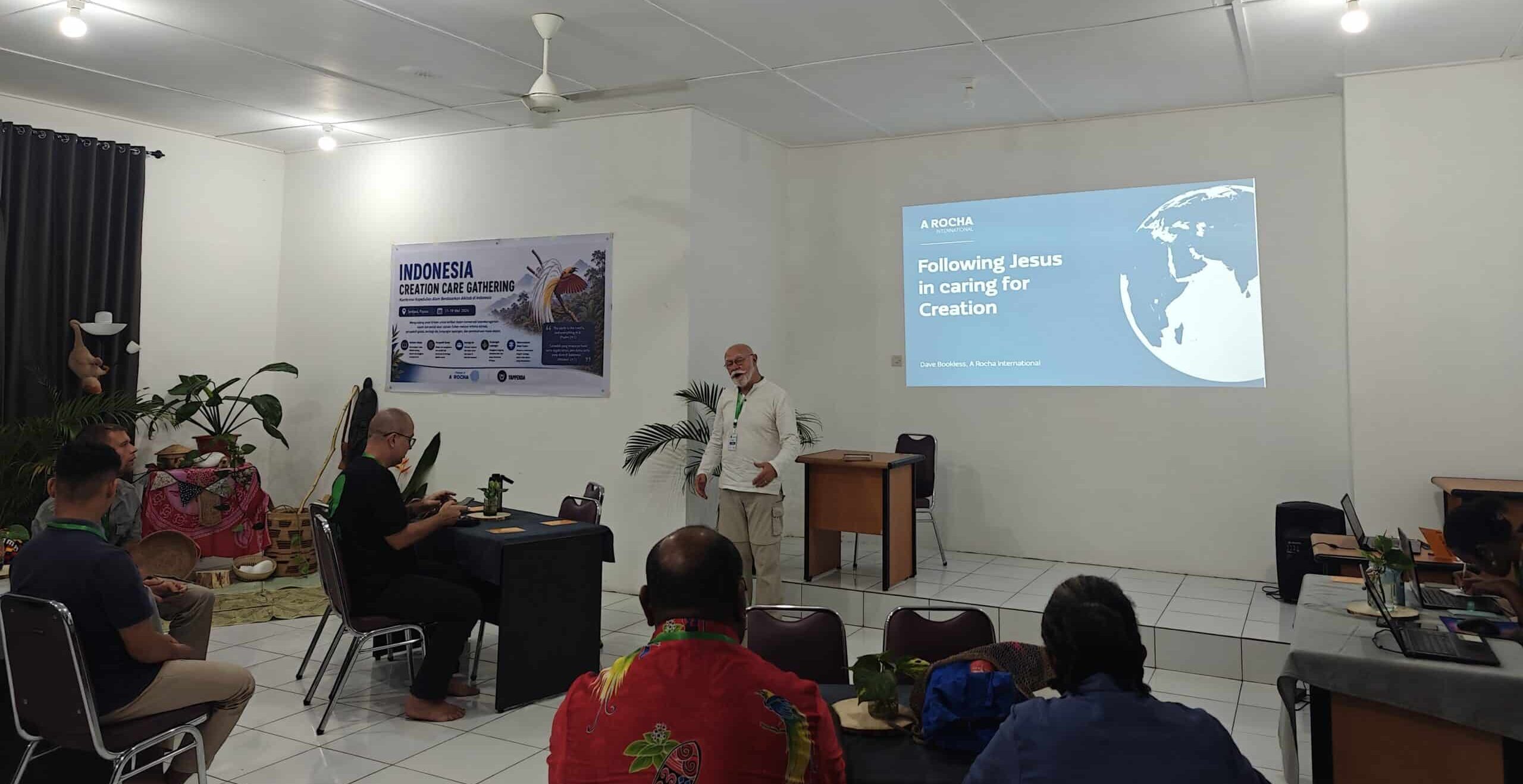
This milestone anchored a momentous month in Indonesia, where A Rocha International’s Kuki Rokhum and Dave Bookless joined three major conferences. Their presence reflected a rapidly growing conviction across international ministries: caring for God’s creation is not separate from Christian mission, but an integral part of it.
Shaped heavily by the concerns of a younger generation, the new mandate challenges the global Church to integrate creation care into everyday discipleship, teaching and mission. At the UBS Fellowship Event in Indonesia, where over 240 leaders celebrated 80 years of Bible partnership, young ambassadors explicitly challenged the movement to safeguard the future of God’s world. To help ministries respond, Kuki and Dave spearheaded an international workshop to unpack the statement and establish frameworks for global collaboration.
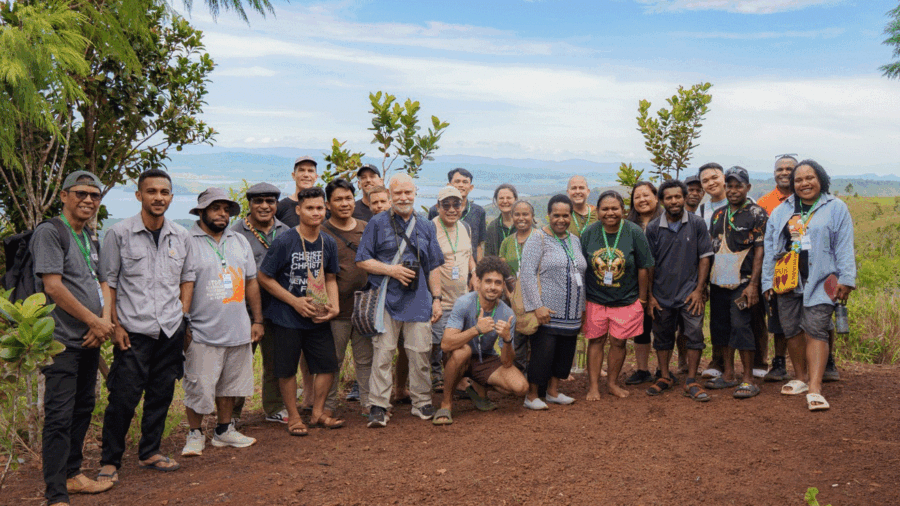
The momentum continued at the Patmos Global Summit on Bible engagement, where delegates from various mission agencies and Christian organizations examined global research on how different cultures engage with Scripture today. Immediately following, a regional creation care gathering in Papua – hosted by Yappenda, a member of the Friends of A Rocha Network – drew 35 participants from local churches, theological institutes and NGOs. Attendees shared practical, local success stories spanning conservation, environmental education and sustainable agriculture.
Real-world partnerships are already proving the power of this shared biblical foundation. Participants highlighted initiatives like Ekologia – a partnership between the Portuguese Bible Society and A Rocha Portugal that inspires schools and communities through environmental education – and a student climate change essay competition in Eswatini that attracted more than 8,000 entries.
Together, these gatherings offer profound reasons for hope. By uniting organizations that collectively reach millions of believers, Creation Care: A Biblical Mandate provides the strategic foundation needed to bring environmental stewardship further into the mainstream of global Christian practice.
Please pray for the partnerships and friendships that emerged from these gatherings, for wisdom as new opportunities develop, and for churches and Christian organizations around the world seeking to live out this biblical mandate.
.
Shopping Basket
This website uses cookies to ensure you get the best experience on our website.