Big-Give_mc

Big Give

Double your impact

We’re excited to let you know that in 2026, with your help, we hope to mobilize and equip over 35,000 young people to care for creation. Every region of the world is experiencing acute crises of biodiversity loss and climate change. Species and habitats, tropical forests and reefs are being lost daily. Temperatures are rising while governments cut funding for conservation programmes. With their futures at stake, young people care deeply about the state of the world and want to contribute to solutions. However, they can be paralyzed by eco anxiety, lack relevant training or simply don’t know where to begin.    

Investing in young people has always been an important part of the A Rocha mission. We have been selected to participate in the Big Give Christmas Challenge again and this year your support will help us reach even more young people through Environmental Education programmes, internships, volunteer placements, capacity building and youth-led research projects. Your gift will equip young people to understand better the connection between creation care and the Christian faith. Reaching this many young people would make a significant impact and we’d love your support.   

The Christmas Challenge kicks off at noon (GMT) on #GivingTuesday, 2 December and continues until noon GMT on 9 December. During that time, every contribution made through our campaign page on the Big Give Christmas Challenge website* will be DOUBLED.  

One donation, twice the impact.  

*Please note that only donations made through our campaign page on the Big Give website between 2-9 December are eligible to be doubled (while match funds last). The donate button will appear on the campaign page when the Christmas Challenge launches. 
High-Seas_mc

High Seas Treaty

You may remember in our July enews we reported on the UN Ocean Conference, held in Nice, France. In that story, we highlighted the situation of the high seas – the vast maritime area that lies beyond the jurisdiction of any state. Sometimes described as the ‘Wild West’ where anything goes, this area covers half of the planet and nearly two-thirds of our seas. Slowly but surely, that era of lawlessness is giving way to hope, as real protection for this vulnerable part of the ocean becomes possible. 
  
In June 2023, governments adopted the High Seas Treaty – a landmark agreement designed to protect the ocean, including addressing the threats of deep-sea mining and geoengineering while safeguarding lives and livelihoods. 
 
The Treaty opened for State signatures in September 2023. By June 2025, perhaps encouraged by the Ocean Conference, the number of signatories had risen from 30 to 51. By the end of August, 55 had signed. Then 57. The milestone of 60 ratifications loomed: at 60, a 120-day countdown is triggered, after which the High Seas Treaty will enter into force. Slowly the numbers crept up…and on 19 September, two years after opening, the 60th State ratified the treaty. Numbers continue to climb – the current count is 75 signatories. On 17 January 2026, the High Seas Treaty will come into effect as a legally binding international agreement. 
  
The ocean is vital – producing oxygen, storing heat and carbon, providing food and livelihoods, carrying goods and sustaining countless forms of life – the list goes on. What happens next with the Treaty will be interesting to see; there are still multiple agendas and priorities at play. But we hold hope that this marks a major step toward caring well for this vulnerable area that means so much to the equilibrium of our world.

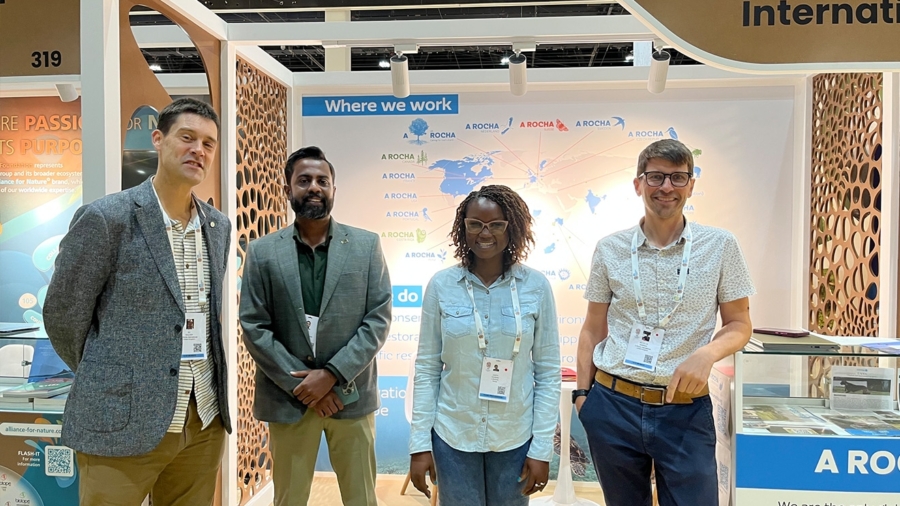
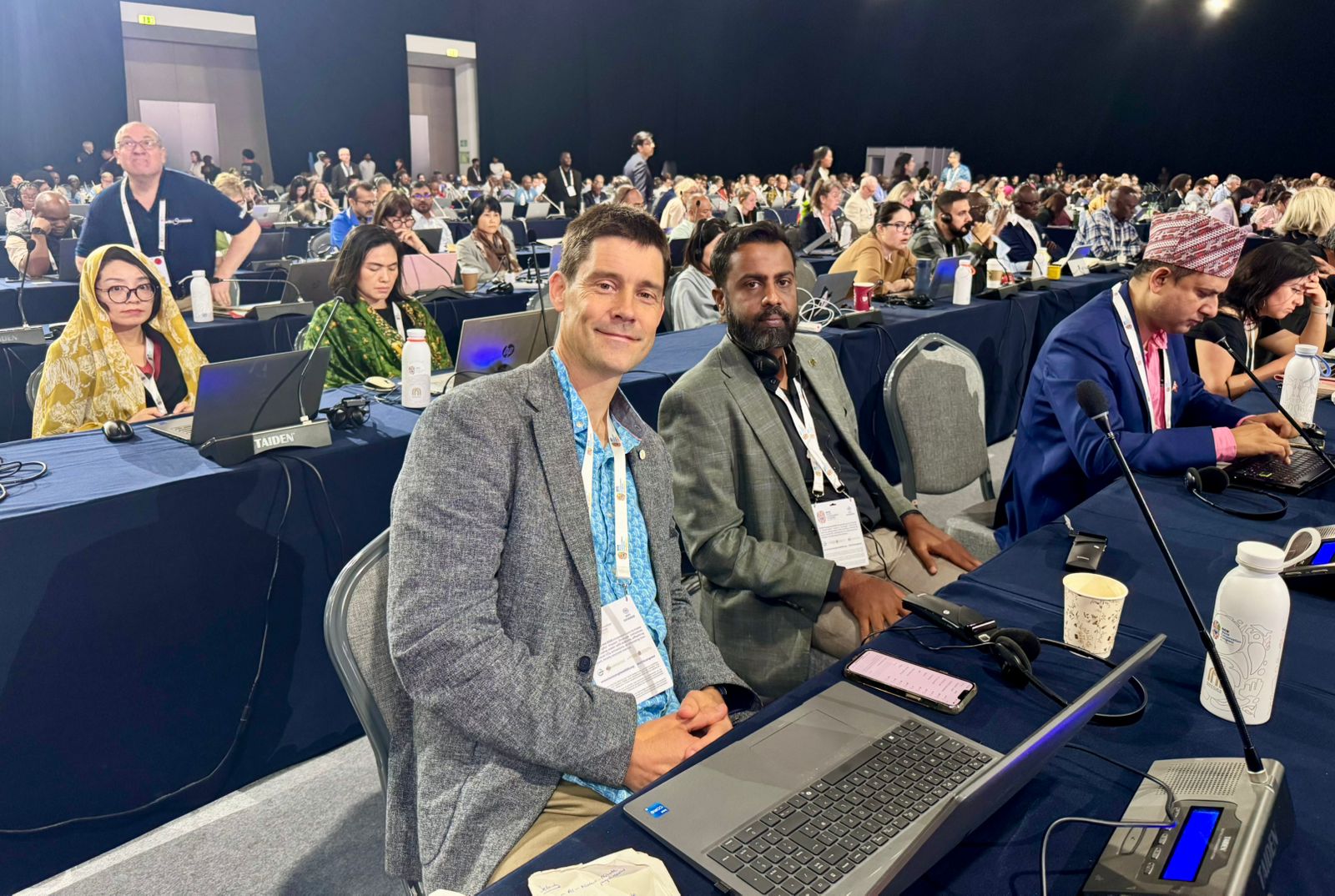
A Rocha International's booth at the exhibition. Left to right: Ed Walker, Avinash Krishnan, Judith Ochieng and Nicholas Warren.

The 2025 IUCN World Conservation Congress

Once every four years, the IUCN World Conservation Congress brings together governments, NGOs, indigenous people groups and volunteer scientists who are working urgently to protect nature and conserve life on Earth. Of the 1,400+ members of the International Union for Conservation of Nature (IUCN), A Rocha International is the only global Christian conservation organization. This October, we brought a distinctive perspective to the Congress, which is responsible for shaping the global conservation agenda.

In the Congress’ forum, for example, A Rocha hosted the live podcast ‘The Missing piece in conservation? Engaging world faiths and worldviews at the grass roots.’ The worldviews of more than three-quarters of the world’s population are shaped by faith, and religion remains an underused force in protecting nature. Faith influences what people love and, ultimately, what they protect. We brought together conservation professionals from a variety of faith traditions to discuss why, in the words of our Director of Theology Dave Bookless, ‘Faith groups need a place at the table’, with examples from the field and an optimistic vision for the future.

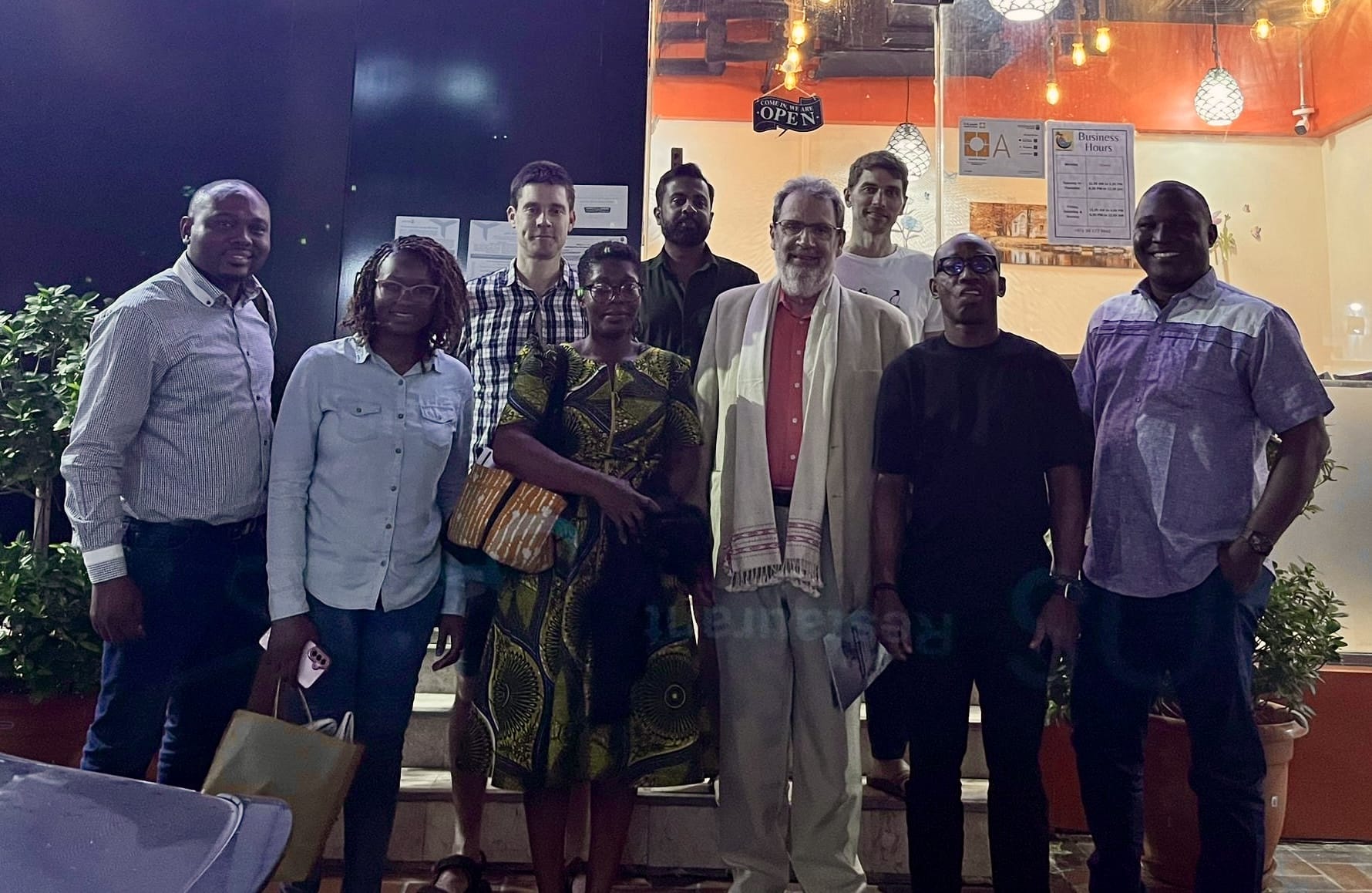
‘Nature knows no borders – and neither should our efforts to protect it,’ remarked A Rocha’s Conservation Practice Lead, Nicholas Warren, who attended the Congress. This spirit pervaded the Exhibition, where Congress attendees and the public gathered to share stories of innovation, struggle and success in conservation. Hundreds of languages were spoken and thousands of ideas were exchanged. The A Rocha International delegation mirrored this multiculturalism: Nicholas Warren and Ed Walker joined from the UK, Avinash Krishnan from India, and Judith Ochieng from Kenya. A Rocha Ghana is also a member of the IUCN, represented by Seth Appiah-Kubi, Jacqueline Mbawine, Daryl E Bosu and Godwin Evenyo Dzekoto.

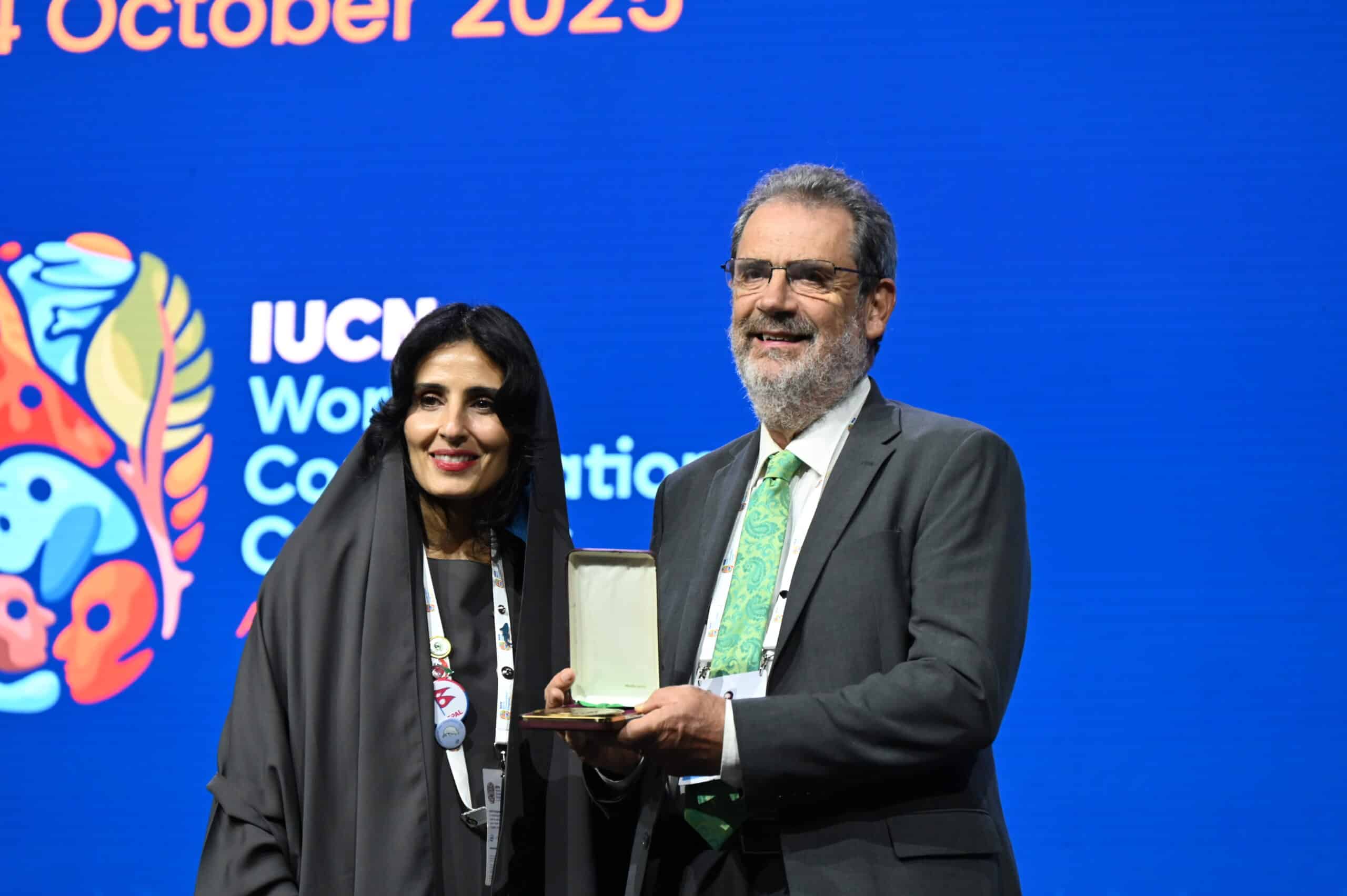
During the Congress’ Awards Ceremony, the Harold Jefferson Coolidge Memorial Medal was awarded to Dr. Simon Stuart, a former Executive Director of A Rocha International, in recognition of his transformative impact on global species conservation, particularly through his work on the IUCN Red List and amphibian conservation. In his acceptance speech, Simon thanked A Rocha co-founders Peter and Miranda Harris for helping bring his faith and love of nature together and said, ‘Conservation is a collaborative effort, and the true heroes are usually unseen, so I’m proud to accept it on their behalf.’ 

Finally, at the Members’ Assembly A Rocha voted on key resolutions for the IUCN that will shape conservation priorities worldwide. These discussions are urgent as we strive to halt and reverse biodiversity loss, making the world ‘nature positive’ by 2030. 148 Resolutions were passed, focused on coordinated solutions that benefit people and nature. For example, the Assembly voted to recognise ecocide as a crime, define ethics around the use of synthetic biology for conservation, encourage soil security laws, and improve tree planting practices by ‘Planting the right tree in the right place for the right purpose’.  

Congratulations to A Rocha Ghana, who successfully advocated for Motion 104: Safeguarding biodiversity and human rights in energy transition mineral governance. This groundbreaking resolution calls on governments, companies and civil society to ensure that the global shift to renewable energy does not come at the expense of biodiversity or the rights of Indigenous Peoples and Local Communities. The global shift to renewable energy and decarbonisation has significantly increased the demand for energy transition minerals, such as the bauxite mined in Ghana’s Atewa Forest. Motion 104 recognises the critical need to address climate change while also upholding ‘conservation justice’ for people and planet.  

The IUCN President, Her Excellency Razan Khalifa Al Mubarak, left the Congress with a powerful statement: ‘Ours is not an easy task, but it is an essential one: to bridge divides – between science and policy, between climate and biodiversity, between people and the planet itself. To remind the world that nature is not only a victim of our excesses, but a powerful ally in our survival… Let us leave Abu Dhabi with the confidence that what unites us is far greater than what divides us — our shared belief in the resilience of life itself.’ We leave the Congress encouraged and equipped for the next several years of conservation. 

Dave_blog_tern

Migration

Picture of Dave Bookless

Dave Bookless

Migration

Facing Migration With Wonder, Worry And Welcome.

From Arctic Terns crossing the globe to millions of people displaced by conflict and climate change, migration is one of nature and humanity’s defining stories. This reflection explores the wonder of migration, the growing threats faced by both wildlife and human migrants, and what a Christian response might look like through three themes: wonder, worry, and welcome.

Through this year, we’ve been looking at the natural world from micro to macro, from tiny organisms to global ecosystems. Migration is a theme that links both. Butterflies cross continents; songbirds weighing a few grams fly thousands of miles. Some of the statistics are extraordinary:  

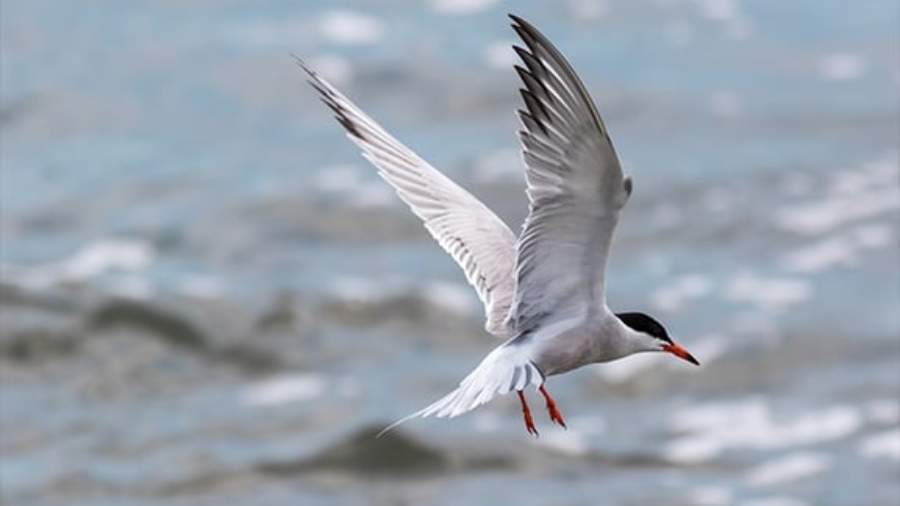
  • Arctic Terns Sterna paradisaea regularly fly 90,000 km per year between the Arctic and Antarctic, which means in a lifetime they may fly the equivalent of to the moon and back three times![i]  
  • A satellite-tagged Bar-tailed Godwit Limosa lapponica entered the book of Guinness World Records after flying 11 days nonstop from Alaska to Tasmania, a distance of 13,560 kilometres.[ii] 

Another kind of migration has also been in the news. Humans have always migrated, locally and globally, driven by conflict, economic and environmental factors. The biblical people of Israel remembered, ‘my father was a wandering Aramean’.[iii] Yet today, we live in an era of unprecedented human migration. The number of international migrants within the Americas alone grew from 34.8 million in 1990 to 78.7 million by mid-2024.[iv] Environmental changes, particularly human-induced climate change, have become ‘the great displacer’. Predictions of climate refugees and migrants by 2050 vary hugely, with some suggesting over 1 billion. A median estimate, based on multiple studies, suggests over 170 million migrants within regions – not including intercontinental migrants.[v]  

“On a changing planet, with increasingly unstable ecosystems, both human and nonhuman migrants are suffering.

I’ve been reflecting on how migrating birds and butterflies cross national borders with impunity whilst human migrants face political barriers. Yet, on a changing planet, with increasingly unstable ecosystems, both human and nonhuman migrants are suffering. More than 30,000 people drowned trying to cross the Mediterranean between 2014 and 2024, with at least another 12,000 missing, presumed drowned.[vi] The western race of the Monarch butterfly has lost an estimated 99.9% of its population.[vii] The latest estimate of the annual Wildebeest migration in the Serengeti-Mara is under 600,000, less than 50% of previous estimates.[viii] Migratory birds face huge challenges with increasing desertification, extreme weather and changes to phenology (the flowering dates of plants).[ix] 

So, as Christians, how should we respond to migration? I want to suggest three simple ideas that perhaps relate to both human and wildlife migration. 

The practical result of wonder and worry is welcome.”

WONDER 

As a bird-ringer (bander), I have the privilege of holding tiny warblers that have navigated across oceans, mountain ranges and deserts to return to their breeding grounds. Even the most hardened atheist can have moments of awe at the miracle of migration. Let’s reawaken that childlike sense of joyful wonder. Let’s also reflect on the dangerous, desperate journeys made by those whose crops have failed, whose land is flooded or dried out, and who seek a better life. 

WORRY 

The statistics on wildlife migration are deeply disturbing in a world of habitat destruction, chaotic weather and changing climate. Worry may not be the best word, but we should lament and mourn at what our human choices have done to God’s world. Surely, we should also be deeply concerned at the suffering of vulnerable refugees and asylum seekers and the very real political challenges caused by mass migration? Words written thousands of years ago still speak to us: ‘The foreigner residing among you must be treated as your native-born. Love them as yourself.’[x] 

WELCOME 

The practical result of wonder and worry is welcome. We are called to create spaces and communities where migrants can thrive. Jesus said, ‘For I was hungry and you gave me something to eat, I was thirsty and you gave me something to drink, I was a stranger and you invited me in.’[xi] I like to apply those words to both nonhuman and human migrants. Our little London church faced this very recently when our newest member, an Iranian refugee, was suddenly made homeless and needed very practical help. Whether it’s putting up nest boxes for Swifts, planting for pollinators, protecting overwintering sites in Mexico or Congo, or supporting A Rocha’s critically important projects and research, we are called to create a welcoming home for all. 

Finally, the prophet Jeremiah wrote: ‘Even the stork in the sky knows her appointed seasons, and the dove, the swift and the thrush observe the time of their migration. But my people do not know the requirements of the Lord.’[xii] This somewhat unfavourable comparison with migratory birds should challenge us to seek God’s heart for all migrants, whether insects, birds or our fellow human mammals. 

Picture of Dave Bookless

Dave Bookless

Dave is Director of Theology for A Rocha International, where he works to embed creation care into international Christian organizations, theological institutions, and mission movements. His past roles with A Rocha include being an International Trustee and the co-founder of A Rocha UK (with his wife Anne). He has a PhD from Cambridge University on biblical theology and biodiversity conservation, and has contributed to many books and articles, including Planetwise, available in six languages. Born and raised in India, Dave has a love for Indian food, Indian culture and Indian Christianity. Dave is also a qualified bird-ringer and loves birding, islands, running and mountains.

Other Articles

Unlikely Partners

A Personal View Of The Collaboration Between Finance And Nature.   This reflection explores whether finance and nature conservation are truly in conflict, or whether

Read More »

Anchored To The Rock

An A Rocha Story Of Redemption. A journey from loss, loneliness, and doubt to faith, belonging, and hope through discovering community and the unexpected anchor

Read More »

Glimpsing The Sacred In Wonder

Playfulness and Communion. An invitation to deeper attentiveness: exploring how science, faith, and the natural world reveal wonder, humility, and responsibility – calling us to

Read More »