For Uganda’s forest-edge communities, West Bugwe forest is a source of life, but it can also be a hostile and fearsome place. Although the forest canopy used to be a lush oasis, much of the native tree cover has been destroyed, replaced by the invasive Paper Mulberry (Broussonetia papyrifera) and dense, cumbersome shrubbery. The equatorial sun beats down on a raucous cawing of Black-and-white-casqued Hornbills (Bycanistes subcylindricus) and the chattering of Red-tailed Monkeys (Cercopithecus ascanius). Cicadas drone, while the Red-capped Robin-chat (Cossypha natalensis) whistles a rich song full of mimicry. Groups of children and women laugh and shout to each other while collecting firewood, their voices quieting when they encounter a stranger.
On days like this, too many people have been killed by venomous snakes or harassed by aggressive primates, among other dangerous or fatal wildlife encounters. Meanwhile, the National Forest Authority has been tasked with protecting the forest from illegal activities, but many community members feel disconnected from their efforts. To break this cycle of fear and conflict, A Rocha Uganda is bringing everyone to the table to share the forest in peace.

Life in the Forest
After surveying the forest’s wildlife, A Rocha Uganda identified 14 snake species across the landscape. 64 percent of these were venomous, including the Green Bush Viper (Atheris squamigera), whose leaf-textured scales help it blend into the forest’s understory. An encounter with these snakes at home or in the forest can be incredibly dangerous: A Rocha found a complete absence of antivenom at local health facilities, as well as delayed interventions and limited community awareness of how to safely respond to snake encounters.
Surveys also confirmed the presence of four primate species, including the nationally vulnerable De Brazza’s Monkey (Cercopithecus neglectus). Its presence indicates that the reserve is still able to support species with specialized ecological requirements. This underscores the importance of conserving the few mature forest sections that remain. De Brazza’s Monkey prefers dense, riverine forest habitats and is generally elusive. Nevertheless, community members have reported regular conflict, including almost daily crop-raids by monkeys and especially the more brazen Olive Baboons (Papio anubis).
Promoting Co-existence
Protecting West Bugwe begins with education and empowerment. A Rocha Uganda brought the National Forest Authority, Collaborative Forest Management groups (CFMs), forest guards, churches and students together for a forest conservation workshop. There, leaders were equipped with the skills to identify species, understand forest ecology, and promote coexistence between humans and wildlife.
This was followed by surveys of the wider community to understand better how and why conflict with wildlife happens. It often takes the form of crop raiding, snake bites, livestock predation and safety concerns for women and children. Using these responses and other Ugandan models, A Rocha hosted wildlife coexistence workshops in local schools, churches, trading centres and CFM groups.

These interventions have already begun to transform people’s relationships with the forest’s wildlife. One CFM member explained, ‘Before the training, we feared snakes and would kill them immediately. Now I know which ones are dangerous and what to do safely.’ Community members have a greater understanding of the vital ecological roles of snakes and primates, and they are equipped with non-lethal strategies to avoid conflict.

Conflict isn’t just limited to wildlife. Historically, the National Forest Authority (NFA) has contended with illegal activity in the forest, especially around restoration areas. A Rocha Uganda’s interventions have improved relationships: people have begun attending local meetings and engaging with the Forest Authority in and around the forest. As active routes into the forest close, compromises are found. For example, thanks to A Rocha Uganda’s mediation, the NFA now allows community members to enter the forest one day a week to collect a ‘headload’ of firewood: the amount they can physically carry on their heads.
Restoring the forest for people and wildlife
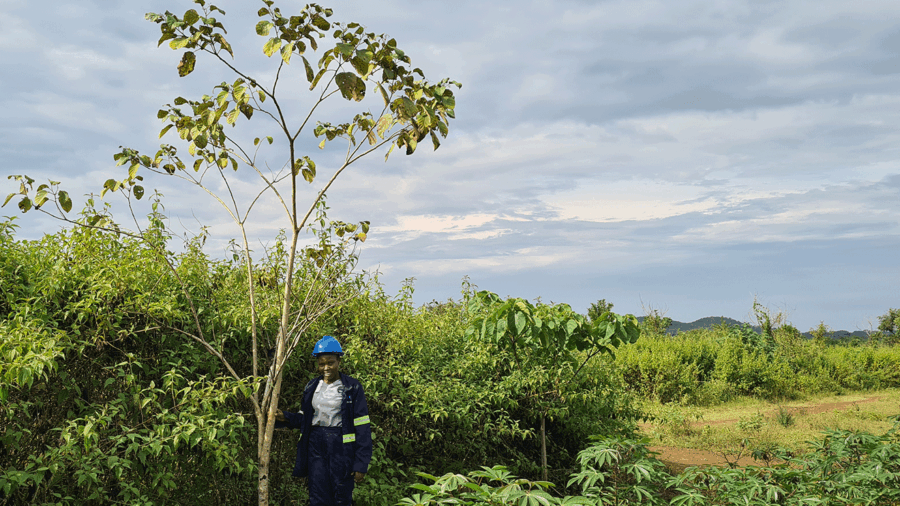
A Rocha Uganda has also been allocated 50 hectares of the forest to restore, and they are bringing the community alongside this work. While the forest canopy appears intact, much of it has been ravaged by invasive species like Paper Mulberry (Broussonetia papyrifera) and Lantana Camara. A Rocha’s restoration is taking two forms: reforestation of native tree species and liberation of native seedlings that are already established by intervening to encourage their growth.
Sustainable livelihoods are an essential component of West Bugwe’s long-term conservation: A Rocha Uganda is equipping local households with techniques like beekeeping, Farming God’s Way, agro-forestry, and building smokeless stoves. All of these activities reduce pressure on the forest while enriching communities’ connections with the natural environment.
These interventions are proving to be a good witness of A Rocha’s Christian faith. A local church in Habuleke has observed an increase in membership as the community sees its relevance due to the accrued benefits from forest honey production livelihood.

In another town, Hamuli, Peter Ejakait is a leader of the Collaborative Forest Management group and a practitioner of Farming God’s Way. This includes three basic principles – zero-tillage, mulching and rotation of crops – which mimic natural forest ecosystems. Since switching to this form of conservation agriculture, Peter has increased his agricultural yield immensely. Through education and community-based conservation, properties like Peter’s and the forest itself are growing into an oasis. West Bugwe is becoming a place where both humans and wildlife can thrive.