Feast-of-Creation_header_mc

The global Church unites for The Feast of Creation

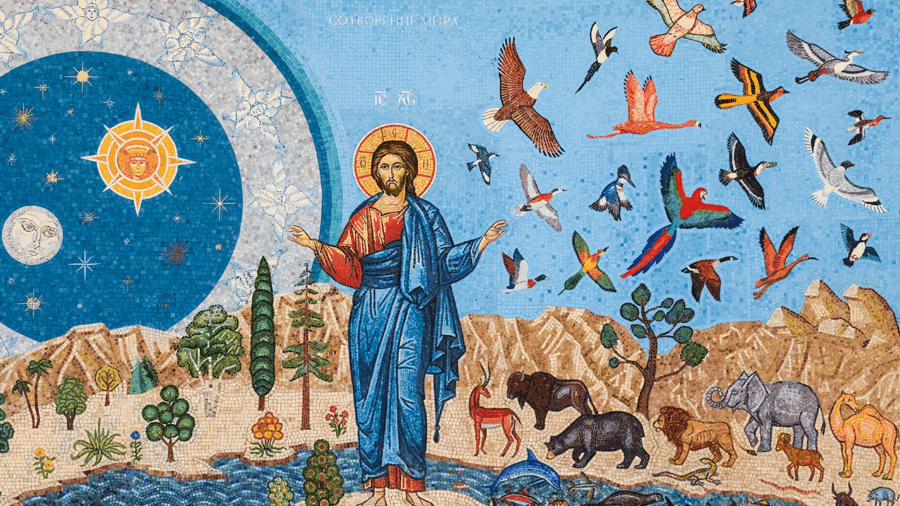
Churches worldwide are coming together to adopt a major new Christian festival: the Feast of Creation, also known as Creation Sunday.

From 2024-2025, all the major Christian denominations and networks gathered for two ecumenical councils in Assisi, Italy. Through this time of prayer, discussion and friendship, they have agreed to mark the first Sunday in September as a day to celebrate the Creator God and the mystery of creation in Christ. From Eastern Orthodox, to Pentecostals, to Roman Catholics, to Mennonites, Anglicans and more, the world’s Christian traditions are uniting around the conviction that celebrating, praying for and protecting God’s creation is essential to the Christian life.

Rev. Dr. Dave Bookless, Head of Theology for A Rocha International, attended the first Assisi conference, and offers his reflection:

The first Assisi conference was an extraordinary time of listening, learning and sharing with global church leaders, liturgists and theologians from across the global Christian spectrum. Held outdoors when possible, the plenary sessions and discussions were bathed in worship. We concluded with a pilgrimage up Mount Subasio where St Francis used to pray surrounded by nature.

The Feast of Creation coincides with the Season of Creation, which is a more extended celebration from 1 September to 4 October each year. The Season of Creation activities are coordinated by an ecumenical steering committee, of which A Rocha International’s Kuki Rokhum is a member. Our Head of Theology, Rev. Dr. Dave Bookless, also participates through the Season’s Advisory Committee, which provides theological and liturgical expertise.

From ancient eastern origins to the modern world

The first of September has ancient roots as a day of beginnings. Before the time of Christ, the ‘early rains’ of September marked the beginning of the agricultural year. Beginning in the 7th century, Byzantine tradition marked the creation of the cosmos on 1 September, and it came to be celebrated as the beginning of the liturgical year. This also parallels the Jewish calendar, which celebrates its New Year, the feast of Rosh Hashanah, around the Autumn Equinox.

‘I want creation to penetrate you with so much wonder that everywhere, wherever you may be, the least plant may bring you to clear remembrance of the Creator.’
St. Basil the Great, Hexaemeron V. 2

This ancient tradition became more relevant than ever as ecological crises worsened around the world. In 1989, based on this ‘sign of the times’, the Orthodox Church’s Ecumenical Patriarch Demetrios I invited the entire Christian world to celebrate the World Day of Prayer for Creation on 1 September. Two years later, the newly elected Ecumenical Patriarch Bartholomew I (known as ‘The Green Patriarch’) convened an unprecedented ecological gathering of leaders to extend this celebration throughout the Orthodox Church.

This invitation led to an ecumenical explosion. The World Council of Churches was instrumental in extending the celebration to a ‘Season of Creation, lasting from 1 September until 4 October, the feast day of St. Francis of Assisi. Christians worldwide have embraced the season as part of their annual calendar. Pope Francis established the World Day of Prayer for the Care of Creation in the Roman Catholic Church in 2015, and in 2019 started officially celebrating the Season of Creation, as well. Pope Leo XIV has since added a ‘Mass for the Care of Creation’ to the Missal.

An ‘Ecumenical Kairos’ in Assisi

There is now ecumenical dialogue underway around the Feast of Creation that is unprecedented in the long history of Christianity. A series of theological dialogues beginning in 2024 has become known as the ‘Assisi Process’, which brings together 13 Christian world communions and various ecumenical bodies to discuss how they may adopt the Feast of Creation or Creation Sunday in their own context.

The process has revealed a pressing need to revitalize the doctrine of creation as central to Christian theology. The central concept drafted during the process is: ‘The Feast of Creation commemorates God’s act of creation of all things through Christ, also leading to praise the Holy Trinity as Creator and to cherish the created order as sacramental and covenantal.’

In May 2025, the second Assisi conference marked the 1,700th anniversary of the Ecumenical Council of Nicea. Since 325, the Nicene Creed has signified a bond of peace and communion between Christians. Fittingly, the Feast of Creation is grounded in the Creed’s proclamation of our faith in the Triune God that the Creed describes: ‘God the Father almighty, maker of heaven and earth’; Jesus Christ, who is ‘true God from true God… through [whom] all things were made’; and the Holy Spirit, who is ‘the giver of life’.

As we enter the third millennium of Christianity, the Assisi process is a powerful sign of communion amongst the global Christian family. It is also a prophetic gesture that the Church is responding to the groaning of creation.    

‘If the Assisi process continues to develop and reach its goal it might become a landmark in the history of Christianity. Looking back into the second millennium, there seems to be only one precedent: the Feast of the Transfiguration, originally celebrated in the East and then adopted in the West in 1456… This ecumenical process, with Western and Eastern churches discerning together a new feast, is ‘new territory’ for our contemporary churches – and a very promising opportunity.’
Bishop Bedford-Strohm

A united creation theology

In part, the Feast of Creation is about celebrating ‘Creation as the created world’, gifted by God to us. More importantly, however, it is about thanking and praising our Creator God by celebrating ‘Creation as foundational mystery’ of our Christian faith. At the Assisi gatherings, a wide group of church leaders, liturgical scholars, theologians from other disciplines and ecumenists discussed what should be core to this Creation Day, and how they might implement it in their own contexts.

Who attended the Assisi process?

  • World Council of Churches
  • Middle East Council of Churches
  • Anglican Communion
  • Baptist World Alliance
  • Catholic Church – various bodies*
  • Coptic Orthodox Church
  • Ecumenical Patriarchate (Eastern Orthodox)
  • Disciples of Christ
  • Lutheran World Federation
  • Mennonite World Conference
  • Moravian Church
  • Pentecostal World Fellowship
  • Salvation Army
  • World Communion of Reformed Churches
  • World Evangelical Alliance
  • World Methodist Council

Just as other feasts throughout the liturgical year reveal the mysteries of Christ, the Feast of Creation invites Christians to contemplate the multifaceted mystery of creation through a Christ-centered lens. While discussions are ongoing, four main themes have emerged in the Assisi process so far:

  1. God’s act of creation: At the core of the feast is remembering God’s act of creating the heavens and the earth. It is a holy mystery that God created ‘out of nothing’ (ex nihilo) and before time (‘in the beginning’). God’s creative activity is continuous (creatio continua) and ongoing, even today. It is also ‘creation out of love’ (creatio ex amore): not from necessity, but from divine freedom and generosity. Through the feast, we offer thanksgiving and praise to God who brought the world – and us – into being.
  2. Creation as Christological mystery: Jesus Christ is at the centre of the liturgical year, with each feast exploring a different dimension of his mysterious nature. The Feast of Creation invites us to contemplate Christ’s role in the act of creation. All things were created by the eternal Word (logos): in him, through him and for him (Colossians 1:16). Christ is the Alpha and Omega: the one through whom all things were made, and also the one through whom all things are redeemed.
  3. Creation as Trinitarian mystery: As explained in the Nicene Creed, the three divine persons of the Trinity act inseparably in the creative work. This relational communion between Father, Son and Holy Spirit is reflected in the interdependence of all beings in the created world. Creation is also brought into Trinitarian love: all creatures proceed from the Father and return to the Father through Christ in the power of the Spirit.
  4. Creation as sacramental and covenantal: Finally, the feast recognizes creation as a sacramental reality that reveals and mediates the presence of its Creator. Although God is transcendent, we encounter his love in and through the created order, which is filled with his presence. The feast is also a time to lament and repent of the ways that humans have desecrated God’s gift of creation through sin. Instead, we are reminded to cherish creation, and to love what God loves. God’s love for creation is so profound, in fact, that the Creator became a creature to establish the New Covenant (John 3:16), which includes the redemption of all creatures.

For much of Christian history, the Church has not embraced its mandate to care for God’s creation, either through complicity and inaction, or through actively harming what God called ‘very good’ (Genesis 1:31). But around the world, laypeople, theologians, activists and clergy have called on the Church to participate in Christ’s healing and reconciliation of all creation. We are beginning to see the fruits of this labor.

While the Assisi process is ongoing, we encourage you to celebrate the Feast of Creation / Creation Sunday on the first Sunday of September! You might also consider joining the longer celebration of the Season of Creation from 1 September – 4 October. This year’s theme is ‘Living Water’, based on Ezekiel 47:1-12, which portrays God’s life-giving water flowing from the temple of God. Visit the A Rocha Resource Hub to learn how you can celebrate the Feast of Creation in your own tradition and for the Season of Creation Celebration Guide.

Beach-cleanup_mc

A collage of cleanups

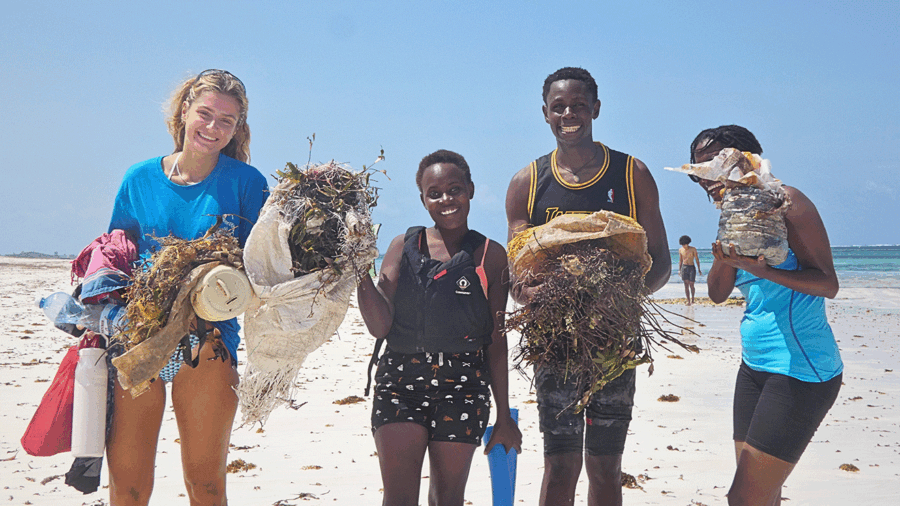
Litter cleanups are a powerful conservation tool, which almost anyone can join. According to the Ocean Conservancy, ‘Up to 23 million metric tons of plastic waste are estimated to enter global aquatic ecosystems annually.’ The challenge of plastic pollution is monumental, but beach cleanups can still have a lasting impact, especially when they are accompanied by actions to reduce the use of plastics in the first place.

Each September, A Rocha Organizations around the world join the International Coastal Cleanup and World Cleanup Day to create waters of hope, not plastic. This hope is for the landscapes, seascapes and wildlife that have been harmed by plastic pollution, and also for us humans who feel a greater sense of connection and optimism when we come together to care for our common home. Ultimately, our hope is in the Creator God who promises to renew all things and invites us to join this transformative work.

Read on for encouraging stories from A Rocha’s cleanups around the world.

Poetry from the Philippines

Christians in Conservation Philippines, an A Rocha Associated Project, saw an impressive turnout for the 2025 International Coastal cleanup. Teaming up with a local church and its members, they mobilize five schools and five health organizations to clean up beaches at Lobo, Batangas, Philippines. Lobo has coasts facing the Verde Island Passage which is known as having the highest concentration of marine shore fish species on Earth.

With support and encouragement from the local government, about 130 children, 21 youth and 231 adults joined the effort to protect marine life, gathering a total of 82 kg of waste! One group even planted seedlings of the endemic and endangered Philippine teak (Tectona philippinensis).

Mico Salas, Executive Director of Christians in Conservation, was inspired by the epic cleanup to write the poem below.

Taking cleanups underwater

Beach cleanups have proven to be incredibly effective at tackling marine plastic pollution. Since the International Coastal Cleanup began over 35 years ago, over 19 million volunteers have collectively removed more than 400 million pounds of trash from the world’s beaches and waterways.

However, not all marine litter washes ashore. Plastic and other waste often remain underwater, where they threaten marine life and damage fragile habitats. Removing this waste can be difficult without disturbing marine animals and their habitats in the process.

A Rocha Kenya and their partners have come up with a clever solution: underwater cleanups! On 18 July, more than 30 strong swimmers and free divers gathered at Watamu Marine National Park to remove waste that ordinary beach cleanups cannot reach. Together with the Kenya Wildlife Service and Turtle Dive Water Sports Centre, the volunteers collected 30.5 kg of plastic and other marine waste from a relatively small underwater area, helping to protect Watamu’s marine life from the shoreline to the ocean floor.

Plans are now underway to build on this first activity and expand the underwater cleanup initiative.

Hunting for nurdles

Most beach cleanups target larger plastics which can easily be seen and collected by hand. Smaller plastic particles are often overlooked in this process, but they are uniquely harmful to marine life.

Nurdles are tiny plastic pellets that are molded to make most of the plastic products we use every day. Billions of nurdles are produced each year and are easily spilled during manufacturing or transport. Because they look dangerously like fish eggs, seabirds, shellfish, whales and other marine wildlife easily mistake nurdles for food, which can lead to injury, starvation or even death.

A Rocha USA hosts ‘Nurdle Hunts’ in Florida each year during The Great Global Nurdle Hunt, a month-long event which often coincides with the International Coastal Cleanup. Hunting for nurdles isn’t just an opportunity to clean up beaches: A Rocha USA takes time for contemplative activities and even swimming. By praying for, protecting and enjoying God’s creation, we grow to love and care for it more and more.

A Rocha Peru is joining the nurdle hunting enthusiasm, as well, with a pilot project on Coastal Nurdle Monitoring and Clean-Up. In Peru, research on coastal microplastics remains limited, and pellet-focused studies are practically non-existent, especially outside Lima. A Rocha Peru organized this pilot activity to explore the presence of nurdles on beaches in the fishing village, Huanchaco. The response from the local community was incredibly positive, as volunteers were highly motivated to join the beach cleanups and learn about microplastic pollution. 1200 nurdles were collected in the surveyed areas, highlighting the severity of microplastic pollution in this tourist-heavy area and the need for more initiatives in the future.

The International Coastal Cleanup takes place on 19th September, 2026, and for those who don’t live near the ocean or another body of water, World Cleanup Day is on the 20th! Find educational, theological and practical resources on cleaning up plastic pollution in A Rocha’s Plastics Toolbox.

Kruparna_pond_mc

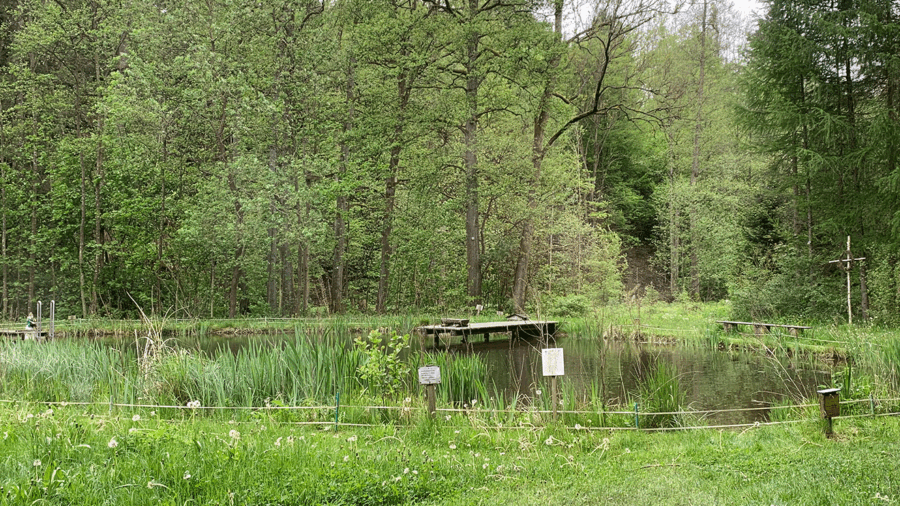
Baptisms at the pond

Since the beginning of A Rocha Česko (Czechia, Czech Republic), the field centre called Krupárna (Mill) has been a meeting point of all kinds of people, with various backgrounds, skillsets, gifts and stories. All kinds of people and all working towards one shared goal – creating a place where Christians can manifest their love to God as both Saviour and Creator, protecting nature as God´s creation and inspiring both believers and non-believers to do likewise.

Turning the former mill and factory into an environmental centre was a long and messy process. But creating five biodiversity ponds was much messier and muddier! However, these ponds are now thriving with life, full of splendid colours, smells and sounds, and full of opportunities for children to observe wildlife, play with the elements, or have a short swim.

For many years, four local evangelical churches have also been using the most beautiful pond for baptisms. About 60 people, mainly young, have been baptized here. It´s always a solemn and joyous event. Family members and friends stand around the pond in a circle, singing hymns, praying and witnessing this key moment in a young Christian life. The solemnity is enhanced and carried by the grandeur of the surrounding nature, the lush greenery and the soothing and comforting beauty of a place vibrant with life.

Those involved do not believe baptism in a pond in this beautiful place is any better or ‘more spiritual’ than baptism in a contemporary, concrete church building. However, the surrounding concert of wildlife is something that makes baptism speak more powerfully to the whole congregation present.

Phillip-Gail-prepare-used-cardboard-for-sheet-mulching-no-dig-garden-beds-at-THH-01-Sep-2025-scaled

The conception of A Rocha Singapore

Picture of Phillip Wang

Phillip Wang

The conception of A Rocha Singapore

What would an engineer and an economist-by-training know of nature conservation, much less about helping found a Christian conservation non-profit organization in Singapore?

Meet Phillip Wang and his wife Gail Lien, two of the founders of
A Rocha Singapore, recently registered as the 23
rd national member of the global A Rocha family. Phillip is its chair.

‘It’s been quite a journey to get to this point, but I found myself wondering why my faith did not seem to have any response to this “problem” – our engagement with the natural world, and the way we use and exploit it. The theological narrative I had grown up with, to which I had committed my life, appeared to be silent. My Christian worldview, which I thought was comprehensive, drew a blank,’ Philip says. ‘Why is it that it doesn’t seem to have anything to say about caring for the planet?’ 

“My Christian worldview didn’t seem to have anything to say about caring for the planet.”

Phillip found it hard to comprehend how sustainability figured in the Christian life. ‘Usually there’s an overarching imperative guiding your actions and resources. Often this would have been directed through an evangelical lens, with sharing the Good News, looking to share God’s love with people who were yet to know how much God loved them. It was something I had come to understand as a key focus of our Christian walk – but something which I felt I was pretty bad at.’ But then he was confronted with something different – an environmental crisis that made the question harder to set aside. 

‘There’s a world of trouble – and it’s God’s world,’ he says. ‘Using tools of modern science, there’s plenty of data pointing to that trouble. Climate change, biodiversity loss, challenges to food production, air quality, deforestation, ocean health, over-fishing and more. If you’re not convinced in one area, there’s another where the evidence is hard to deny.’ 

Through a mutual friend, Philip met Peter Harris in Singapore. ‘The initial conversation with Peter was about how our modern evangelical Christian narrative had focused on the good news of God’s love for us through Jesus Christ and loving our neighbour as ourselves. This is all correct, of course,’ Phillip says. 

‘Maybe you need to think about it in terms of the responsibility we are given to steward the gift from God. But we have virtually no understanding of our relationship with the rest of God’s created world – the creation, of which we are a part. Peter reframed it as a theological issue: maybe we need to think about it in terms of the special responsibility we are given to “work and keep” creation, to steward the gift from God.’ 

As Phillip began reading more – from A Rocha’s materials and wider ecological theology – something started to cohere. 

‘It felt like the puzzle pieces were coming together. I began to see how anthropocentric our theology often is – focused almost entirely on human salvation. But Scripture consistently places us within creation – not apart from it. I realized how dualistic my thinking had been. I would enjoy nature, thank God for it, and then return to urban life without any sense of responsibility to care for it.’  

Over the following months, reading Scripture with this new awareness began to reshape familiar passages. ‘Romans 8, where creation groans. The Psalms, where nature is precious. Jesus’ parables – soil, seeds, sparrows, lilies. I realized how much I had missed by reading everything through a purely human-centredlens.  

Even well-known verses took on a different dimension. Genesis 9 ‘speaks about God’s covenant not just with Noah, but with every living creature – the birds, the livestock, the wild animals,’ he says. ‘It’s a commitment that includes the whole of creation, though the subheading frames it so narrowly that you read it as if it’s only with Noah.’ 

These insights began to shift not just Phillip’s understanding of environmental issues, but his understanding of the Gospel itself. ‘This has been deeply transformative. The Gospel feels bigger now. Creation doesn’t exist just for us. It exists for God’s pleasure. So the question becomes: What does it mean for us to care for what brings Him delight?’ 

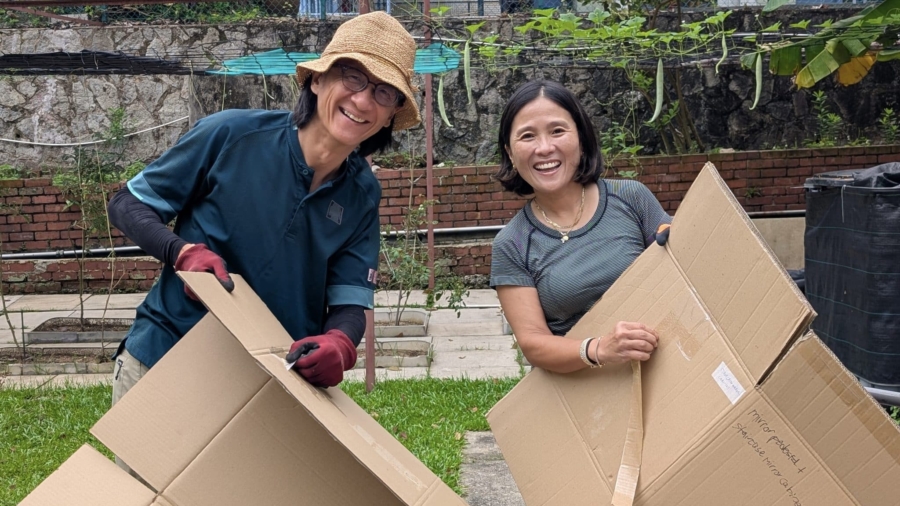
With the help of Melissa Ong – one of the leaders of Friends of A Rocha in Singapore – Phillip ran three rounds of a six-week study on creation care. ‘People were really transformed,’ Phillip recalls. ‘They said, “Now that we know this, we want to do something. What do we do?”’ So they convened a working group of about 15 people. They prayed, they discerned and slowly the idea for Singapore to move to the next stage and join the A Rocha family as a nationally-registered member took shape. 

A garden for humans and wildlife is born

In May 2025, A Rocha Singapore was formally recognized as the 23rd nationally registered member of the global A Rocha family. Its first flagship project is a garden at the Christian halfway house, The Helping Hand. The idea was seeded when Gail visited a contact at the halfway house in Kovan that prepares men to reintegrate into society after prison. 

During her visit, Gail noticed a large garden in the former school compound that was unused except for hanging laundry. She asked: ‘Can we do something with this garden?’  

‘Getting residents working in the garden could be a means of starting their own healing journey,’ Phillip says. ‘There’s something about working with your hands, being in nature. It can be a means of healing, especially for people with difficult pasts.’  And so the community garden ‘Bloom and Buzz’ was born. 

Along the way, the team realized something bigger. ‘In a city where most big green spaces come under the management of NParks, here was a private landholder saying, “Come and work with us”,’ Phillip noted. 

That insight has since expanded into a broader question shaping the work of A Rocha Singapore: ‘How do these pockets of green space support biodiversity across a city state?’ 

A Rocha Singapore’s Science Officer, James Khoo, has been preparing a conservation plan around this, and A Rocha Singapore hopes to launch a pilot conservation study soon. 

Beyond major green corridors like Bukit Timah Nature Reserve and MacRitchie Reservoir, smaller sites – church grounds, school compounds, community spaces – may collectively form a significant ecological network. 

At The Helping Hand, the garden is already beginning to take shape as an edible landscape of herbs, fruit trees and vegetables. But the vision goes beyond the physical space. 

The longer-term goal is to train residents in gardening and sustainability, creating genuine job pathways,’ Phillip says. ‘A lot of them have difficulty finding work. If we can build those skills and find partners willing to take them on – that’s something I really want to keep developing.’ 

From a conservation perspective, early signs are encouraging. Wildlife is returning, with insects already being documented by the team. The contrast between before-and-after conditions is striking. The Bloom & Buzz Garden is a community space and learning hub, bringing together residents, families, volunteers, community gardeners and faith communities. 

Besides benefiting people, the permaculture garden has a particular focus on pollinators, especially bees. Habitats include foraging areas, nesting sites and bee hotels to support urban biodiversity. 

In the future, A Rocha Singapore hopes to establish a functional urban ecosystem that supports Singapore’s fragmented urban biodiversity. Plans are underway that the flagship Bloom and Buzz garden is a template to develop a toolkit to grow native pollinator plants to help others create biodiversity gardens. 

This article is extracted from Gemma Koh from Salt & Light article published this year. Click here to read the full version: https://saltandlight.sg/faith/creation-doesnt-exist-just-for-us-it-exists-for-gods-pleasure-the-divine-way-this-couple-was-led-to-co-found-christian-conservation-charity-a-rocha-singapore/ 

Other Articles