Casa-Adobe_MC

The home-life of A Rocha Costa Rica

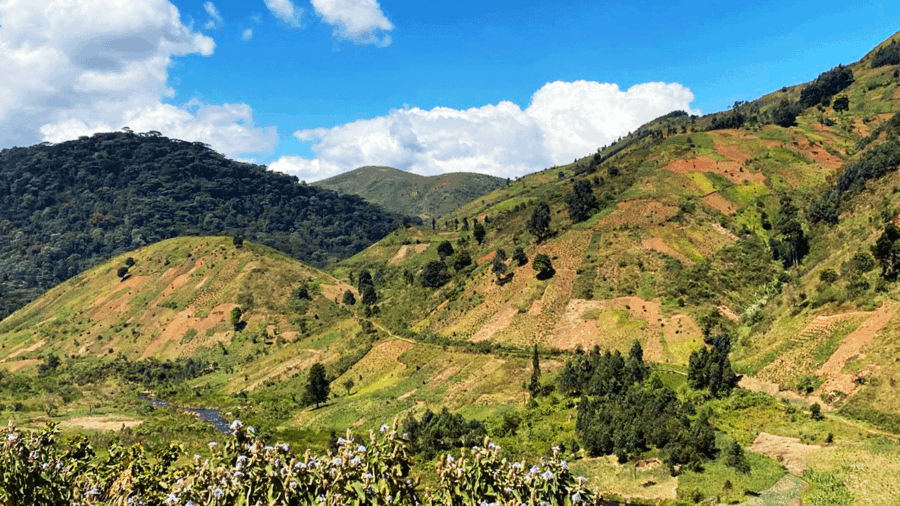
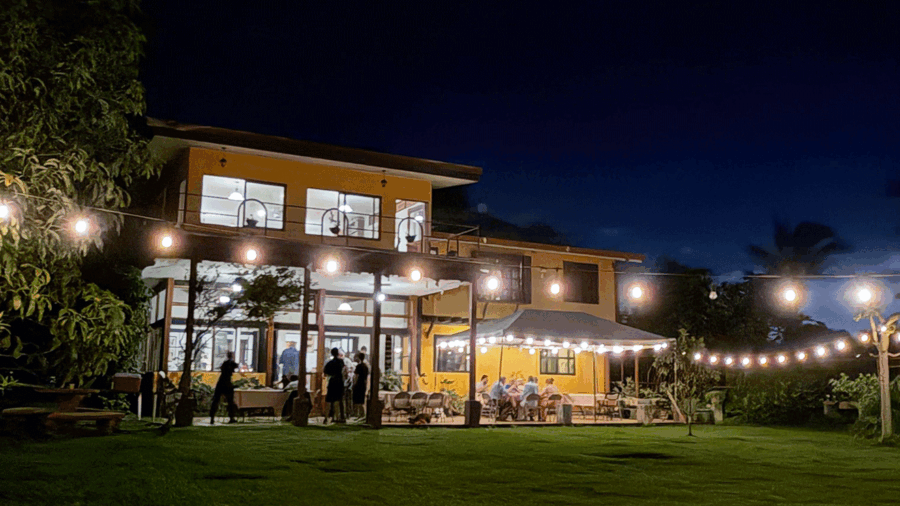
 Adobe is a building material made of mud, straw and manure. It is also a great metaphor for the kind of community Ruth and James Padilla DeBorst set out to create when they moved into Casa Adobe in San José, Costa Rica, with their blended family of eight back in 2010 – a place where the wounded and well, the destitute and the richly resourced, would share life. They were soon joined by a single father with his daughter, some foster kidsand a family of refugees from Nicaragua, and over the years many others have called this place home.

As time went on, the community set out to be good neighbours, and identified three areas of focus: ecology, radical hospitality and education. They registered as a non-profit and together welcomed both local people and others from far away for meals, long and short-term visits, internships and volunteering opportunities. They tutored children, founded a house church and soon identified the river running through the area – Río Virilla – as a neighbour in its own right.

For several years they have been getting to know this river and working alongside others to clean it, restore its banks and hold the businesses poisoning the water to account – in court where necessary. 

James says, ‘The grandparents of our neighbourhood remember swimming here, and now it is one of the most polluted rivers in Latin America. As we work to restore it, we don’t just see ourselves as its saviour, but as those needing to be mentored and discipled by creation, both by its damage and by its beauty.’ 
In 2025 Casa Adobe became the heart and home of A Rocha Costa Rica, and the vision has grown from concern with one section of one river to encompass an entire watershed, from its source to the salt marshes at its mouth. 

‘There is a river whose streams make glad the city of God, the holy habitation of the Most High.’ 
Psalm 46:4 

Find out more at costarica.arocha.org 

India-header_MC

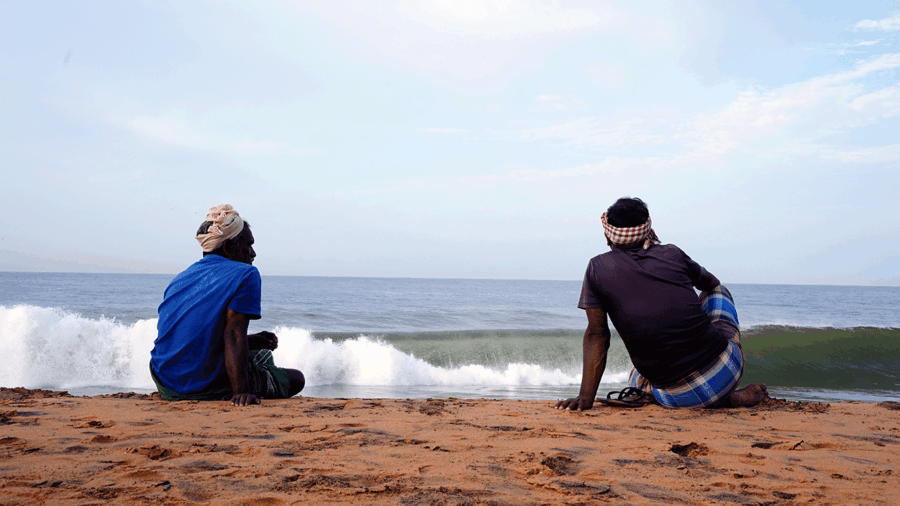
A new project for marine life and coastal livelihoods in Southern India

At the southernmost tip of mainland India, the Bay of Bengal, the Indian Ocean, and the Arabian Sea converge in a coastline rich in dynamic ecosystems. Marine life thrives across estuaries, lagoons, mangroves and seagrass meadows; sandy, rocky and muddy intertidal shores; nearshore rocky pools and reefs; and out toward continental shelves, upwelling zones and deep-sea habitats. Coastal communities, too, rely on these diverse habitats for their lives and livelihoods. However, these environments face mounting pressures from plastic pollution, habitat degradation and climate stress.

To address these challenges, A Rocha India has launched a new marine conservation project, expanding its conservation reach from the forests of Bannerghatta into coastal waters. Building on A Rocha’s science-led, community-focused approach, the initiative aims to conserve and restore ocean biodiversity while empowering local communities in Kanyakumari (Tamil Nadu) and Thiruvananthapuram (Kerala).

Expanding conservation from the forest to the ocean

Scientific rigour and local relationships are the foundation of this new marine project. In late 2024, A Rocha India welcomed Dr. Anita M. George to the team as a Project Associate and Marine Biologist. A Fulbright-Nehru Fellow and marine sponge taxonomy expert from the University of Kerala, Dr. George brings a wealth of experience in understanding ocean biodiversity, marine microbiomes and the ecological roles of critical marine organisms – even lesser-appreciated species like sponges.

At the project’s onset, Dr. George conducted a session on marine conservation for the A Rocha India staff, helping them transfer their skills from the Bannerghatta-Hosur landscape to the coast. This led to baseline field visits to the three potential project sites. Over years of researching and living in southern India’s seaside communities, Dr. George had formed contacts with locals and leaders who were instrumental in gathering information for this new project. 

Conservation rooted in local communities

Long-term conservation success relies on the trust and active participation of local communities. Across the coastal hamlets of southern India, fishing is not just an industry; it is a way of life deeply intertwined with local culture and faith institutions. When it comes to engaging with outside organizations, some fisherfolk have expressed scepticism toward NGOs visiting the villages, due to prior experiences where organizations failed to follow up after initial engagement.

Resolved to build a community-centred foundation, A Rocha India engaged directly with local fisherfolk, village leaders and church networks. From January to March 2025, the A Rocha team visited potential project sites where they met key community leaders and facilitated discussions with local fishing communities. One morning, the A Rocha team even joined the fishermen to assist with hauling in the previous day’s catch. This offered valuable insight into their daily routines and provided additional opportunities for meaningful engagement.

A key milestone came through partnerships with the University of Kerala Department of Aquatic Biology and Fisheries, which is one of India’s oldest universities and a prominent institution fostering aquatic research. A Rocha India hosted a beach cleanup in partnership with the university, with 40 Master’s students and 10 faculty in attendance. The group collected 250 kgs of plastic waste, including polythene covers, plastic bottles, plastic caps, discarded leather bags, shoes, glass bottles, metals and other polystyrene ghost nets for fishing. The cleanup also provided a wonderful opportunity to create a public demonstration for tourists and visitors at the beach.

Another of A Rocha India’s partnerships emerged with Coastal Peace & Development (CPD) – a development wing associated with the Church of South India operating across dozens of fishing hamlets in Kanyakumari. In early 2025, A Rocha joined a gathering of 55 women ‘animators’ – community leaders appointed by CPD to represent individual fishing villages. Through open dialogues and educational sessions, the team introduced A Rocha’s conservation vision, discussed the impact of marine pollution on local livelihoods and distributed practical goodwill gifts like thermal flasks for fisherfolk to carry hot water on sea trips.  

‘Engaging in open dialogue with local fisherfolk fosters trust and mutual understanding,’ the project team noted, reflecting on their initial focus-group discussions. ‘By working together toward a common goal, we can bridge gaps, build rapport and promote a sense of shared responsibility for the health of our marine environment.’ 

Responding to crisis with local insights

The flexibility of this new project was put to the test when an unexpected environmental crisis hit due to a major shipwreck along the Kerala coastline. On 25 May 2025, Liberian-flagged container vessel MSC Elsa 3 capsized and sank, resulting in the spillage of large quantities of plastic nurdles into the Arabian Sea. Plastic debris from the shipwreck spread across parts of the Indian Ocean and Bay of Bengal. The incident created widespread public anxiety over seafood safety, disrupting the ecosystem as well as income and trade of local fish vendors and fishermen.

In response, A Rocha India adapted its immediate research plans to conduct an extensive social survey across fishing hamlets in Kanyakumari, Thiruvananthapuram and Kollam. Reaching 75 direct survey participants and over 100 outreach contacts, the team gathered vital baseline data on how local communities perceive marine pollution, seafood safety and environmental risks. These insights ensure that A Rocha India’s ongoing conservation strategies are socially informed, context-responsive and tailored to the community’s real-world needs.

Looking ahead

As the marine conservation project moves forward, A Rocha India is gearing up for its next chapter. Plans are underway to publish multilingual educational guides, posters and digital toolkits aimed at raising awareness about endangered marine species, sustainable fishing practices and plastic reduction across more than 1,000 students and 200 fishing households. The team will also focus on raising awareness about local marine fauna and flora, particularly endangered and threatened marine species. 

Meaningful progress can only be achieved through collective action. A Rocha India is combining rigorous scientific monitoring with community engagement to cultivate a culture of care for the ocean and the creatures who depend on it. In this unique place where three seas meet, A Rocha is helping the waters remain vibrant and life-giving for generations to come.

DR-Congo_MC

Communities Speak: Healing Fractured Relationships Around Kahuzi-Biega National Park

Sweeping across lowlands, dormant volcanoes and high mountains in the Democratic Republic of the Congo, Kahuzi-Biega National Park is a sanctuary for wildlife species found nowhere else on earth, many of them endangered. However, a history of eviction, exclusion and punishment has left local Indigenous Peoples alienated from conservation efforts in the park. The local Church has a unique opportunity to transform these fractured relationships, as the vast majority of locals are practising Christians. As A Rocha DR Congo begins a new project in the region, it is catalyzing this opportunity and taking a community-centred approach to conservation.

Established in 1970, Kahuzi-Biega National Park is a UNESCO World Heritage Site in South Kivu. It is home to many charismatic species such as Eastern Lowland Gorillas, Bongo Antelopes, Bush Elephants, Dwarf Buffaloes, Congo Peafowl and, most notably, Grauer’s Gorillas Gorilla beringei graueri, the world’s largest primate. The national park provides crucial ecosystem services such as climate regulation, water conservation and soil preservation, not only locally but for the entire Congo Basin and the planet. 

This vital ecosystem now faces intense pressure, which can be linked to the historic exclusion of Indigenous Peoples from the park’s management, combined with rapid population growth and poverty. Threats include deforestation for charcoal, slash-and-burn agriculture, poaching, illegal mining and insecurity caused by armed groups. These pressures destroy ecosystems, pollute water sources, jeopardize food security and impoverish communities. In the current top-down approach to conservation, both people and the landscape are suffering. Transformative action is needed to reconcile conservation with the well-being of the human populations neighbouring the park.

A Vicious Cycle of Economic, Agricultural and Health Crises

A Rocha DR Congo envisions a community of engaged eco-citizens around the park. However, long-standing injustices have forced many into desperate situations. When Kahuzi-Biega National Park was established and expanded, thousands of local Batwa Indigenous Peoples were evicted from its boundaries. Forced to settle on the park’s periphery, they face extreme land insecurity. 

While surveying communities surrounding the park, A Rocha DR Congo found that the Batwa community harbours a sense of injustice and frustration linked to the loss of their cultural identity, their forest-based livelihoods and their traditional land management practices. During one of A Rocha DR Congo’s focus groups, an Indigenous leader expressed the following:

“For us, the Batwa of Kalonge, the forest is not just a collection of trees to be fenced off; it is our home, our own living environment, which has been taken away from us by the state. Imagine being evicted from your own hut and then being told that you no longer have the right to enter it. That is exactly how we feel about the park’s current boundaries. Yet this forest is our nurturing mother, our pharmacy and our traditional homeland. It is there that our elders used to gather medicinal plants, find our food, breathe pure oxygen, draw crystal-clear waterand perform rituals. It is also there that we practised Busingo, that ancestral knowledge which enables us to produce and light fire using the elements of nature. Busingo was not about destruction; it was the symbol of our alliance with the forest. Today, the fire of Busingo is gradually dying out, and with it, our culture. The impact is profound and painful: we are currently deprived of our natural habitat. We have been turned into spectators of our own land, when we used to be its guardians.”

As many of the Indigenous Peoples surveyed around the park do not own land (52%), they depend on private landowners in order to farm. This land is often leased on a short-term sharecropping basis, which forces farmers – most of whom are women – to over-exploit their small patches of land season after season, leading to a decline in soil fertility. As it is impossible to expand their agricultural land legally, many resort to exploiting the park’s free and accessible resources.

The obligation to pay high rent traps farmers in an unsolvable economic equation, keeping them below the extreme poverty line. Chronic food insecurity follows, leading to alarming health consequences. For instance, two out of three children in the village of Mule suffer from Kwashiorkor, a form of severe protein-energy malnutrition. While A Rocha DR Congo was conducting its community surveys, South Kivu experienced a resurgence of Ebola virus disease, highlighting the urgent need to address the root causes of these health crises.

Humans and Wildlife Depend on a Healthy Ecosystem

Historically, institutions have regarded Batwa Indigenous Peoples as marginalized and illiterate populations. In reality, a large proportion of their population has completed secondary and higher education. The Batwa population is fully aware of its ancestral rights to the forest, and they understand complex issues of biodiversity, conservation and environmental justice. However, opportunities for formal employment in and around Kahuzi-Biega National Park are virtually non-existent. Though illegal, subsistence practices in the park have become necessary for many people’s survival.

A Rocha DR Congo’s surveys revealed that the local Indigenous community appreciates the national park’s vital role in conserving forests, protecting wild animals and serving as a potential opportunity for tourism. Culturally, gorillas, snakes and leopards are highly respected, and their protection is supported by the community.

Indigenous communities also showed a keen, practical understanding of the ecosystem services provided by the park’s forest. Farmers directly link forest loss to local climate disruption, particularly reduced rainfall. They explained how this has resulted in declining harvests, drying water sources, and increasing animal diseases in livestock. Batwa Indigenous Peoples understand the vital link between the park’s conservation and their own agricultural survival, but in the current system, they are driven by extreme necessity to exploit the park’s resources. A Rocha DR Congo seeks to build on this knowledge and provide practical solutions to restore both the forest and community trust in its governing bodies. 

A Spiritual, Practical and Community-Centred Approach to Conservation

The communities surrounding Kahuzi-Biega National Park do not exploit it out of ignorance or greed, but out of extreme necessity. A holistic approach is needed, and A Rocha DR Congo has identified the local church as a unique venue for transforming this situation. In the Kalongecommunity, which borders the park, the Church is not merely a place of worship; it is a stable, highly influential institution with the power to mobilize social change. 98% of the local population is religious and practising (mostly Protestant and Catholic), making church engagement the most effective way to deliver environmental education.

These churches are also unique spaces for inclusion. The local Batwa community is overwhelmingly Christian and integrated into the same religious networks as the non-Indigenous local communities. While land disputes and historical exclusion surrounding the park often create significant social tensions between these groups, church pews remain one of the few places where people of different backgrounds can come together in a spirit of fraternal equality.

Catholic parishes and Protestant churches in Kalonge offer a neutral venue for dialogue. Within the Church, environmental education can be framed not as a constraint imposed by the park but as a shared spiritual responsibility. Creation care theology is still uncommon in DRC churches, so this initiative from A Rocha will be the first of its kind in the region. Other influential channels for environmental education include Kalonge Community Radio, schools and community associations, which provide ideal spaces for building trust and raising awareness.

To break the cycle of poverty and deforestation around the park, A Rocha DR Congo also aims to implement a green development initiative focused on sustainable livelihoods:

  • Agroecological Farming: Establishing small, high-yield vegetable gardens through community-led farmer training, with a strong focus on empowering local women. 
  • Community Agroforestry: Planting fast-growing species on household farms and bare land to generate income, establish community forests and reduce illegal tree cutting for charcoal.
  • Sustainable Livelihoods: Introducing beekeeping and small livestock to diversify household incomes and improve nutrition without exploiting park resources.

Because a large proportion of the population farms land they do not own, they are also less inclined to invest in long-term sustainable practices. The Batwa, in particular, are excluded from private forestry and confined to purely subsistence farming. The green development programme A Rocha envisions will promote land security for farmers by offering incentives and negotiating long-term leases with private landowners. By securing land rights for community farmers, we can break the cycle of dependency. 

Institutional changes to how the park is governed are also needed. Often, environmental management at Kahuzi-Biega National Park is top-down and exclusionary, and community trust in park management is exceptionally low. The vast majority of community members told A Rocha DR Congo that they are not sufficiently involved in decision-making. A Rocha advocates for conservation approaches grounded in social equity, which engage the Batwa Indigenous minority and other local community members as co-management partners at every step of the process. While men have historically dominated decision-making, women are the primary drivers of subsistence farming. Because they work the land daily, truly inclusive governance will engage women, as well.

In the Democratic Republic of the Congo, protecting precious wildlife and ecosystems need not come at the cost of human flourishing. By grounding conservation in the socio-economic, environmental and cultural realities of Indigenous Peoples, A Rocha DR Congo is helping cultivate a future where nature and humanity thrive together.

Heidy-Chung_mc

God’s worshipful design

Picture of Heidy Sumei Chuang

Heidy Sumei Chuang

God’s worshipful design

An Invitation to Churches and Artists.

‘God saw all that he had made and it was very good! There was evening, and there was morning, the sixth day.’
Genesis 1:31NIV

When I teach watercolor classes, I begin with this verse to help my students understand that creativity is a gift from God and a mirror of His own creative process. It is a poignant and profound way in which we, God’s masterpieces, image him. Just as God looked and saw (surveyed, reflected on, concluded) that all he had made was very good, we, too, are invited by Christ to ‘consider the birds of the air and the flowers of the field.’ This ‘seeing’ is the very first skill I teach my students, for the work of a visual artist stems from our ability to perceive and consider. Just as a cellist knows their instrument uniquely – the weight of their bow and the smooth ebony beneath their fingertips – the artist wields the instrument of observation with lifelong practice and curiosity.

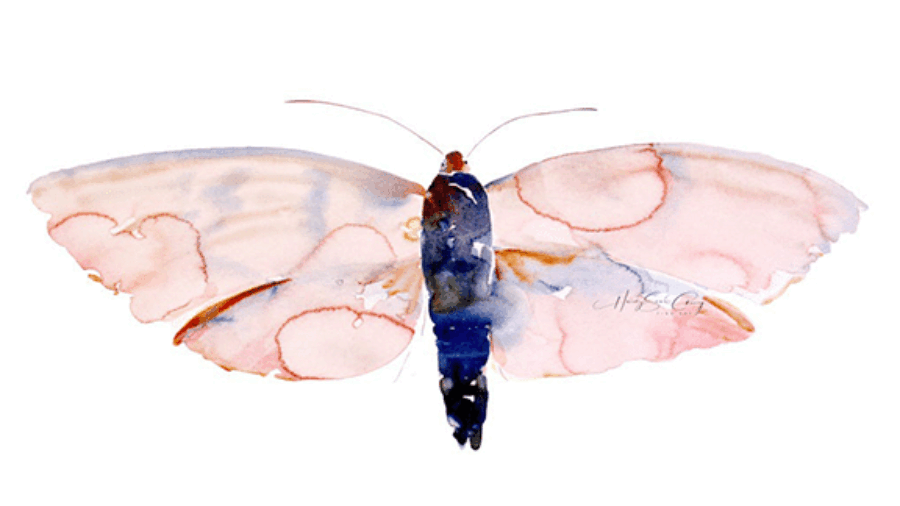
When we learn to look, two things happen. First, we discover that creation is very good. I am reminded of my time at A Rocha France, painting moths and finding the beauty and intricacy of these often-overlooked insects. Sometime later, at L’Abri in Switzerland, this experience was mirrored in my workshop with students as I asked them to closely observe and draw moths at various stages of their lifecycle. The act of looking and creating was utterly transformative, with one student sharing that three days earlier, she would have killed a moth without a second thought. They had learned to cherish – to see the ‘very goodness’ – of this tiny piece of creation. The artist’s role is to teach people to see, and when we learn to see, we respond with love. 

The second thing that happens is that God is revealed in creation – ‘The heavens declare the glory of God.’ When I have sent my students into nature to practice looking, God has spoken to them as He so often speaks to me. The artist becomes a storyteller. As I consider, ponder, and discover the depths of God as revealed in creation, my art tells these stories.

My friend, a composer, tells me that for her, the beauty of music is that it unfolds through moments in time. As an artist, I find great beauty in art’s ability to hold countless brushstrokes, hours of effort, and corresponding or even contradictory ideas all together, at once, on the same paper. Meaning is so powerfully received when it is rooted in the complexity of life; as the Psalmist wrote, ‘he makes the valley of Achor a gateway of hope.’ Not the valley of abundance or ease, but the valley of trouble. Art holds space for mystery and paradox in a way that is unique to this discipline and has been explored within Christian worship for centuries if not millennia.  

‘Then Moses said to the sons of Israel, “See, the Lord has called by name Bezalel the son of Uri, the son of Hur, of the tribe of Judah. And He has filled him with the Spirit of God, in wisdom, in understanding and in knowledge and in all craftsmanship; to make designs for working in gold and in silver and in bronze, and in the cutting of stones for settings and in the carving of wood, so as to perform in every inventive work.”’ Exodus 31:1-5 

The first time God’s Spirit is recorded as filling a person is to give an artist wisdom, understanding and craftsmanship. This passage also speaks of what God finds beautiful – our worshipful response to the work of his hands, the land beneath our feet. Not any land; the pomegranates and grapes made of gold were meaningful and fruitful in their culture, time, and place.

The question of how we can incorporate art into worship is not answered from a distance but rather within a specific community. This can sometimes be lost in our increasingly global world. Who are your artists? What land do you inhabit? What is significant, worshipful, and beautiful in your church community?

This passage also speaks of the invitation and role of individual artists, for Bezalel was called by name.

If the church, in a world full of industry and agenda, can create spacious places for artists to flourish, they will become the storytellers, teachers, and hope-bringers God has designed them to be. They will bless the body and creation with their ability to look and respond. Art is not just something God uses but sits right at the center of His rich and full design for worship.

Finally, I am reminded of two stories. The first was the Easter Vigil at my church, Church of the Cross, Boston, where artists, musicians, chefs, florists, and others filled the church with God’s creation and our worshipful response to Him. I saw in the details artistic coincidences that are impossible to orchestrate apart from God’s pleasure, intention, and presence within our art. The second was an exhibition of my work at Waterfall Gallery, NYC, one of the busiest and most secular cities on earth. Many at the exhibition saw paintings pleasing to the eye, but those who had eyes to see saw the message of reconciliation and hope within my floral collection, ‘Beauty from Ashes’. The call to the visual artist is to see and worship, build up the body, and finally, be hope-bringers to our despairing and complex world, by speaking of God’s care – for us and all of creation. 

This blog was republished with permission from Heidy’s Substack and is an excerpt from Worship & Creation: A Digital Guidebook by A Rocha USA (2024). You can download the full guidebook for free here.

Other Articles

DSC_0061-e1516030304535-1500x591

Volunteers for civic service missions

We are currently looking for three young people in civic service to:

  • A mission to help develop the educational garden and welcome the public. Mission of 8 months. All the information here.
  • A mission to assist in conservation activities and the reception of the public. Mission of 8 months. All the information there
  • A public reception mission in Les Courmettes and support for the association’s activities at the national level. 8-month mission. All the information here.