Coral gardeners

Blue Thumbs: Tending Watamu’s Coral Garden

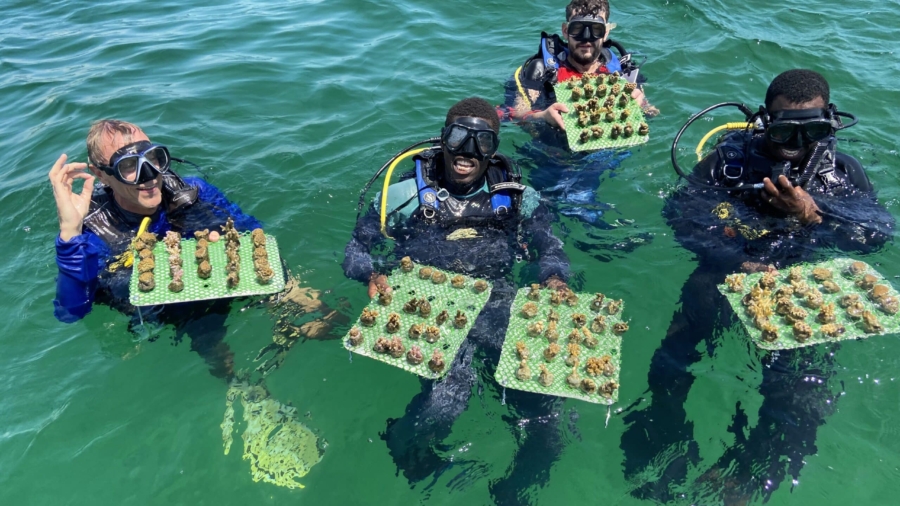
Underwater gardeners are growing resilient coral reefs in Kenya. It’s not altogether different from terrestrial gardening: in an underwater nursery, divers cultivate coral fragments on plugs, allowing them to grow large enough for ‘planting’. Rather than using fertilizer or soil, they mash together an epoxy glue that holds underwater and transplant the coral plugs to degraded reefs with nails and screws.  

The gardeners return frequently to track the coral’s survival, growth and health, tending to them with care. While weeding out excess algae, fish swarm around, enjoying a feast of invertebrates dusted up by the gardening activities. Much like their efforts to reforest degraded woodlands, A Rocha Kenya is restoring a vibrant reef ecosystem in Watamu Marine National Park.  

Planted coral

Watamu is one of the world’s oldest marine parks, established in 1968. Since then, this 10 km² area has been protected by the Kenya Wildlife Service against human threats like fishing and unsustainable coastal development. However, the park’s coral reefs still face the threat of increasing thermal stress and coral bleaching.  

A vital reef turned skeletal 

Historically, Watamu’s coral reef was magnificent with diverse corals of vibrant colours that housed a myriad of fish and other marine life. Research on these corals has been ongoing for over 40 years, so we have a strong understanding of how they have degraded over time. The reef was once considered healthy, boasting 40-50% coral cover. However, a devastating global bleaching event in 1997-1998 drastically changed the landscape. The reef turned completely white, and coral cover dropped to a mere 10% between 1998 and 1999.  

Corals are not inert, colourful rocks: they are animals, closely related to jellyfish and anemones. Corals have a symbiotic relationship with the tiny microalgae that live inside their clear tissue and give the corals their stunning colours. Coral protects and gives essential nutrients to the microalgae. In return, the algae produce sugars through photosynthesis that feed the coral.  

Rising sea temperatures have caused this vital relationship to break down. When waters warm to a stressful temperature, algae becomes toxic to the coral animal, and the coral expels it to survive the heatwave. This leaves the coral bleached and vulnerable, its white skeleton showing through the transparent tissue. Eventually, the corals may die, and the hundreds of thousands of marine animals they support will suffer, as well.  

Watamu’s coral reef has never been the same since the bleaching event in the ‘90s. Corals have recovered somewhat, but continued and more frequent bleaching events have ravaged corals in Watamu and around the world. A devastating bleaching event in 2024 may have had an even worse impact on the reef. Before the 1990s, bleaching was a small, localized occurrence in response to ocean pollution after a storm. Mass bleaching events are becoming a regular occurrence, but they are a modern phenomenon.

Partially bleached coral
Fully bleached coral

Learning from corals’ resilience 

Every six months since a bleaching event in 2020, A Rocha Kenya revisits over 600 tagged corals in 70 permanent plots in the marine park to see how the corals are growing. They also assess if there are bleaching-resistant colonies and if baby corals (recruits) have settled in the plots. Repeated bleaching has caused the coral cover to decline from 35% in 2020 to 11% by April 2025. Nevertheless, A Rocha observed many corals that survived, pointing to signs that some corals may be developing increased thermal tolerance. 

While corals can recover from bleaching, this depends on the thermal adaptation and regrowth of corals outpacing the rate of rising sea temperatures. Reef recovery is further constrained by low coral recruitment and the overgrowth of dense macroalgae, which outcompete coral for space and light. Thankfully, corals that survive bleaching often exhibit increased thermal resistance, making them more likely to survive future events. 

This sign of hope catalyzed A Rocha Kenya to implement the first Kenyan coral gardening project in a protected area. After years of observing and documenting the reef, A Rocha began a restoration pilot in Watamu in April 2024, in partnership with Coral Reef Care and the Kenya Wildlife Service. Propagating and planting these thermally resistant colonies back onto the reef could help overcome the issue of low recruitment and speed up the recovery of Watamu’s reefs. 

Coral gardeners
Coral gardeners planting in Watamu Marine Park

The coral gardening process takes place in three stages: 

  1. Collecting coral fragments. The collected fragments are either Corals of Opportunity, (COOs) naturally broken fragments found in the ocean from various coral types or fragments from Thermal Resistant Colonies (TRCs), colonies that have naturally adapted to withstand higher temperatures without bleaching or suffering mortality. 
  2. Coral ‘gardening’ and transplantation to the reef. Collected fragments are taken to underwater nurseries. COOs are glued onto plugs or zip-tied to nursery tables for stabilization while TRCs from outside the park are placed in nurseries to monitor growth before transplantation. Local TRCs are directly transplanted to reefs after collection. Once the corals in the nurseries have grown to a suitable size, they are carefully transplanted back onto degraded reef areas. 
  3. Monitoring and maintenance. TRCs are often prioritized for planting in areas most affected by bleaching. The transplanted corals are regularly monitored to track their survival, growth and health. This includes checking for signs of disease, predation or bleaching. The team also weeds the substrate and the nurseries regularly to ensure the baby corals have the space and light they require to thrive. 

Nurturing an adaptive coral garden 

In 2025, A Rocha Kenya and their partners planted 1,565 corals within Watamu Marine National Park as part of the ongoing coral restoration efforts. Additionally, the marine team is introducing heat resistant corals from outside Watamu to increase genetic diversity and restore some of the species that have disappeared from the park. Following El Niño-related stress, resilient coral species (including Stylophora subseriata and Porites cylindrica) sourced from Kuruwitu were introduced and are currently under close monitoring to assess their adaptation and growth. An additional 116 broken coral fragments were collected from nearby Uyombo. 

Monitoring remains continuous and adaptive. Survival rates, bleaching responses and growth patterns guide restoration decisions, with interventions designed as structured experiments to identify coral species and genotypes capable of withstanding increasing thermal stress and changing ocean conditions.  

The coral garden is a community effort, engaging tourists, volunteers and local boat operators in hands-on marine conservation of a beloved ecosystem. In 2025, A Rocha Kenya organized 58 boat trips, totaling over 470 diver-hours. Collaboration with key partners including Kenya Wildlife Service, Bahari Hai Conservation, Turtle Bay Dive Centre, and Coral Reef Care is central to the project’s success.

Coral gardeners underwater

Since March 2026, Kenya Wildlife Service has expanded the restoration initiative by bringing in additional partners, including IUCN Kenya, Kenya Marine and Fisheries Research Institute and others. This collaboration aims to scale up reef restoration using a range of techniques, such as underwater sculptures, reef stars and artificial reef blocks. These efforts are also intended to create an alternative tourism site, helping to reduce visitor pressure on the natural coral reefs. 

Why work so hard to protect these corals? Coral reefs are some of the most diverse and valuable ecosystems on Earth. They support more species per unit area than any other marine environment, including about 4,000 species of fish, 800 species of hard corals and thousands of other species. Scientists estimate there may be millions of undiscovered species of organisms living in and around reefs. This biodiversity is considered key to finding new medicines for the 21st century. A Rocha also believes that coral reefs have value independent of any use to humans and should be protected regardless, as creatures loved by God. 

The future of our coral reefs depends on their ability to regrow faster than the heat rises. In a time of compounding crises from climate change to biodiversity loss, we are embracing creative solutions to protect life on Earth. 
Conservation Certificate Cohort 1

Conservation Certificate Cohort 1: The Experience

Picture of Sylvia Muia

Sylvia Muia

Conservation Certificate Cohort 1: The Experience

Almost a year since its launch, the Conservation Certificate’s first cohort will graduate by the end of July. Read about their transformational experiences

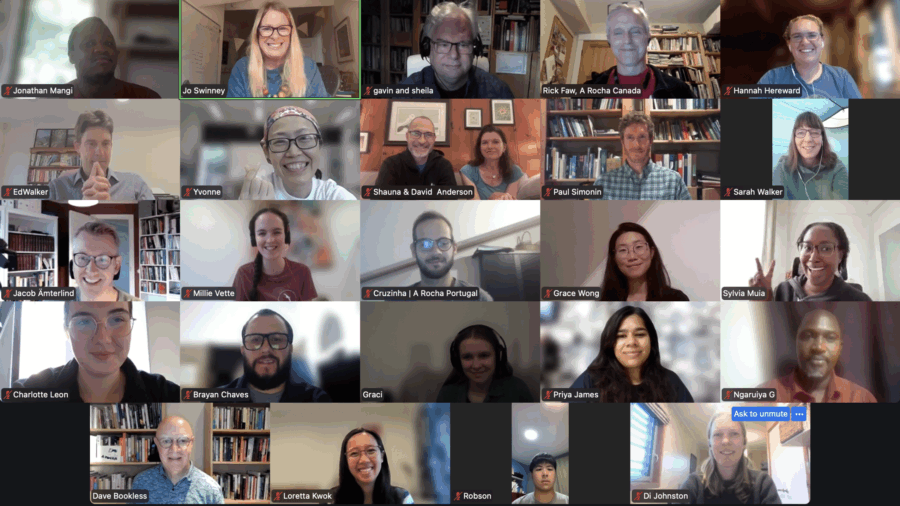
Almost one year ago, A Rocha International launched the Conservation Certificate with the first cohort of 15 students coming from 10 countries in Africa, Asia, Europe, North and Central America and Oceania. Created to honour the memory of Chris Naylor (former Executive Director of A Rocha International & founder of A Rocha Lebanon), his wife Susanna Naylor (co-founder of A Rocha Lebanon) and Miranda Harris (A Rocha co-founder, the certificate equips young leaders in conservation to be hopeful and effective conservationists.  
 
In this blog post, students share their experiences of how the certificate has transformed their minds and lives. 

1. The course has been attended by students from different parts of the globe with different cultures and challenges.  What have you learnt from your fellow participants? 

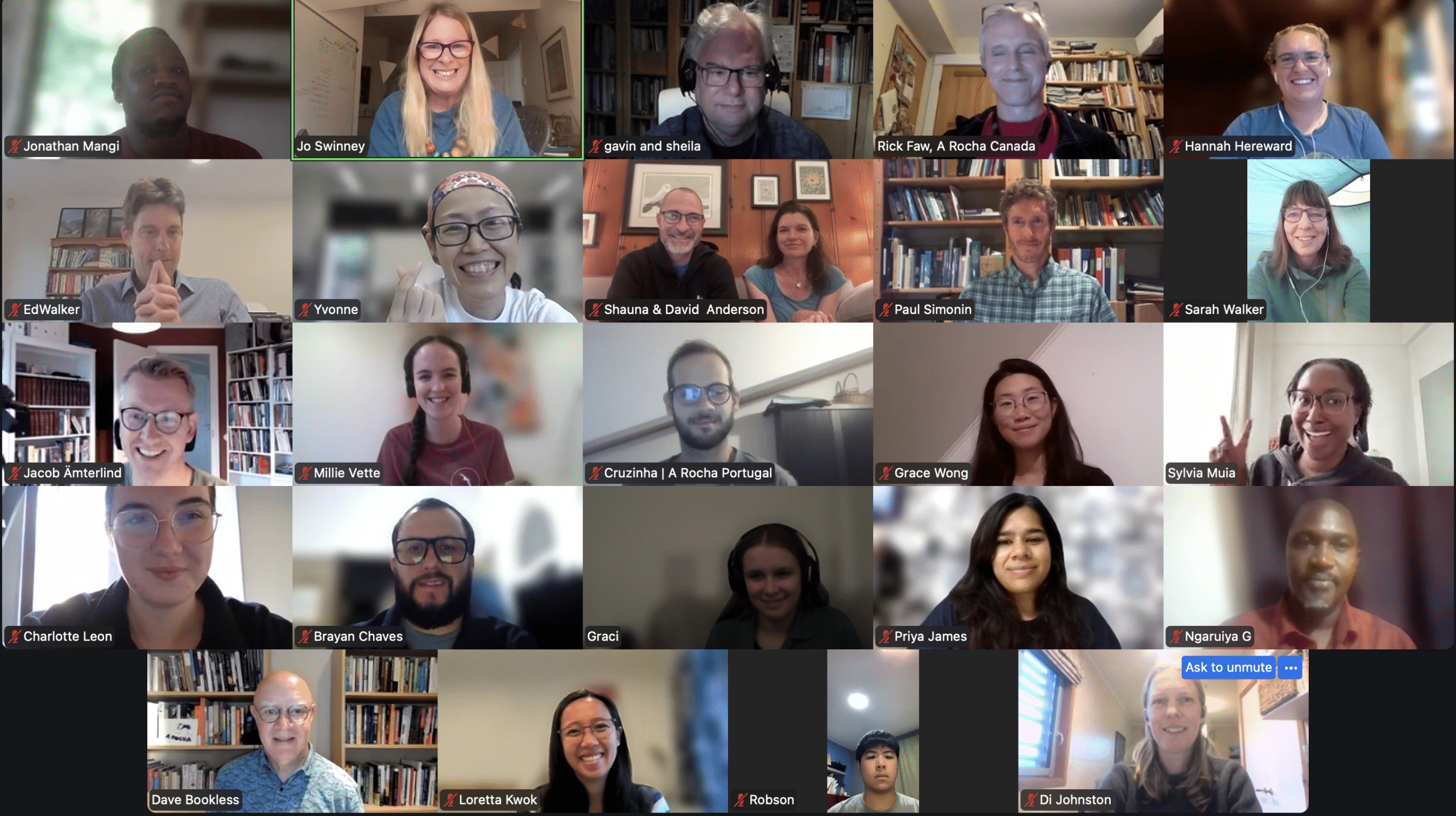
People working in conservation do so many different jobs. From communications to administration to housekeeping to science, they all work towards caring for creation in all the ways they contribute. I initially only thought that scientists’ work mattered in conservation but the certificate changed how I viewed that. It made me realize that the work I do still has an impact in conservation through the storytelling that reaches many people through the A Rocha website, social media and publications. Sylvia Muia (Kenya) 

For me, I live in a rural setting and I’ve been amazed by all the creation care efforts coming out of Hong kong for example. A context that is so vastly different from my own but I’ve been really encouraged by all the examples of God’s creation there and the people working with it. But then also to realise that we have so much in common, in our faith, in our passion for creation and in our struggles and difficulties have been encouraging as well. Jacob Ämterlind (Sweden) 

I have loved experiencing creation through the eyes of my fellow participants. Our Awe and Wonder channel on Slack has been such a beautiful space for sharing. I have loved seeing different parts of the world throughout the year. Species that I have never seen before, and climates I am yet to experience (others in snow while I am in summer!). Seeing how we are all in awe of God’s beautiful creation has deepened a sense of hope and joy for our future. Knowing that it isn’t just me and my friends at the bottom of the world who care, has been a deep source of hope. Millie Vette (New Zealand) 


2. How has the course transformed you in your personal life and has it changed how you view God’s creation? 

I always enjoyed being part of nature, especially when I take walks in the forest. Now I get to appreciate every part of creation including human beings and their innovations. I have begun to notice little things more. The sand that turned into stone that was turned into a house. The water that was turned into electricity that lights up the night. The darkness that allows us to see the stars at night even though I used to be terrified of it. Every little thing has a purpose. Even the mosquito and cockroach but I am still debating those two. Only God knows. Sylvia Muia (Kenya) 

“the work I do still has an impact in conservation through storytelling”

3. Has the course helped you professionally within the roles you are in working for A Rocha?  

Yeah, it’s been great. It has given me so many new thoughts and ideas. Both for practical conservation and for organisational development. If I have to pick something, I’d highlight the sessions on how to set up a project, which was very hands on but also the sessions on advocacy and community engagement was really fascinating and encouraged me to be more proactive, I’d say, in involvement with authorities for example. Jacob Ämterlind (Sweden) 

I am the regional coordinator for the upper North Island for the Eco Church project here in Aotearoa, New Zealand. I spend a lot of time with churches, talking about the importance of creation care and how important it is to the life of the church. The Conservation Certificate has deepened and expanded how I communicate and support churches in my work. This has been through the different readings we have had and hearing from the experiences of our teachers that this learning has happened. Millie Vette (New Zealand)  

As a communications coordinator, there is a lot of content and information about A Rocha that I send to our audiences that requires me to have a greater understanding of creation care theology. I am now able to explain what we mean when we say God has commanded us to care for creation. It isn’t a concept that we are creating from thin air but a command that is in the Bible that has evidence. Sylvia Muia (Kenya)

4. Spiritually, has the course affirmed/challenged your belief about God’s call to steward and care for his creation?  

Yes, definitely. And also affirmed my belief that God is working through A Rocha in a very special way. The many, many stories and examples from around the world that we’ve been listening to is really encouraging. And you can clearly see God’s hand at work there. And the diversity of speakers has been great as well. I feel like there’s a change coming, God is calling people from all over the world to wake up and challenge the ecological crisis head on. And that is giving me a lot of hope, both for the future of A Rocha but also for the church as an agent for change. And we need hope, don’t we. Desperately so. Jacob Ämterlind (Sweden)

“The Conservation Certificate has deepened and expanded how I communicate and support churches in my work”

5. Do you lead in any capacity ie a team, or a group of volunteers etc.  Has the course helped your leadership skills? 

I am not necessarily in a leadership position but in a position expected to inspire others. I train and support A Rocha comms personnel from more than 25 countries. The course has helped me learn to recognize that we all come from different cultures with different personalities. Someone being different from you can be challenging but it is a learning moment that can help build a meaningful professional connection. Sometimes, there could be surprising similarities but it is exciting to discover more than what you are used to. Sylvia Muia (Kenya) 

6. Conservation work can be demanding, pressurised and also depressing in the face of climate change and global biodiversity collapse – has the course equipped you to cope with the hard times and given you a road map of hopefulness? 

Conservation work can be a heavy burden, especially when the expectation is that humans need to fix what they have ruined. The course has been a helpful reminder as to why Christian conservationists play an important role in inspiring others to have hope. It is not a burden for us to carry but the Lord who still loves and cares for creation. It is such a relief and a great reminder that God is still the creator. Sylvia Muia (Kenya)

Picture of Sylvia Muia

Sylvia Muia

Based in the bustling Nairobi city, Sylvia connects A Rocha to the world through creative writing and social media posts. Sylvia is a trained journalist and has a degree in Corporate Communications and Management. Sometimes, she can be spotted knitting, painting or baking cottage pies if she is not catching up on her favourite show.

Other Articles

Unlikely partners

A personal view of the collaboration between finance and nature. This reflection explores whether finance and nature conservation are truly in conflict, or whether they

Read More »
Mole-crab_mc

Small, Strange and Sacred: Why A Rocha Protects Under-Appreciated Species

All species are worthy of attention, love and protection. But less charismatic creatures–like the Mole Crabs swarming along Florida, USA’s sandy beaches or the crickets flitting around the dry meadows of Switzerland–are often overlooked by the public, and even by scientists. Around the world, A Rocha organizations enthusiastically study under-appreciated species as an opportunity to express our values and implement strategic conservation projects.  

When deciding how to approach a project, A Rocha uses the IUCN Red List of Threatened Species to understand the conservation status of the species that are present and whether or not they are at risk of extinction. However, many species are still listed as ‘Data Deficient’, meaning the creature hasn’t been studied thoroughly enough to receive an official ranking. These species are an opportunity for A Rocha to provide valuable conservation data and fill in the gaps where our partners and other organizations are not currently focused.  

Many of these under-studied creatures could play vital roles in their ecosystems, but we don’t have enough data to understand them, let alone advocate for their protection. Their decline or extinction could have unpredictable and grave consequences for ecosystems that are already struggling.  

We often value creatures for their usefulness: for ourselves or for the wider ecosystem. But deeper than that, we care for overlooked species because God created them and loves them.

A Rocha International’s Director of Theology, Rev. Dr. Dave Bookless describes this as ‘theo-eco-centrism’:

‘Animals and indeed the whole of wild nature are inherently valuable in the sense of being valued by God regardless of their significance for humanity.’

In Genesis, ‘God delights in creating and providing for all creatures.’ Humans, made in God’s image, are then commanded to assist in the ‘flourishing of the whole good creation.’ (‘Why should wild nature be preserved?’ by Rev. Dave Bookless)  

Mole Crabs on Florida’s ‘Space Coast’, USA 

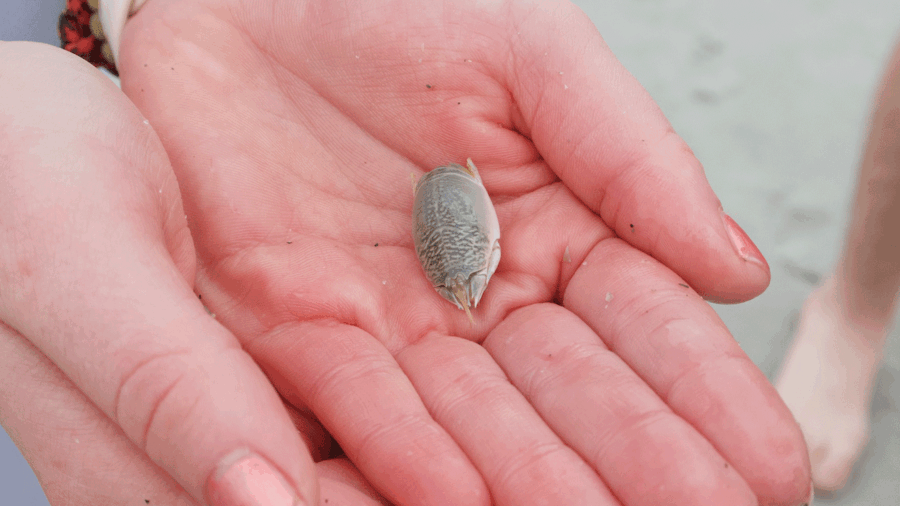
The Atlantic Mole Crab Emerita talpoida [cover image] is a tiny and unassuming crustacean studied by A Rocha USA. Also known as ‘sand fleas’ by Florida locals, they are far from being a pest. Mole Crabs are foundational to the sandy ecosystem, acting as an essential food source for shorebirds and fish. Because of this, local fishers use them as bait.  

It was these fishers who indicated to A Rocha USA that the local Mole Crab population was in decline. The reason is unknown, and they have not yet been assessed for their global conservation status. A Rocha’sconservation interns set to work designing a project to understand the Mole Crab’s spatial and temporal abundance along Florida’s Space Coast.  

Volunteer students from Waynesburg University joined the search for Mole Crabs in the tumultuous ‘swash zone’ where waves wash over the beach. The conservation interns later presented their findings at a local symposium and developed communication materials about both the scientific aspects of their research and the theological experience of connecting with a small yet beloved creature. By owning this project from start to finish, they brought many people together in a journey of appreciation for an under-studied species. 

Grasshoppers and crickets in the Swiss Dry Meadows 

Through regular habitat maintenance and species inventories, A Rocha Switzerland sparks excitement for the lesser-known insects of the dry meadows. Many people appreciate butterflies, but it’s much rarer to find outings dedicated to observing crickets and grasshoppers—these are generally reserved for a select few enthusiasts. 

Yet these less charismatic species are fascinating in many ways when you take a closer look: they produce a repertoire of sounds just as extraordinary as birds’, allowing you to identify certain species by ear even though they look exactly alike. They undergo numerous molts before reaching adulthood, facing dangers at every stage.  

To reproduce, crickets and grasshoppers deliberately search for the perfect habitat, which has either vegetation or soil loose enough to lay eggs, but neither too dry nor too wet; plenty of hiding places; and food—whether plant-based or even carnivorous—to suit their needs. Some species found in dry grasslands have such specific ecological needs that they serve as indicators of whether the habitat is in good condition and able to support other creatures. 

Grasshoppers and crickets enable reliable ecological monitoring, especially since their ecology is well understood in Switzerland and they play a key role in the food chain. For example, the endangered Italian Grasshopper Calliptamus italicus requires areas devoid of vegetation; this species can therefore be supported with minimal effort through periodic brush clearing and the creation of clearings. Though it may seem a bit plain at first glance, when it jumps, its red wings unfold magnificently! It is a species just as important and interesting as a butterfly when you take a closer look.

Ruspolia nitidula - Gabriela Joray
Ruspolia nitidula

The moths of Portugal 

Moths, the nocturnal cousins of butterflies, play a vital role in keeping ecosystems in balance. Around 2,800 species have already been identified in Portugal, and that number is expected to grow in the coming years as moth trapping and identification stations continue to spread across the country. 

Beyond being a key food source for countless animals, moths are excellent pollinators of a wide variety of plants. Many species fly and feed during the day, and some of those plants are part of our everyday diet, making moths quiet but essential contributors to our food security. 

Scientists also study moths to assess the impact of climate change and other environmental pressures on habitat health, as they are outstanding bioindicators of ecosystem quality. 

Unfortunately, many people still associate moths with bad omens, and in some parts of Portugal they are even called ‘witches’. Others avoid them out of fear that they’ll damage clothing, when in fact fewer than 1% of species do, and even fewer today given that most of our clothes are synthetic. 

A Rocha Portugal has been studying moths without interruption since the 1990s — trapping, identifying and recording them to better understand and protect them. Moths are also a key part of A Rocha Portugal’s ‘Discovering Pollinators’ project, which runs every year with schools across the Barlavento Algarvio region. 

Portugal_Catocala mariana Isabel Cunha Soares

Historical project: Beach Boys in Kenya 

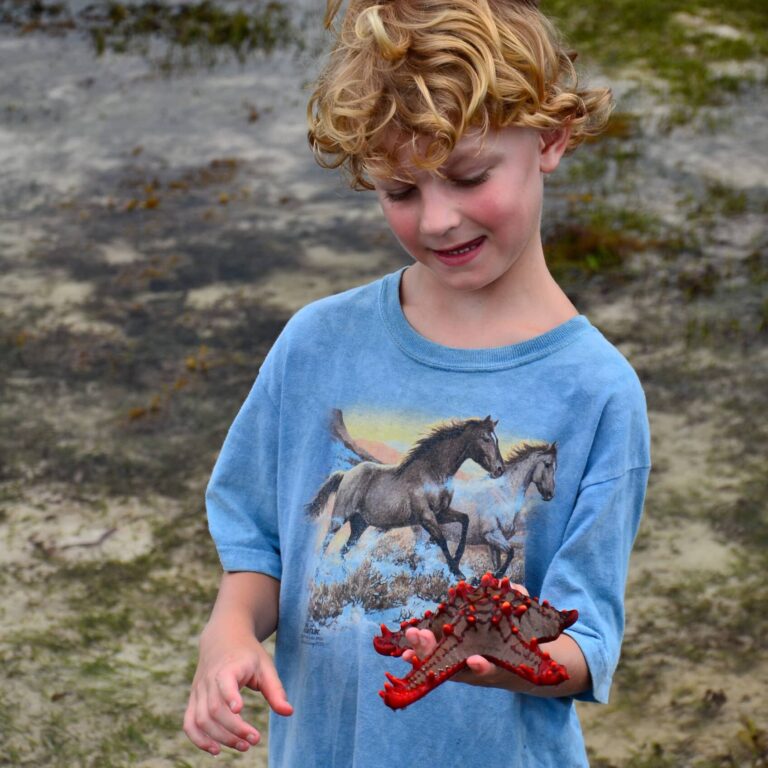
The intertidal rock pools at Kenya’s Watamu Marine National Park often go overlooked in favour of the stunning coral reefs, which attract the attention of scientists, locals and tourists. In 2013, Bob Sluka was working on marine projects in Kenya. Accompanied by his family of young children, the Slukas spent more time exploring rock pools than diving in the reefs, and they encountered a surprising array of marine species there.  

Few, if any, locals were studying biodiversity in Watamu’s intertidal rock pools, so A Rocha Kenya filled in the gap with a new species monitoring project. There, they discovered the incredibly rare Crisp Pillow Coral Anomastraea irregularis. The team had been searching for this coral in the ocean’s reefs, but finally found them in this unlikely place. This coral is classified as Vulnerable, but it is often overlooked compared to other vulnerable species in Watamu.  

These encounters in the rock pools led to a project that engaged a relatively overlooked group of people: the local ‘Beach Boys’ who would informally approach tourists just outside the park to give them tours of the rock pools. Often, however, the information they shared was inaccurate, or they would inadvertently harm wildlife by picking up and moving interesting creatures to different pools. A Rocha Kenya stepped in to offer the Beach Boys scientific training, engage them in conservation work and provide them with a certificate to help improve their livelihood.  

By surveying overlooked species and investing in the local community, A Rocha Kenya holistically protected a vital habitat. A Rocha continues this tradition worldwide, offering love and rigorous scientific attention to neglected species as an act of worship to the God who made them and declared the whole of creation ‘very good.’ 

Salmon_mc

A way home: breaking barriers for Canadian salmon

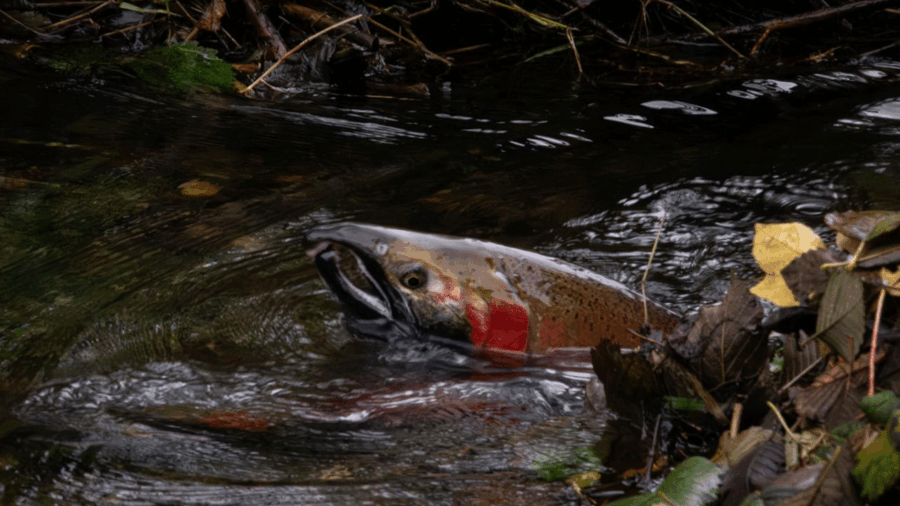
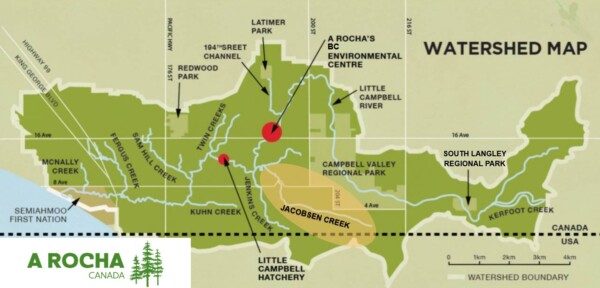
For over 30 years, salmon trying to swim up Jacobsen Creek, a tributary of the Tatalu in South Surrey, Canada, were met with a two-meter high culvert, blocking passage to the creek and affecting the creek’s ecological balance.  

To help bring the salmon back to the creek, A Rocha Canada’s Conservation Science team came up with a plan to reconnect the creek with a fishway, designed to follow the creek’s natural meander. Planning and construction were carefully timed to minimize risk to the fish and their habitat, and fish in the area were safely caught and moved to other parts of the creek, before temporarily redirecting the water flow around the work site. 

Construction of the fishway, which raised the streambed to the height of the culvert, was completed in 2023, with additional plantings and adjustments in 2024 and 2025.  

By the third season, returning Chinook and Coho salmon were actively spotted spawning upstream – a promising sign of ecological recovery. 

“Humans have done a lot of things that have degraded salmon populations, but this project is an example of how humans can also help watersheds heal. It is exciting and encouraging to see salmon back in the ecosystem upstream of this barrier after at least 30 years of absence,” said Paul Simonin, Director of Conservation Science at A Rocha Canada. 

Tatalu_Jacobsen_2-600x288
Map of the Tatalu watershed, with the Jacobsen Creek tributary highlighted in yellow

This project, funded by the Pacific Salmon Foundation, with additional support from Fisheries and Oceans Canada Salmonid Enhancement program, British Columbia Salmon Restoration and Innovation Fund, and Investment Agriculture Foundation, is more than just one creek. It is part of a broader effort to restore salmon habitat and strengthen the Tatalu watershed as a whole.  A healthy, salmon-bearing ecosystem will nourish the surrounding forest through marine-derived nutrients, sustain wildlife such as bears, eagles, and otters, and support the cultural and economic wellbeing of communities and Indigenous Nations connected to the watershed. 

Watch the video and read more about the project here. 

Jacobsen Creek Fishway